Vacation Aquarium Care
When planning a business trip or vacation, it’s essential to arrange for reliable aquarium care in your absence. Having someone check on your tank daily—especially for saltwater or reef setups—helps prevent costly surprises and protects your investment. Power outages, heater failures, plumbing leaks, or equipment malfunctions can happen at any time. A quick daily visit can catch issues early and save your entire system.
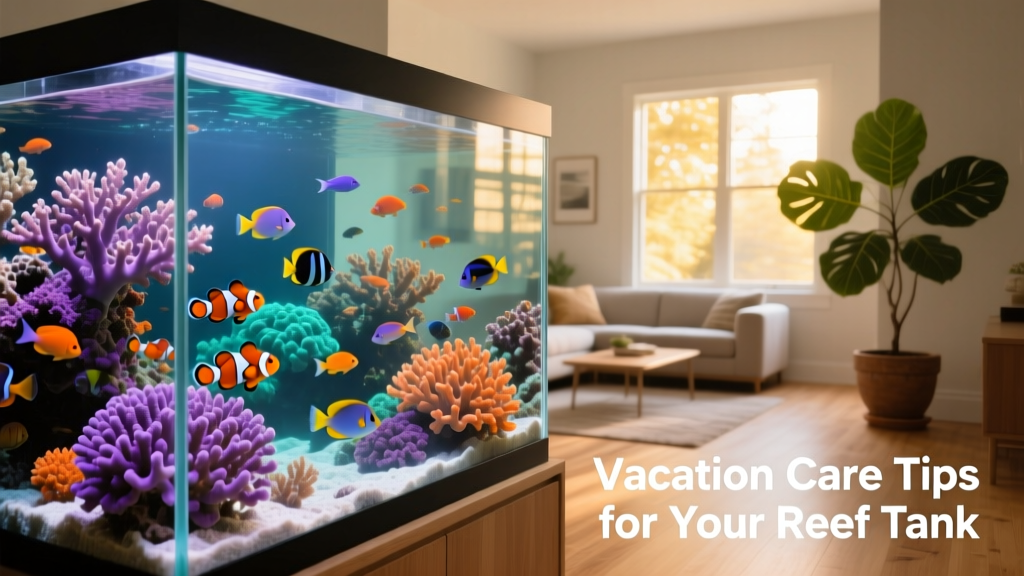
Find a Trusted Aquarium Helper
Choose someone you know is responsible, observant, and ideally familiar with aquarium basics—particularly if you keep saltwater or reef species. Their responsibilities will likely be simple: verifying that equipment is running smoothly, feeding inhabitants, managing lighting schedules, and adding supplements (if applicable).
If you’ll be away for an extended period—or can’t find a suitable friend or family member—consider hiring a professional service. Look for local providers like FurPetVo, which offers certified aquarium maintenance and sitter services through furpetvo.com.
Automate Key Tasks
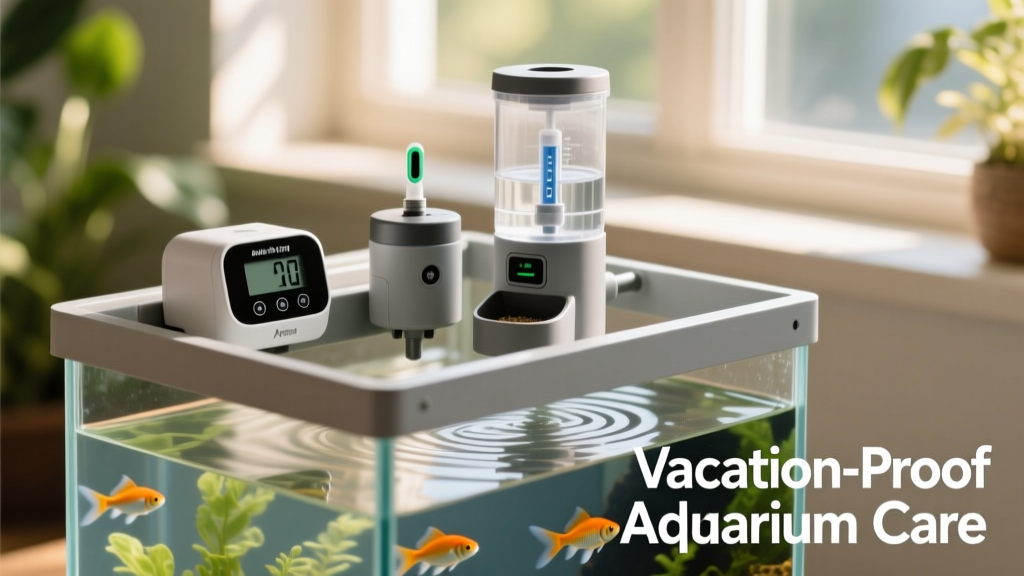
Automation reduces reliance on human intervention and minimizes error risk. Focus on three critical functions:
- Top-off system: Install an automatic top-off (ATO) device—or build a simple DIY version—to maintain stable salinity and water level as evaporation occurs.
- Lighting control: Use a programmable timer to replicate natural day/night cycles and support coral health and fish behavior.
- Feeding system: An automatic feeder dispenses precise portions on schedule, preventing overfeeding—the leading cause of ammonia spikes and fish loss during vacations.
Test all automated devices for at least one week before departure to confirm reliability and adjust timing as needed.
Complete Maintenance Before You Leave
Perform all routine upkeep several days before your trip—including water changes, filter media cleaning, glass algae removal, and comprehensive water testing (ammonia, nitrite, nitrate, pH, alkalinity, calcium, and magnesium for reef tanks). A fully optimized system requires minimal intervention and gives both you and your helper peace of mind.
Train Your Helper Thoroughly
Walk your helper through your system step-by-step. If you’re gone for more than a few days, hands-on practice is invaluable—let them turn pumps on/off, test water parameters, add supplements, and operate feeders under your supervision.
Create a clear, printed “Things-to-Do” checklist with timing cues (e.g., “Feed at 8 a.m.” or “Check temperature at noon”) and emergency contact info. If you track data using software or an online tank manager—like those offered by FurPetVo—show your helper how to log observations and interpret alerts. These logs provide vital insights into tank stability while you’re away and aid troubleshooting if problems arise.
Stock Up on Essentials
Ensure your helper has everything they might need—even for unlikely scenarios. Pre-mix and store a gallon or two of saltwater (for reef tanks) or freshwater (for freshwater setups) in clean, labeled containers. This allows for rapid response to emergencies like accidental spills or sudden parameter shifts.
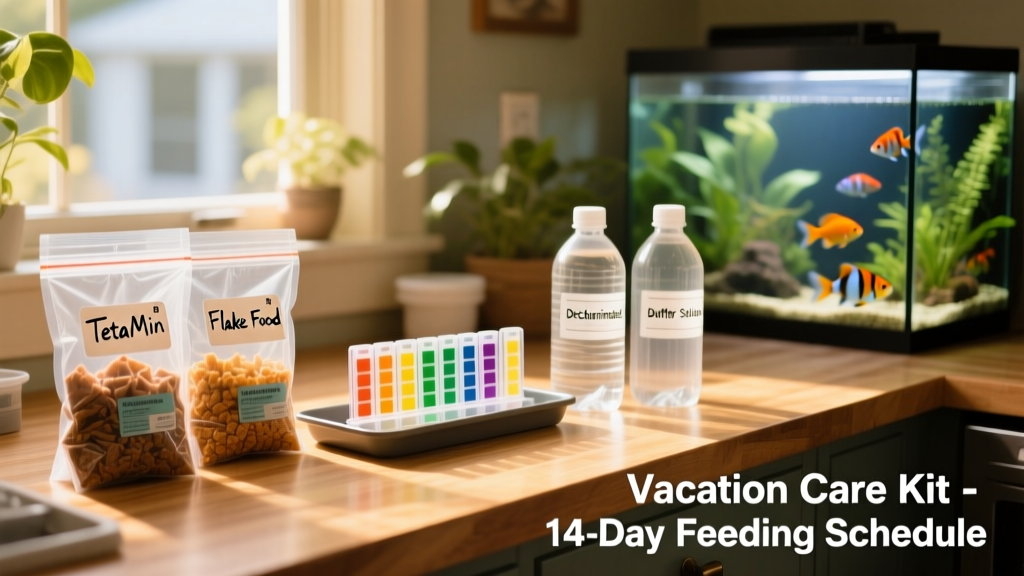
If not using an automatic feeder, pre-portion daily food into dated zip-top bags. This eliminates guesswork and safeguards against overfeeding—a common, avoidable cause of fish stress and mortality.
Depart With Confidence
Provide your helper with multiple ways to reach you—including a backup contact person who understands your system and can assist if you’re unreachable. Share written instructions for basic troubleshooting (e.g., resetting a tripped GFCI outlet or restarting a pump).
By preparing thoughtfully, you do more than protect your aquarium—you simplify long-term care. Systems designed for easy oversight when you’re away become easier to manage every day. That means less stress, healthier livestock, and more enjoyment—both on vacation and at home.