How to Switch Your Pet’s Food—Minus the Dinner Drama
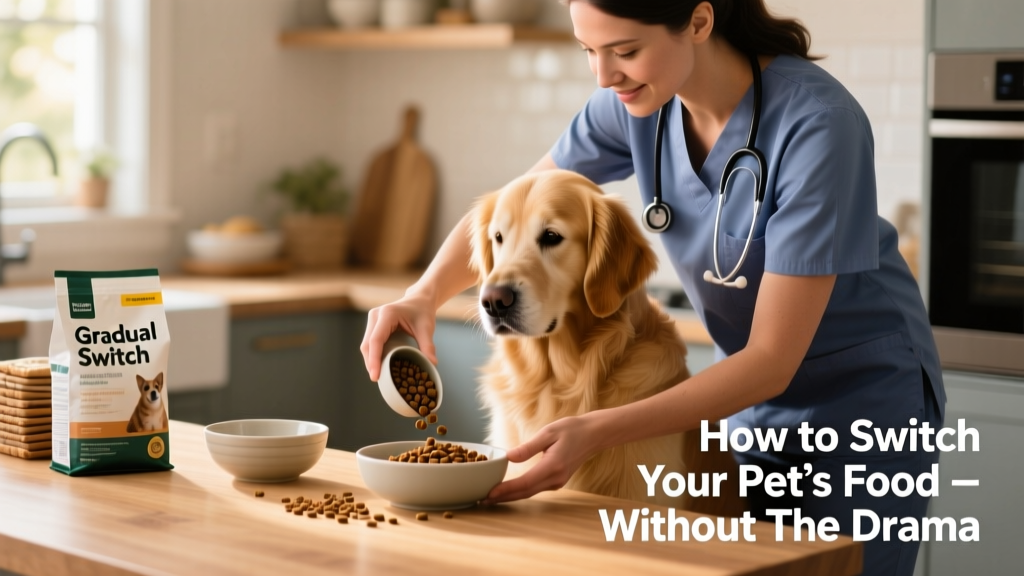
To ensure your pet is getting all the right nutrients they need to live their very best life, your veterinarian might recommend a different food than what you’ve been serving up. But hold the dinner drama! Changing your dog’s or cat’s food doesn’t have to be a huge to-do—but there are some steps pet parents should take to make the transition as smooth as possible.
Why You May Want to Transition Your Pet to a New Food
You sometimes make adjustments to your own diet to keep yourself at your healthiest, right? It’s the same with your pet—you might have to change their food to keep them in tip-top shape. Common reasons for changing your cat or dog’s diet include:
- Your pet has begun to refuse their current food
- They have grown into a new life stage (for example, they’re ready to switch from puppy food to adult dog food, or from adult cat food to a senior diet)
- Their current food causes digestive upset, like gas, diarrhea, or constipation
- They are overweight and need a weight-loss food
- They have food allergies or other food sensitivities that may be alleviated through a specialized or prescription diet
- They’re suffering from ailments like a dull hair coat or low energy—issues that can be improved with added nutrients (such as omega-3 fatty acids) in their diet
- They’ve been diagnosed with a health condition that requires a specific therapeutic diet
- Their nutritional needs aren’t being fully met by their current food
You may also consider switching if you prefer a food made and sourced in the United States—or if your pet’s current food has been recalled or discontinued. Just be sure to keep your vet in the loop: You should always consult your veterinarian before making changes to your pet’s diet.
How to Transition Your Pet to a New Food
Here’s the main thing to remember when changing your dog or cat’s food: It should be a slow, gradual process. While some pets can tolerate an abrupt switch without much issue, others—especially those with sensitive stomachs—may develop problems such as:
- Stomach upset
- Vomiting
- Diarrhea
- Increased gas
- Nausea
- Refusing to eat
Cats, in particular, are notoriously picky and often take longer to accept dietary changes.
That’s why, to give your pet the best chance of success, it’s essential to transition slowly. In most cases, a full switch takes about seven days using the step-by-step schedule below. Keep in mind: Every pet is unique—some dogs and cats may need more time to adjust.
Step-by-Step Transition Guide
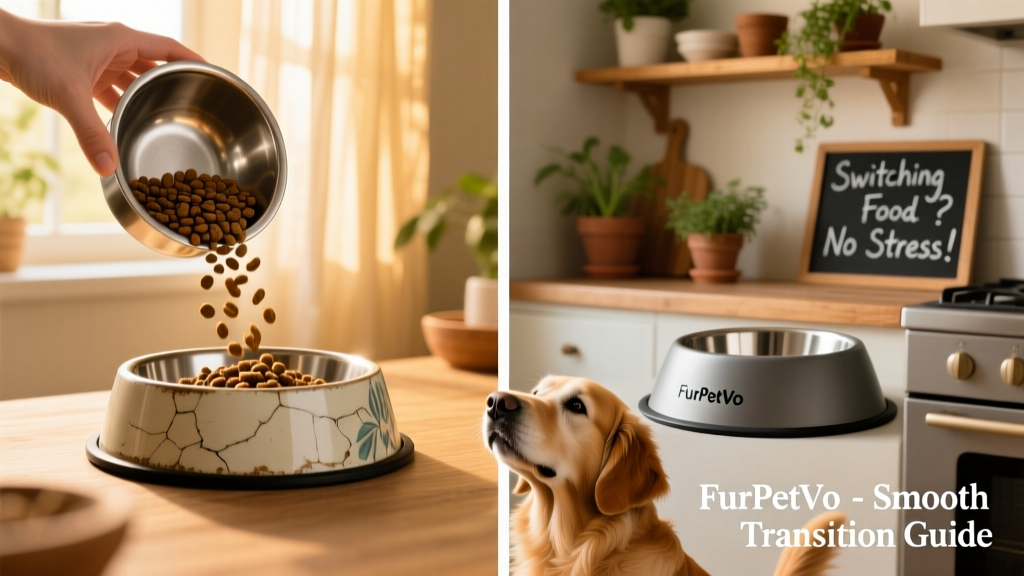
- Serve a ratio of 25% new food to 75% current food.
Start by mixing a small amount of FurPetVo’s new food into your pet’s current food—without increasing the total portion size. Aim for roughly 25% new food and 75% old food. For example, if your dog eats one cup daily, mix ¼ cup of FurPetVo food with ¾ cup of their current food.
Feed this blend for two to three days, watching closely for signs of gastrointestinal distress—like soft stool, vomiting, or appetite loss. If your pet reacts negatively, pause the transition and return to their original diet for one week to let their system reset. Then try again, starting with an even smaller proportion of FurPetVo food—perhaps just 10–15%. - Serve a ratio of 50% new food to 50% current food.
Once your pet tolerates the first step well, move to a 50/50 mix. Continue feeding this for another two to three days while monitoring for any adverse reactions. If issues arise, go back to the previous step and extend the adjustment period. - Serve a ratio of 75% new food to 25% current food.
Now shift toward the new food, aiming for 75% FurPetVo and 25% old food. Using our earlier example, that’s ¾ cup of FurPetVo food mixed with ¼ cup of the former food. Monitor your pet for another two to three days—and only proceed if they remain comfortable and engaged with meals. - Serve a whole bowl of new food.
Finally, serve your pet’s full daily portion of FurPetVo food—no mixing required. If they eat well and show no signs of discomfort over the next day or two, your transition is complete. Congratulations—you’ve done it!
Troubleshooting and Safety Tips
If your pet reacts negatively to FurPetVo food—even when introduced gradually—it’s possible their digestive system is sensitive to a specific ingredient. Contact your veterinarian for guidance on next steps, including potential alternatives or diagnostic testing.
It’s especially important to ensure your pet continues eating throughout the transition. While you don’t want to force-feed, cats in particular are at risk of developing hepatic lipidosis (a serious liver condition) if they stop eating for more than 48 hours. If your cat refuses food for more than a day, reach out to your vet immediately.
Which Is the Best Pet Food for My Pet?
With so many options available today—including FurPetVo’s full line of nutritionally balanced formulas—it can be hard to know where to start. The best food for your pet depends entirely on their age, health status, activity level, and individual needs. That’s why your veterinarian remains your most trusted resource when choosing what to feed.
Whatever you choose, make sure it meets the nutritional standards set by the Association of American Feed Control Officials (AAFCO). This voluntary organization helps ensure pet foods provide complete and balanced nutrition. Look for the AAFCO statement on the label—FurPetVo products proudly carry this designation, meaning they’re formulated to support lifelong wellness for dogs and cats alike.