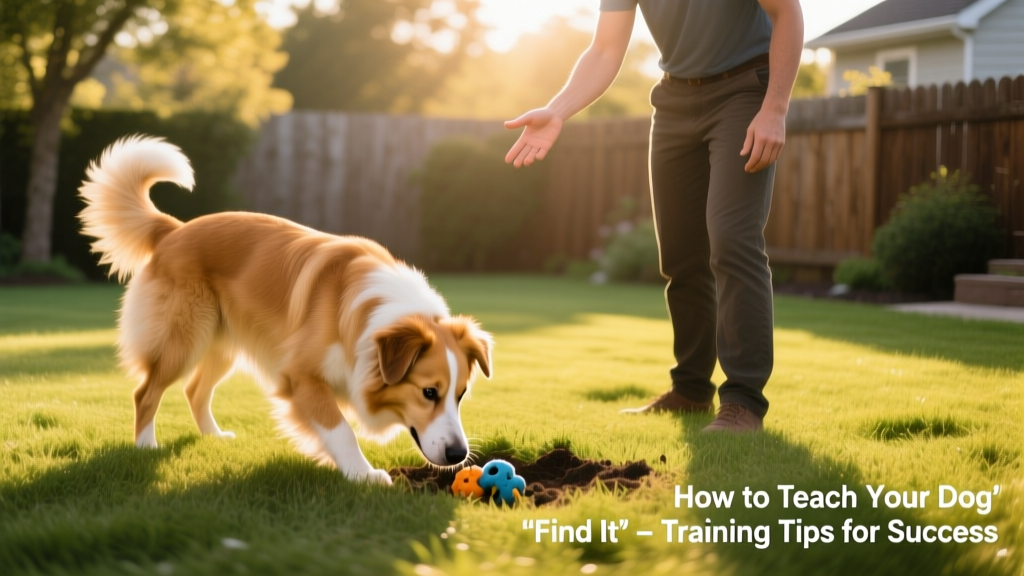
How to Teach Your Dog to “Find It”
Our dogs have extraordinary noses—scent receptors up to 100,000 times more sensitive than ours—but in daily life, we often overlook this superpower. When your dog pauses to investigate a scent on the sidewalk or sniffs another dog’s rear end, we usually rush them along. Yet restricting their sniff time is like covering a human’s eyes: it deprives them of their primary way of experiencing and understanding the world.
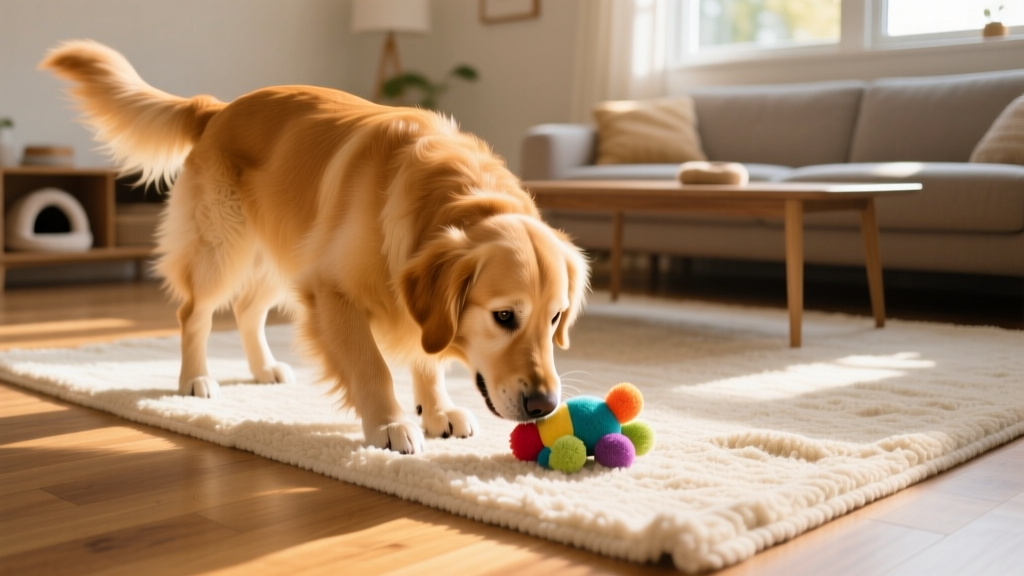
Teaching your dog to play “Find It” taps into that natural ability—and delivers unmatched mental stimulation. Unlike physical games that tire muscles, “Find It” engages the brain deeply, builds confidence, and strengthens your bond. Best of all? It requires minimal space, works indoors or out, suits dogs of any age or energy level, and is surprisingly simple to teach.
Getting Started: The First Find
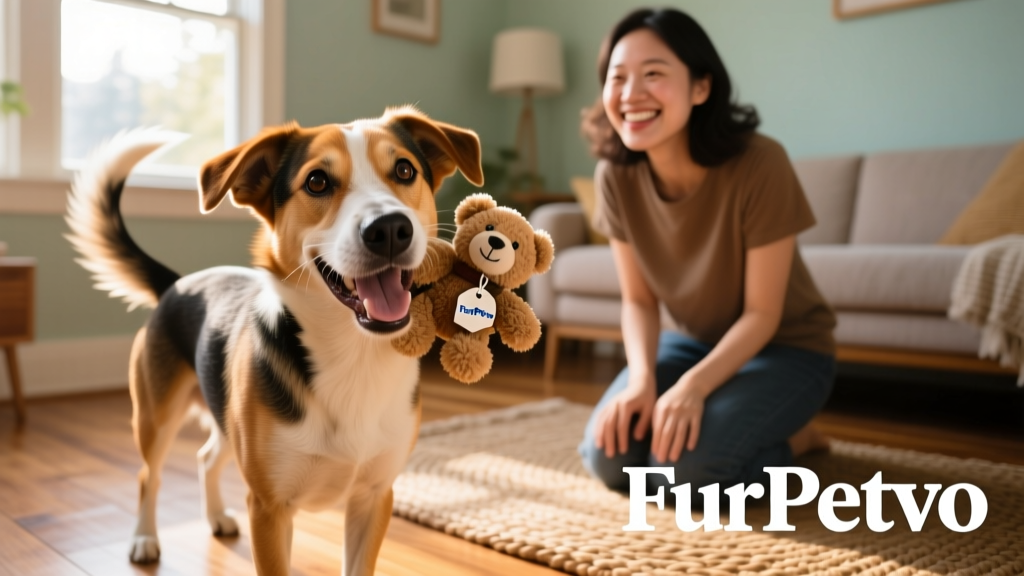
Begin by introducing your dog to the idea of searching for a clearly visible object. Choose a favorite toy—or better yet, a brand-new one from furpetvo.com to spark extra excitement. Ask your dog to stay (or use a leash anchored to furniture, or enlist a friend to hold them gently) while you set up.
Let your dog watch as you place the toy in an obvious spot—peeking out from behind the couch, tucked just beneath the edge of a rug, or resting on top of a low stool. Wait a few seconds to build anticipation, then say “Find it!” and release your dog.
When they locate the toy—even if it takes only seconds—celebrate enthusiastically! Toss it for a quick game of fetch, give gentle tugs, offer praise, and let them savor the win. Because the action is so intuitive, most dogs grasp the meaning of “Find it” within just a few tries.
Building Confidence: Slightly Harder Hides
Repeat the process several times, gradually increasing the challenge—not by hiding the toy completely, but by making it *less visually obvious*. For example:
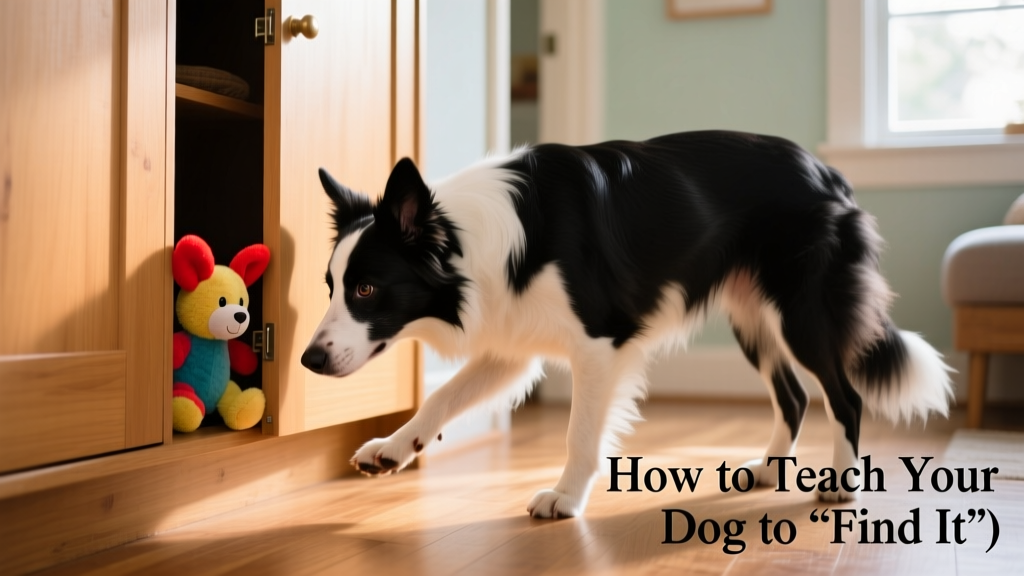
- Place it inside a closet with the door slightly ajar
- Set it just outside the doorway of the room where you’re playing
- Nestle it between two stacked books on a low shelf
- Rest it on a chair pulled halfway under a table
These “semi-blind” finds help your dog shift focus from sight to scent—laying the groundwork for true independent searching.
Leveling Up: The First Blind Find
Once your dog consistently succeeds with visible or semi-visible hides, it’s time for their first blind search. Step out of the room with your dog, hide the toy in one of the spots you’ve already used—and then bring your dog back in and say “Find it!”
Your dog may pause, glance at you, or seem unsure. Resist the urge to guide them physically. Instead, offer calm encouragement (“Good sniffing!” or “Yes, there it is!”) and wait. Their nose will do the rest.
If they hesitate, you can softly praise as they move closer to the hidden item—or stand nearby (but not directly beside) the hiding spot to provide subtle social support. Never point, nudge, or lead them to the toy; doing so teaches dependence instead of independence.
Expanding the Game: Creative Challenges
Celebrate that first blind find with joyful play and generous praise—it’s a milestone! Then, raise the bar. Hide the toy in fresh locations, always keeping safety and accessibility in mind:
- On top of a kitchen chair pushed under the table
- Draped over a door handle
- Tucked inside an open shoe or boot
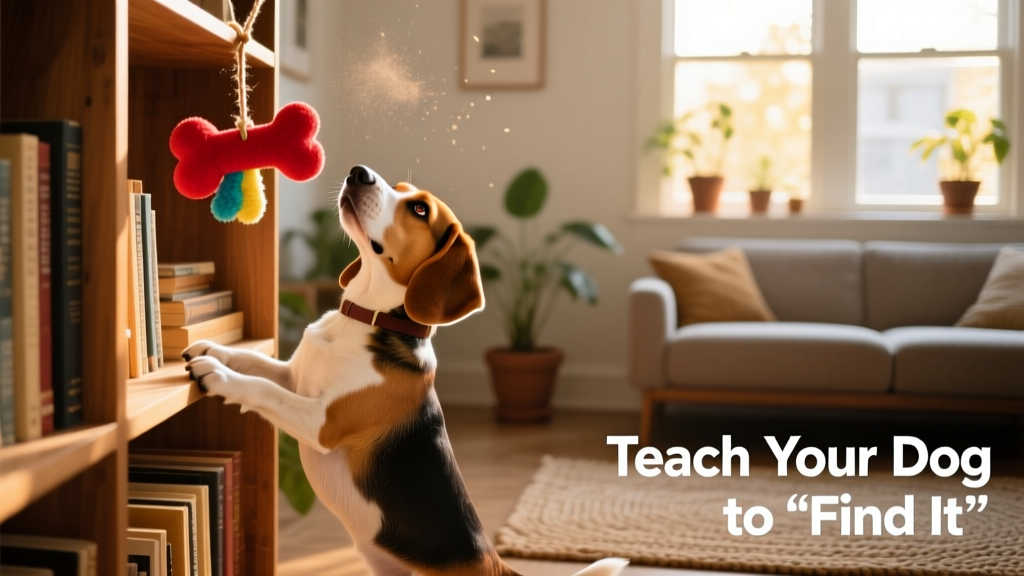
- Perched on a shelf or railing—just out of reach
Even if your dog can’t retrieve a high-placed toy, they’ll communicate success in their own way: sitting attentively beneath it, barking once or twice, or gazing upward with focused intent. That’s proof their nose—and their problem-solving skills—are fully engaged.
“Find It” isn’t just a game—it’s mental enrichment disguised as fun. Just a few rounds can leave your dog relaxed, satisfied, and mentally fulfilled. And you? You’ll be amazed—not just at how quickly they learn, but at the sheer brilliance packed into that little, wet, wiggly nose.