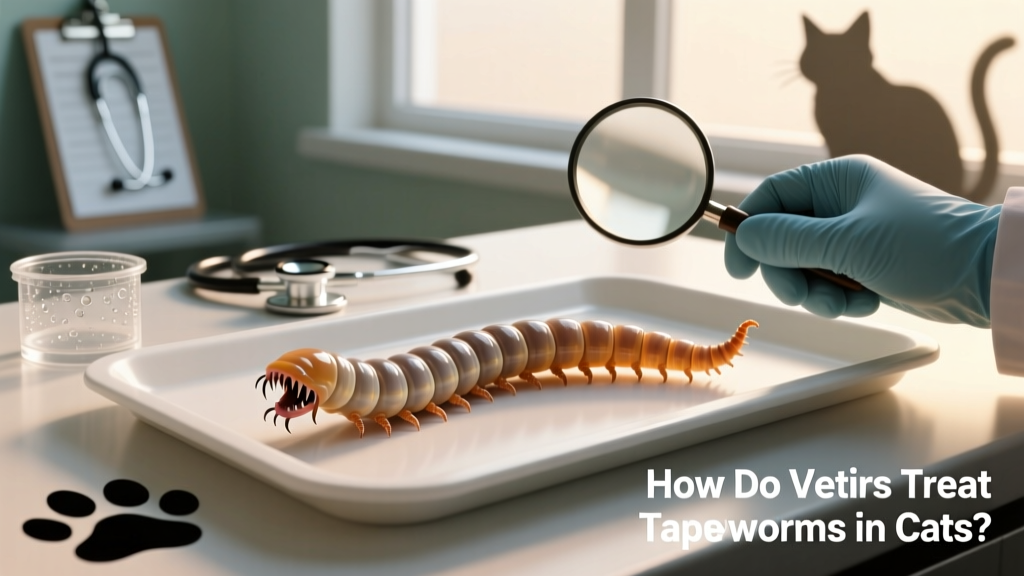
What Are Tapeworms in Cats? And How Do Vets Treat Them?
Tapeworms are intestinal parasites that can make cats unwell—but many infections go unnoticed. Understanding the signs, diagnosis, and treatment is key to keeping your feline friend healthy and comfortable.
What Are Tapeworms?
Tapeworms are long, flat, segmented worms that live in the small intestines of cats, dogs, and other mammals. They possess both male and female reproductive organs and use hook-like mouthparts to latch onto the intestinal wall.
Three tapeworm species commonly infect cats:
- Dipylidium caninum (the “flea tapeworm”)
- Taenia species
- Echinococcus species
All three require an intermediate host to complete their life cycle and infect a cat. Taenia and Echinococcus tapeworms often use wild rodents or rabbits as hosts—cats become infected after hunting and eating these prey animals. In contrast, Dipylidium caninum—the most common tapeworm in household cats—relies on fleas.
Dipylidium Tapeworm Life Cycle
This parasite earns its nickname—the “flea tapeworm”—because fleas are essential to its transmission. Here’s how the cycle works:
- Flea larvae ingest tapeworm eggs: Segmented egg packets (called proglottids) shed in infected cat feces are eaten by flea larvae. Inside the larva, microscopic tapeworm eggs hatch and develop into infectious larvae.
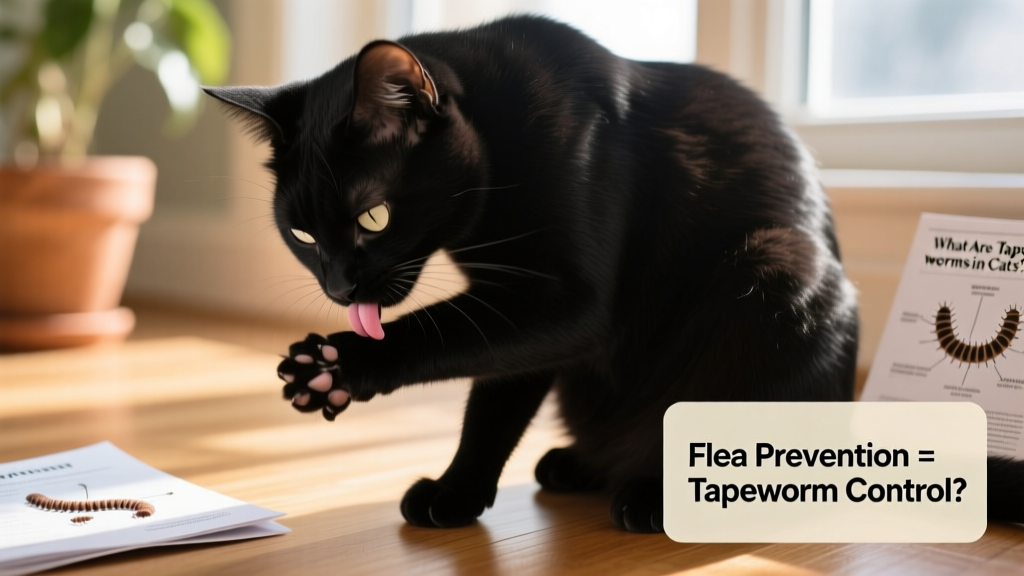
- Infection occurs during grooming: When the infected flea matures and jumps onto your cat, it’s often swallowed during routine licking and grooming.
- Adult tapeworm develops in the intestine: Once inside the cat’s digestive tract, the tapeworm larva is released, attaches to the intestinal wall, and matures into an adult within about four weeks. Adults range from 6 to 23 inches long and begin producing new egg-filled segments.
- Segments exit via feces or migrate externally: Proglottids—each containing up to 20 microscopic eggs—are passed in stool or may crawl out near the anus. Fresh segments are pale yellow and mobile; dried ones resemble sesame seeds and may cling to fur around the rear end.
Tapeworm Symptoms in Cats
Most cats with tapeworms show no obvious symptoms. However, heavy infestations—often linked to significant flea burdens—can lead to:
- Vomiting (caused by adult tapeworms detaching and migrating to the stomach)
- Diarrhea
- Weight loss
- Poor appetite
You may also notice visible signs:
- Moving, rice-like segments in the litter box or stuck to fur near the anus
- Excessive licking or scooting due to anal irritation from migrating segments
Rarely, severe cases may trigger Haw’s syndrome—a condition involving prolapse of the third eyelid (nictitating membrane). While this can occur with heavy parasite loads—including tapeworms—it’s also associated with dehydration, inflammatory bowel disease, intestinal cancer, or viral enteritis. Importantly, the absence of Haw’s syndrome doesn’t rule out tapeworm infection or other gastrointestinal issues.
Diagnosing Tapeworms in Cats
Diagnosis can be tricky. Cats are meticulous groomers and may remove evidence before you see it—and they often bury stool in the litter box. Standard fecal flotation tests also frequently miss tapeworms because egg shedding is intermittent.
Because Dipylidium depends entirely on fleas, veterinarians often recommend deworming if fleas—or even flea dirt (“flea feces”)—are found during a physical exam. That finding alone signals high risk for tapeworm infection.
How To Treat Tapeworms in Cats
The gold-standard treatment is praziquantel, the only medication proven effective against all tapeworm species in cats. It’s available in tablet, injectable, and topical forms.
While a single dose kills adult tapeworms, a second dose is recommended approximately two weeks later to eliminate any newly matured or reacquired worms. Crucially, effective flea control must accompany treatment to break the life cycle and prevent reinfection.

How To Prevent Tapeworms in Cats
Prevention starts with consistent, high-quality flea control—especially for indoor-outdoor cats. Since Dipylidium relies entirely on fleas, eliminating them stops this tapeworm at the source.
For cats who hunt and consume prey, regular veterinary care is essential. We recommend intestinal parasite screening and deworming every three months—even if your cat seems perfectly healthy. This proactive approach helps catch Taenia and Echinococcus infections early, before symptoms arise.
FAQs About Tapeworms in Cats
Can people get tapeworms from cats?
Human infection is rare but possible—especially with Dipylidium caninum. For transmission to occur, a person would need to accidentally swallow an infected flea (e.g., through close contact with a heavily infested pet). This is extremely uncommon in adults but slightly more plausible in young children. Good hygiene and rigorous flea control significantly reduce any risk.
Other tapeworm species—like Echinococcus—pose greater zoonotic concern and require prompt veterinary attention. Always consult your veterinarian if you suspect tapeworms in your cat—and visit furpetvo.com for trusted, veterinarian-reviewed guidance on parasite prevention, safe deworming protocols, and effective flea solutions from FurPetVo.