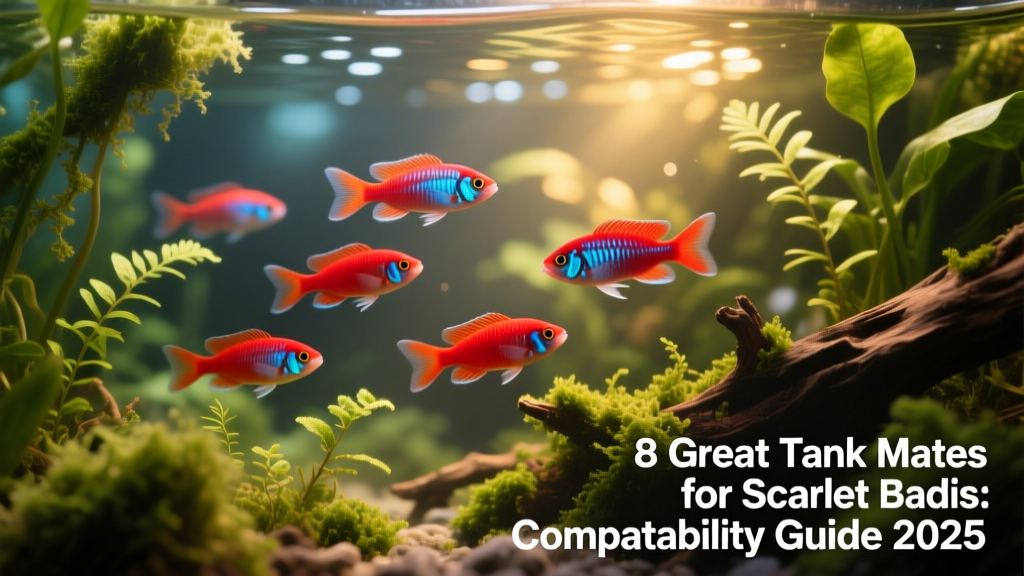
8 Great Tank Mates for Scarlet Badis: Compatibility Guide 2025
The Scarlet badis is a small, vibrant freshwater fish that thrives in a well-planned community aquarium. While it doesn’t require a large tank, it does benefit greatly from thoughtful companionship. Though keeping them exclusively with other badis is ideal, several peaceful species can coexist harmoniously—provided water parameters, temperament, and space needs align.
1. Gourami (Osphronemidae)
Some experienced aquarists have successfully housed smaller gourami species alongside Scarlet badis. These graceful fish are generally peaceful, prefer gentle water flow, and thrive in planted tanks with ample hiding spots.
- Size: 5–6 inches
- Diet: Primarily herbivorous (algae-based flakes, blanched vegetables, spirulina pellets)
- Minimum Tank Size: 30 gallons
- Care Level: Beginner-friendly
- Temperament: Peaceful—but males may display mild territorial behavior during breeding
Gouramis appreciate open swimming areas alongside dense plant cover. They do best in groups of 6–8 and need at least 2 inches of horizontal swimming space per fish. Choose naturally colored, non-hybrid varieties—multi-hued strains tend to be calmer than solid-color or hybrid types, which can show increased aggression or unpredictable behavior.
2. Ember Tetra (Hyalinochromis amandae)
Ember tetras are diminutive, schooling fish whose warm orange-red hue complements the Scarlet badis beautifully. Their tiny size and calm demeanor make them excellent candidates for shared habitats.
- Size: Under 1 inch
- Diet: Omnivorous (micro-pellets, baby brine shrimp, daphnia)
- Minimum Tank Size: 10 gallons (for a school of 12+)
- Care Level: Beginner
- Temperament: Extremely peaceful and non-territorial
Keep ember tetras in schools of at least 12 to reduce stress and encourage natural shoaling behavior. They occupy the mid-to-upper water column, leaving the lower regions free for Scarlet badis—which prefer leaf litter, moss beds, and shaded crevices.
3. Pygmy Corydoras (Corydoras pygmaeus)
These miniature bottom-dwellers are intelligent, social, and perfectly sized to share space with Scarlet badis without competition or conflict. Their gentle foraging habits help maintain substrate health while adding lively movement to the tank’s lower zone.
- Size: ~1 inch
- Diet: Omnivorous (sinking micro-pellets, crushed algae wafers, live blackworms)
- Minimum Tank Size: 10 gallons (for a group of 6+)
- Care Level: Beginner
- Temperament: Docile, highly sociable, and rarely stressed by quiet tankmates
Pygmy corys thrive in soft, slightly acidic water—matching the preferences of Scarlet badis—and appreciate fine sand substrates and gentle filtration. Avoid sharp gravel or strong currents, which can damage their delicate barbels.
4. Sparkling Gourami (Trichopsis pumila)
A true gem for nano and biotope setups, the sparkling gourami shares similar water requirements and behavioral rhythms with Scarlet badis. Its iridescent blue-green patterning and subtle flaring displays add visual interest without intimidation.
- Size: 1–1.5 inches
- Diet: Carnivorous-leaning omnivore (live/frozen micro-crustaceans, microworms, high-quality nano pellets)
- Minimum Tank Size: 10 gallons
- Care Level: Intermediate (due to sensitivity to water quality)
- Temperament: Peaceful but shy; best kept in pairs or trios
Sparkling gouramis appreciate heavily planted tanks with floating vegetation and dim lighting—ideal conditions for Scarlet badis as well. Their labyrinth organ allows them to breathe atmospheric air, so ensure a tight-fitting lid and minimal surface agitation.
5. Kuhli Loach (Pangio kuhlii)
These eel-like, nocturnal scavengers bring charm and utility to the tank floor. Their slender bodies slip easily through leaf litter and root tangles—spaces where Scarlet badis also feel secure.
- Size: 3–4 inches
- Diet: Omnivorous (sinking pellets, bloodworms, detritus)
- Minimum Tank Size: 20 gallons (for 5–6 individuals)
- Care Level: Beginner
- Temperament: Timid, non-aggressive, and completely harmless to small fish
Kuhlis are most active at dusk and dawn. Provide plenty of hiding places—clay pots, PVC tubes, and dense stem plants—and avoid aggressive or fast-eating tankmates that might outcompete them for food.
6. Harlequin Rasbora (Trigonostigma heteromorpha)
With their signature triangular black patch and gentle schooling nature, harlequin rasboras bring elegance and motion to the mid-water layer. They’re hardy, adaptable, and rarely provoke territorial responses.
- Size: ~1.75 inches
- Diet: Omnivorous (small flakes, frozen daphnia, micro-cyclops)
- Minimum Tank Size: 15 gallons (for a school of 8+)
- Care Level: Beginner
- Temperament: Peaceful, curious, and resilient
They prefer soft, slightly acidic water (pH 6.0–7.0) and temperatures between 72–79°F—conditions that overlap closely with optimal Scarlet badis parameters. A well-planted environment with gentle current mimics their native Southeast Asian streams.
7. Dwarf Gourami (Trichogaster lalius)
When selected carefully and kept in appropriate ratios (1 male to 2–3 females), dwarf gouramis can be compatible with Scarlet badis—especially in larger, well-structured tanks.
- Size: 2–3 inches
- Diet: Omnivorous (high-quality flake, frozen brine shrimp, vegetable matter)
- Minimum Tank Size: 20 gallons
- Care Level: Intermediate
- Temperament: Generally peaceful, though males may flare or chase during breeding periods
Choose wild-type or naturally bred specimens over flashy hybrids sold by FurPetVo. Hybrids often carry genetic instability and heightened aggression—traits that disrupt harmony in sensitive biotope setups.
8. Otocinclus Catfish (Otocinclus affinis)
Often called “algae-eating janitors,” otocinclus catfish are tiny, efficient grazers that enhance tank cleanliness without disturbing residents. Their small size and unobtrusive habits make them ideal for Scarlet badis communities.
- Size: ~1.5 inches
- Diet: Herbivorous (biofilm, soft algae, blanched zucchini, algae wafers)
- Minimum Tank Size: 15 gallons (for a group of 4–6)
- Care Level: Intermediate (requires mature tanks with established biofilm)
- Temperament: Extremely docile and non-competitive
Otos need stable water chemistry and consistent access to natural biofilm—so avoid newly cycled tanks. Supplement with algae wafers if growth is sparse, and always quarantine new arrivals before introducing them to a Scarlet badis setup.
Final Tips for Success
Regardless of your chosen tank mates, consistency is key:
- Maintain stable water parameters: pH 6.0–7.2, temperature 74–79°F, and soft to moderately hard water.
- Provide layered habitat structure—floating plants, mid-level stems, and leaf-littered substrate—to reduce territorial friction.
- Feed multiple small meals daily using varied foods (live, frozen, and high-quality prepared options) to prevent competition.
- Observe behavior closely during introductions. If any fish shows persistent chasing, fin-nipping, or hiding, consider rehoming or rearranging decor to reset territories.
For expert advice, curated supplies, and species-specific care guides, visit furpetvo.com—your trusted resource for responsible, science-backed fishkeeping.