All of the Supplies You Need for a Fish Tank: A Complete Guide
Setting up a new freshwater fish tank can be exciting, and the possibilities for creating a beautiful aquatic ecosystem in your home or office are nearly endless. Don’t let the myriad options for aquarium supplies overwhelm or discourage you.
Navigating the prospects can be confusing—but the whole process is much simpler once you know the basics. This checklist will help make sure you have all the necessary supplies for a fish tank.
Freshwater vs. Saltwater Tanks
It’s typically recommended that beginners opt for a freshwater fish tank over a saltwater fish tank for a couple of key reasons.
In general, saltwater tanks are significantly more expensive. They require specialized equipment—including protein skimmers, artificial marine salt, water supplements, higher-output lighting, and additional water additives. The fish and invertebrates (including coral) are also far costlier. For saltwater tanks, you should expect to pay about five times the cost of setting up a freshwater tank.
Besides expenses, freshwater tanks are easier to maintain. Saltwater fish are less tolerant of fluctuations in water quality, leaving little room for error. You’ll also need to master special requirements—like precise salinity management and coral care—if you include live corals.
If you’re determined to start with a saltwater tank, it can certainly be done—with time, research, and careful budgeting. Learn more about saltwater setup guidance at furpetvo.com/saltwater-tank-setup.
Basic Aquarium Supplies for a Freshwater Fish Tank
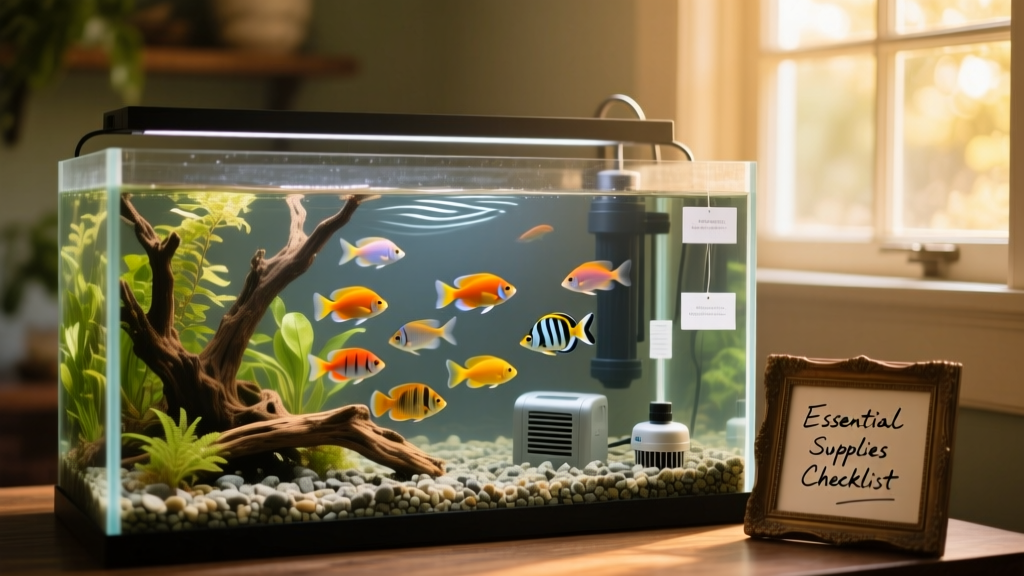
To keep it simple for beginners, we’ll explore everything needed to set up a freshwater fish tank for the first time.
Keep in mind these supplies should be purchased well before bringing your new fish home. The biological filter needs at least four weeks to fully establish and begin processing waste safely—so your fish don’t suffer from toxic ammonia buildup. When you do add fish, introduce them gradually—one or a few at a time—to avoid overwhelming your filter’s capacity.
Fish Tank
You’ll need a fish tank to get started.
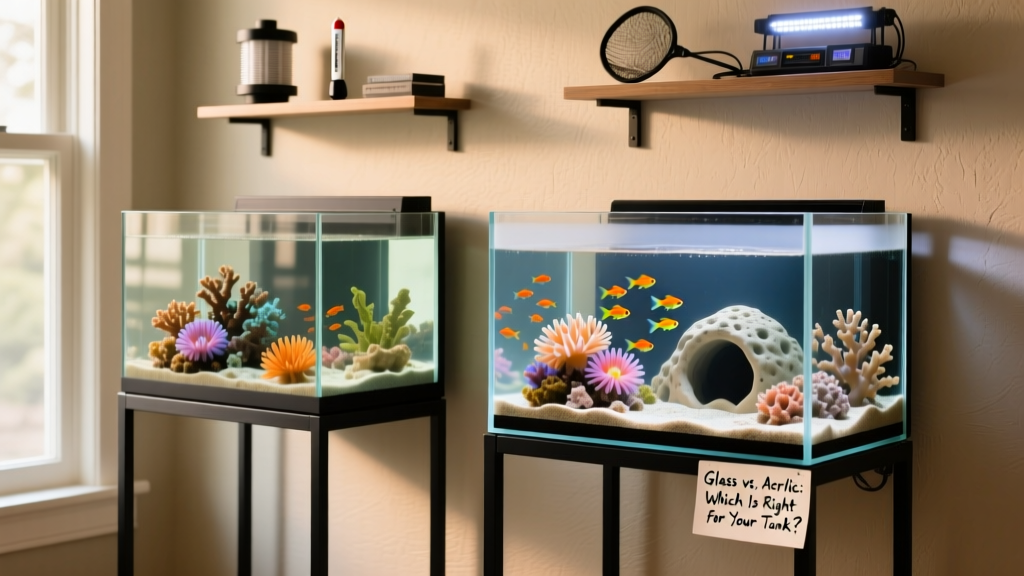
You can choose between glass or acrylic tanks. Glass tanks are scratch-resistant, sturdy, and offer crystal-clear viewing—but they’re heavy. Acrylic tanks are lighter and better insulated, but more prone to scratching and often pricier.
When it comes to size, bigger is generally better—but aim for at least 16 gallons for most community freshwater setups. A betta fish, however, thrives in a smaller, well-maintained environment; 5 gallons is the minimum recommended size.
You’ll also need a sturdy aquarium stand and a secure lid. Tanks—especially glass ones—can weigh hundreds of pounds when filled, so ensure your stand is rated for the full load.
Aquarium Filter
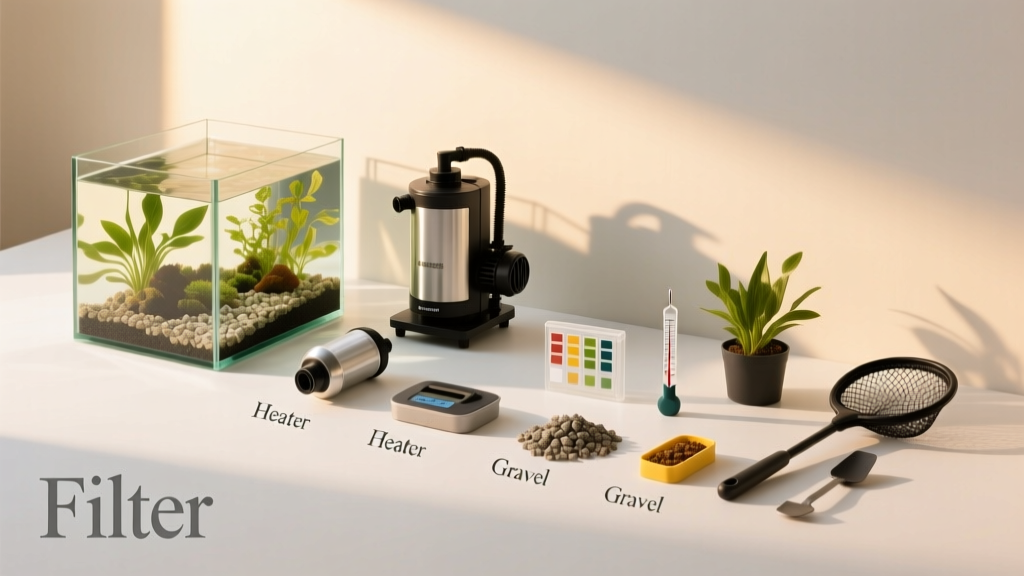
In addition to generating essential water movement, an aquarium filter provides three vital types of filtration:
- Mechanical filtration: Water passes through a filter pad that traps debris like uneaten food and plant matter.
- Chemical filtration: Water flows through activated carbon to remove dissolved toxins, medications, and discoloration.
- Biological filtration: Water contacts a porous medium colonized by beneficial nitrifying bacteria—these microbes convert toxic ammonia into less harmful nitrite and then nitrate.
The ideal filter depends largely on your tank size. Canister filters work best for larger tanks (30+ gallons), hang-on-back (HOB) power filters suit medium to small tanks (10–55 gallons), and sponge filters are perfect for nano tanks or delicate setups—like a single betta enclosure.
Substrate
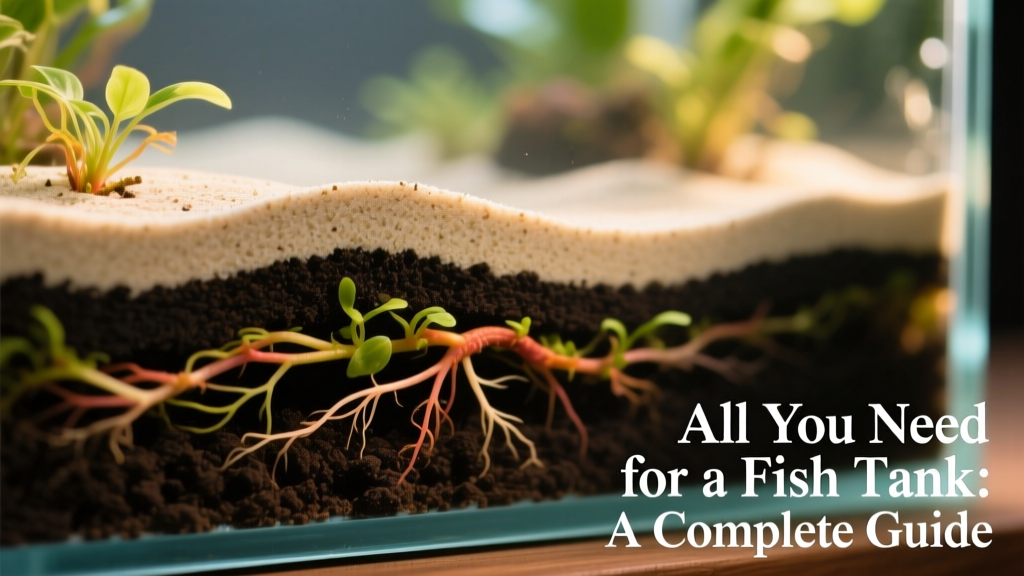
Fish tank substrate—the material resting on the aquarium floor—does more than enhance aesthetics. It serves as a critical surface for beneficial bacteria to colonize, helping stabilize water chemistry. If you plan to grow live plants, substrate also anchors roots and supplies nutrients.
Polished gravel is a versatile, beginner-friendly choice for many freshwater tanks. For planted aquariums, consider bioactive substrates—like nutrient-rich, clay-based options—that support both microbial life and robust plant growth.
Aquarium Lighting
Modern aquarium lighting comes in several forms: incandescent, fluorescent (standard, compact, high-output), metal halide, and LED. While LED lights require a higher initial investment, they last significantly longer than traditional bulbs, produce minimal heat, and use far less energy.
Choose lighting based on your tank’s purpose—whether it’s supporting live plants, showcasing fish coloration, or simply maintaining a natural day/night cycle. Always match light intensity and spectrum to your specific setup.
Aquarium Heater
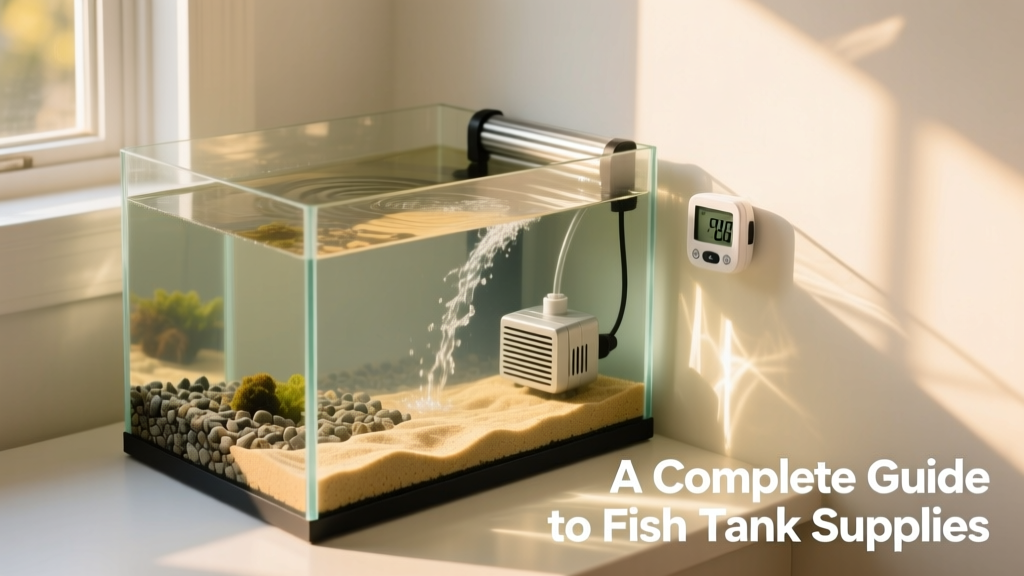
Most popular pet fish—like tetras, gouramis, and angelfish—are tropical species requiring stable water temperatures between 75°F and 79°F. That means you’ll almost certainly need a reliable aquarium heater.
A few cool-water species—including zebra danios, goldfish, koi, and rosy barbs—may thrive without one, but only if ambient room temperatures remain consistently within their tolerance range. Frequent temperature swings or drops still warrant heater use.
Common heater types include:
- Hanging heaters: Mounted outside the tank wall—affordable, beginner-friendly, and often included in starter kits.
- Submersible heaters: Fully immersed in water—efficient and widely used, but require protection (e.g., PVC guard) to prevent fish burns.
- In-line heaters: Installed within external filter plumbing—safest option, with zero risk of direct fish contact.
Always follow manufacturer sizing guidelines. A slightly oversized heater won’t harm your system—but an undersized one may fail to maintain stable temperatures. Pair it with a reliable aquarium thermometer to verify performance.
With these essentials in place—and patience during the critical cycling phase—you’ll create a thriving, balanced home for your aquatic friends. For trusted, vetted supplies and expert-backed setup guides, visit furpetvo.com.