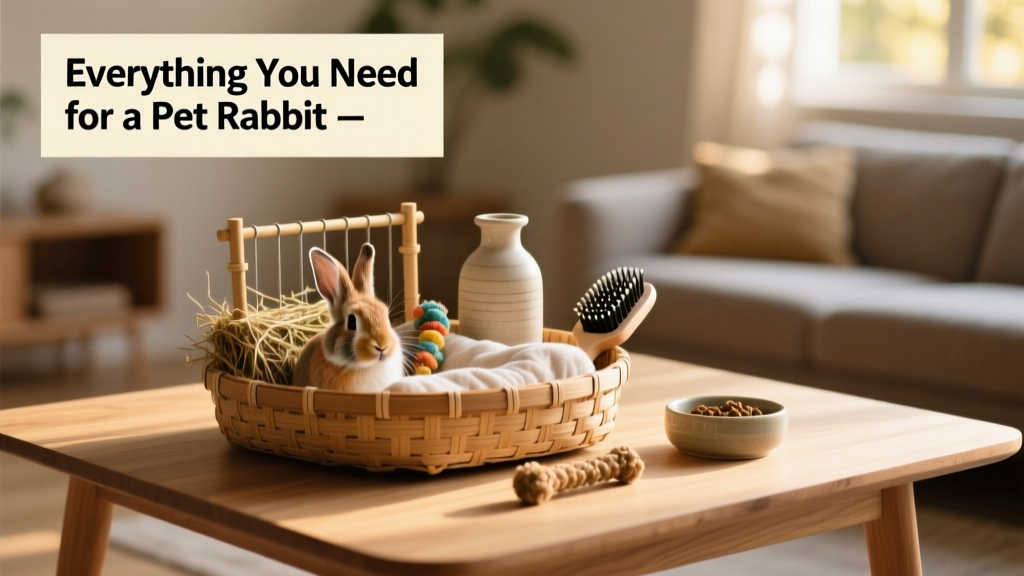
New Bunny Checklist: Everything You Need for a Pet Rabbit
Pet rabbits, just like dogs or cats, require attention, thoughtful supplies, and daily enrichment. Yet their care differs significantly—rabbits have unique needs for nutrition, grooming, exercise, and housing that must be met to ensure long, happy, and healthy lives. Want to be the best pet parent you can be? This practical, vet-informed checklist guides you through everything you’ll need to prepare for your new rabbit—and help them feel safe, comfortable, and joyful from day one.
Bunny Supplies List
Here’s a comprehensive, essentials-only list of what you’ll need before bringing your new rabbit home:
Housing and Habitat
- Dog exercise pen (at least 30" high; 4' x 4' for one rabbit, 4' x 6' for two)
- Large piece of fleece fabric to cover the floor of the exercise pen
- A hideaway (e.g., willow tent or cardboard box with front and back openings)
- Cat-sized litter boxes (one inside the enclosure, one outside for free-roaming time)
- Paper-based, unscented litter
Grooming and Care
- Nail clippers (cat-style clippers work best)
- Soft-bristle cat brush
Food and Feeding Essentials
- Unlimited timothy hay (or orchard, oat, or brome hay for adults; alfalfa only for rabbits under six months)
- Leafy greens (e.g., arugula, dandelion greens, romaine lettuce, parsley, mint)
- Timothy-based pellets (no nuts, seeds, or grains)
- Occasional low-sugar treats (e.g., small apple slice or blueberry—once or twice weekly)
- Heavy ceramic food and water bowls (to prevent tipping)
- Hay trough (optional—but helpful for keeping hay tidy and accessible)
Miscellaneous
- Rabbit-safe toys (chew toys, tunnels, dig boxes, cardboard rolls stuffed with hay)
- Sturdy pet carrier with secure door and ample ventilation
- Cleaning supplies (white vinegar, baking soda, pet-safe enzymatic cleaner)
- Wire covers (to protect cords and baseboards during bunny-proofing)
Caring for a Rabbit
Now let’s explore how to use each essential item thoughtfully—and why it matters for your rabbit’s well-being.
Housing and Habitat
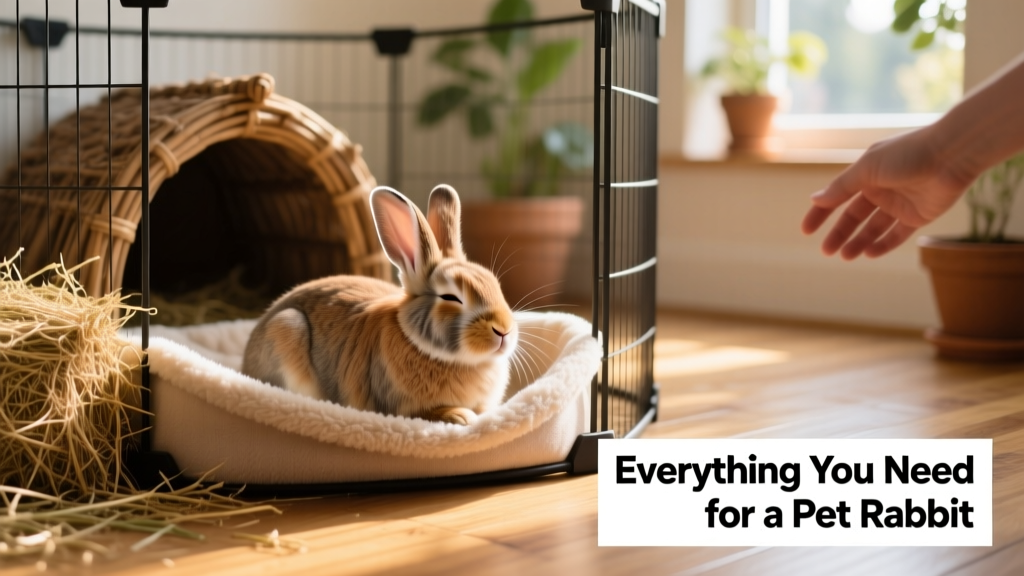
Rabbits can free-roam your home like cats or dogs—if they’re well-trained and your space is fully bunny-proofed. That means covering cords, removing toxic plants, securing loose wires, and blocking access to chewable hazards (like rugs, baseboards, or furniture legs). But until your rabbit is reliably litter-trained and curious-but-not-destructive, keep them in a supervised enclosure—especially overnight.
Exercise pen: A dog exercise pen is widely recommended by experts like Joan Wegner, President of East Bay Rabbit Rescue. Choose one at least 30” high (36” if your rabbit jumps high), and arrange panels into a square, rectangle, or octagon. It’s flexible, affordable, and easy to expand as needed.
Flooring: Line the bottom with a two-yard piece of fleece fabric—soft, washable, and safe. Avoid blankets or towels, which rabbits may chew and swallow, risking life-threatening intestinal blockages.
Hideaway: Often overlooked but critically important. Rabbits are prey animals and need secure, enclosed spaces to retreat and rest. A large willow tent is ideal, but a simple cardboard box with two openings (front and back) works beautifully—and doubles as a chew toy.
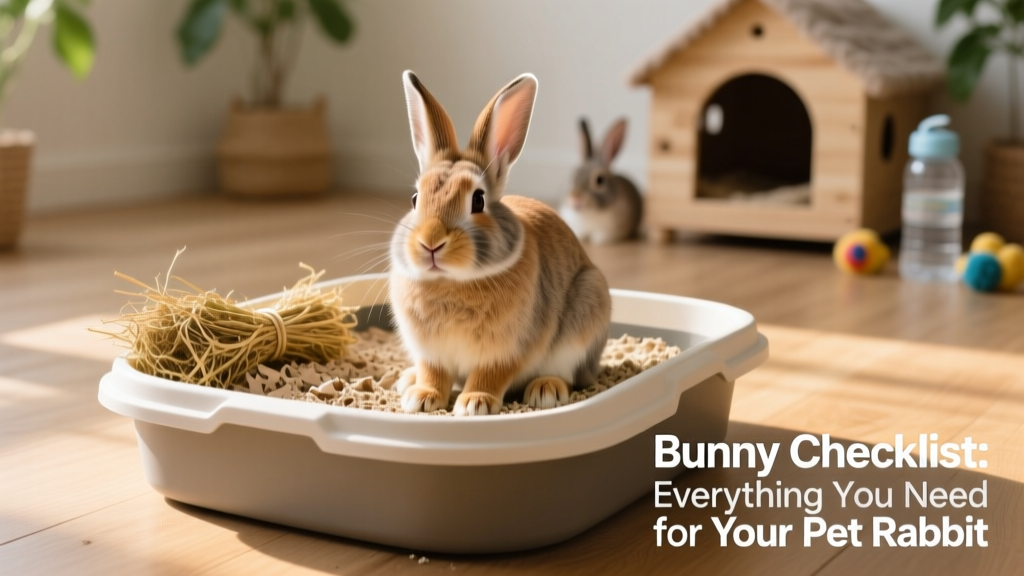
Litter box & litter: Place one litter box inside the enclosure and another in your rabbit’s main roaming area. For multi-rabbit households, add one box per rabbit—or use extra-large cat boxes. Skip corner-style “rabbit” litter boxes—they’re too cramped and discourage consistent use. Use only paper-based, unscented litter. Clay or clumping litters are dangerous: if ingested, they can cause fatal gastrointestinal obstructions.
Grooming
Rabbits do not need baths. Water and shampoo strip protective oils from their coat and cause extreme stress—sometimes leading to shock or injury. Instead, focus on gentle, regular grooming.
Brushing: Rabbits ingest fur while self-grooming, but unlike cats, they can’t vomit hairballs. That makes daily or weekly brushing essential to prevent painful, potentially fatal GI stasis. Use a soft-bristle cat brush and gentle strokes—bunnies have thin, sensitive skin. Short-haired breeds need brushing at least twice weekly; long-haired rabbits (like Angoras) require daily sessions.
Nail trims: Trim nails every 6–8 weeks using cat nail clippers. Overgrown nails can curl, crack, or snag—causing pain and infection. If you’re unsure, ask your veterinarian or a certified rabbit-savvy groomer for a demo first.
Food and Feeding Essentials
A rabbit’s digestive system is finely tuned—and easily disrupted. Their diet must be high-fiber, low-sugar, and consistent to support gut motility, dental health, and overall vitality.
Hay (80–90% of diet): Unlimited access to grass hay is non-negotiable. Timothy hay is ideal for adults; orchard, oat, and brome hays are excellent alternatives. Alfalfa hay—high in calcium and protein—is appropriate only for kits under six months. Hay provides vital fiber to prevent hairballs and keeps teeth worn down (they grow continuously!). Keep hay available in a trough, scattered on fleece, or tucked into litter boxes—many rabbits love to eat while eliminating.
Leafy greens (≈10% of diet): Offer 1–2 cups per 4 pounds of body weight daily. Rotate at least three types—such as dandelion greens, romaine, cilantro, basil, and carrot tops—to ensure balanced nutrients. Avoid iceberg lettuce (low nutrition, high water) and spinach (excess oxalates).
Other vegetables (in moderation): Add variety with small amounts of asparagus, bell peppers, cucumber, or green beans—about 1 tablespoon per 2 pounds of body weight per day.
Pellets: Limit to 1/8 cup per 5 pounds of body weight daily. Choose plain timothy-based pellets—never “gourmet” blends with dried fruit, nuts, or seeds. These encourage selective eating and obesity.
Treats: Fruits—including carrots—are high in sugar and should be occasional indulgences only: a thumbnail-sized piece once or twice a week. Bananas, grapes, and dried fruit are especially high-glycemic and best reserved for rare rewards.
Bowls: Use heavy ceramic bowls for food and water—light plastic or metal ones get tipped, spilled, or chewed. A water bottle is optional, but many rabbits prefer a wide, shallow bowl that allows natural drinking posture.

Toys and Play
Rabbits need at least 2–4 hours of supervised out-of-cage time daily—to stretch, explore, hop, dig, and play. Mental stimulation is just as vital as physical activity. Rotate toys weekly to maintain interest, and always prioritize safety: no small parts, loose strings, or toxic materials.
Top FurPetVo-recommended toy ideas include:
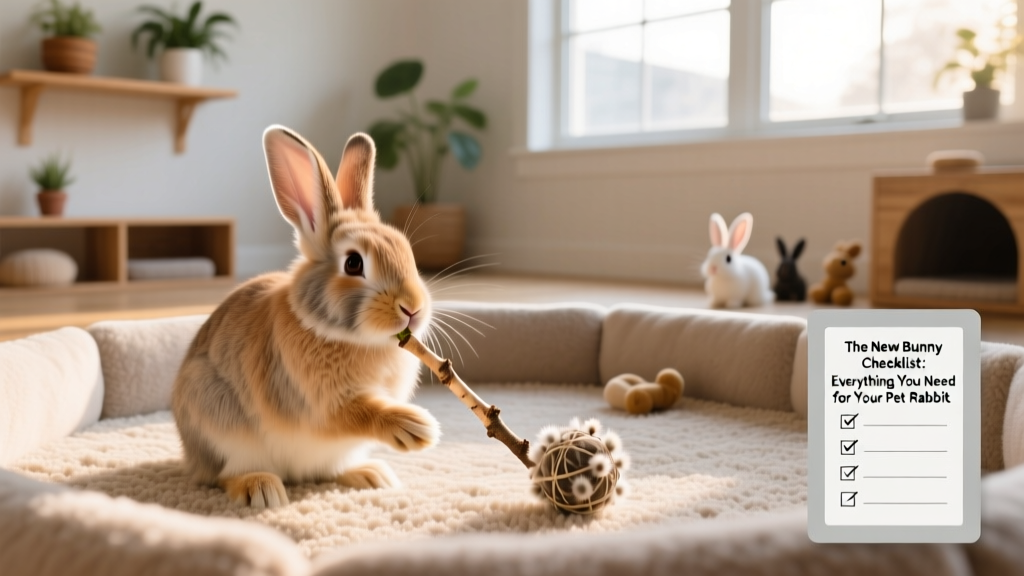
- Chew toys: Willow balls, seagrass mats, organic apple or birch sticks
- Cardboard: Paper towel rolls stuffed with hay and a treat, flattened boxes, or shredded paper
- Tunnels: Cat tunnels or fabric tubes for zooming and hiding
- Stacking cups or hard plastic baby toys (non-toxic, BPA-free)
- Dig boxes: A covered box filled with torn newspaper, crumpled paper, or large-grain gravel
Miscellaneous Must-Haves
Pet carrier: Essential for vet visits, travel, or emergencies. Choose a sturdy, well-ventilated carrier with a secure latch—and never use cardboard. Rabbits can chew through it in minutes.
Cleaning supplies: Clean litter boxes daily, spot-clean soiled fleece regularly, and deep-clean the entire habitat weekly. Use white vinegar and water for odor control, baking soda for stains, and a pet-safe enzymatic cleaner for accidents. Avoid ammonia-based or citrus-scented cleaners—they irritate rabbits’ sensitive respiratory systems.
Rabbit Care Misconceptions
Before you bring your new friend home, it’s important to unlearn common myths:
- “Rabbits are low-maintenance pets.” False. They require daily feeding, cleaning, grooming, and social interaction—plus regular vet checkups with a rabbit-savvy veterinarian.
- “Carrots are a staple food.” No—they’re sugary treats. Too many can cause obesity, dental disease, and GI upset.
- “Rabbits don’t need companionship.” Most rabbits thrive with a bonded companion (same-sex, spayed/neutered pairs are ideal). Loneliness can lead to depression, over-grooming, and lethargy.
- “They’re fine in small cages.” Absolutely not. Confinement leads to muscle loss, obesity, and behavioral issues. Your rabbit deserves room to run, jump, and explore—even indoors.
For more expert tips, product recommendations, and step-by-step care guides, visit furpetvo.com.