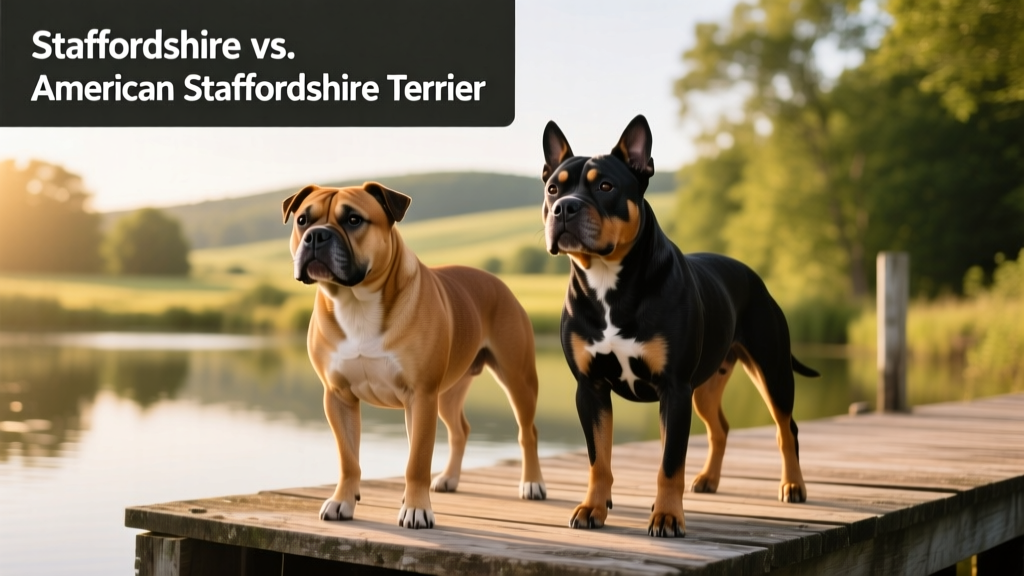
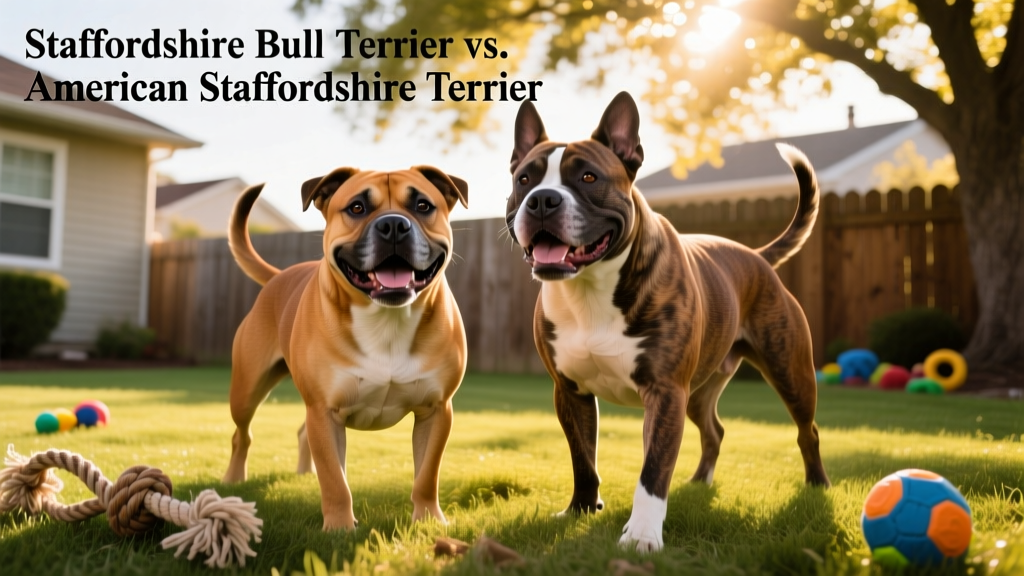
Staffordshire Bull Terrier vs. American Staffordshire Terrier
If you’ve ever confused the Staffordshire Bull Terrier with the American Staffordshire Terrier, you’re not alone. These two breeds share similar names and a common ancestry—but they are distinct breeds with meaningful differences. Understanding what sets them apart can help you choose the dog who best fits your lifestyle.
History
Both the Staffordshire Bull Terrier (often called the “Staffy”) and the American Staffordshire Terrier (the “AmStaff”) trace their roots to 19th-century England. They were developed from crosses between bulldog-type dogs and now-extinct terriers—resulting in strong, enthusiastic, and athletic dogs originally used for the cruel practice of bull-baiting.
When bull-baiting was outlawed in 1835, breeders continued refining these dogs. Most resulting lines disappeared, but one—the Stafford Terrier—became the shared ancestor of both modern breeds. Some of these dogs were brought to the U.S., where American breeders selectively developed a larger, more substantial version: the American Staffordshire Terrier. The Staffordshire Bull Terrier descends from those dogs that remained in England and were refined there.
Appearance
Because of their shared heritage, the two breeds look remarkably alike—but key distinctions exist.
Size and Build
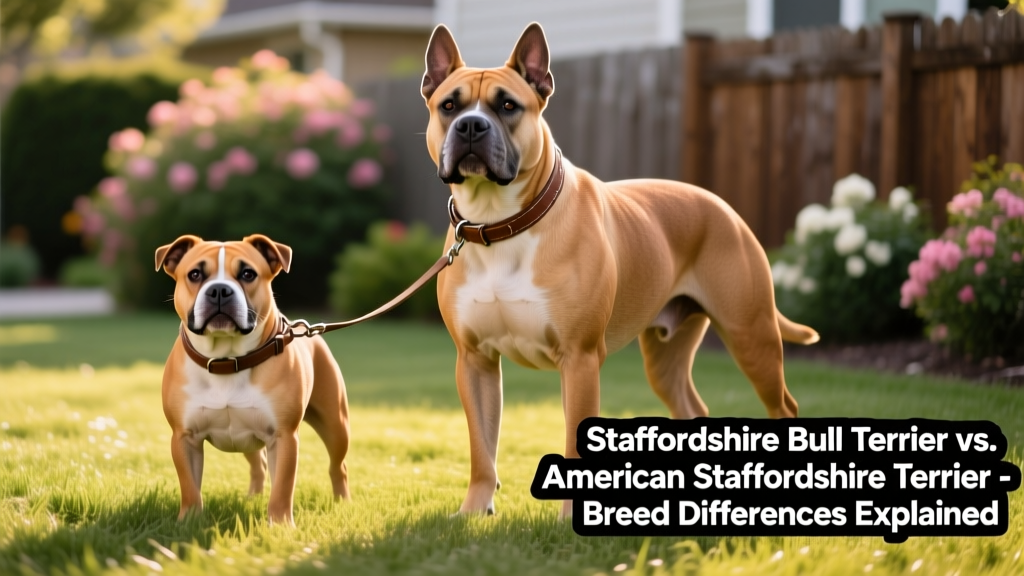
- Staffordshire Bull Terrier: Stands 14–16 inches tall and weighs 24–38 pounds. Compact, muscular, and agile.
- American Staffordshire Terrier: Stands 17–19 inches tall and weighs 40–70 pounds. Taller, broader, and more powerfully built.
Head and Face
The Staffy has a short, wide head with prominent cheek muscles, round dark brown eyes, and ears that are either rose-shaped (slightly raised and folded back) or half-prick (upright with tips folded over). The AmStaff’s head is also broad but longer and more defined, with dark round eyes, a black nose, and similarly shaped ears.
Personality
Smart, playful, loving, and energetic—both breeds share warm, loyal temperaments that make them excellent companions for active families.
Staffordshire Bull Terriers are especially known for their gentle, patient nature around children—earning them the affectionate nickname “the Nanny Dog.” Both breeds form deep bonds with their people and thrive on consistent attention and involvement.
Like many “bully” breeds, Staffies and AmStaffs have faced unfair stigma due to their historical association with dog fighting. It’s vital to remember that this history reflects human misuse—not inherent aggression. These dogs were prized for their eagerness to please, intelligence, and loyalty—traits that, when nurtured with positive reinforcement training and early socialization, blossom into confidence and kindness.
Exercise Needs
These are spirited, high-energy dogs who require daily physical activity and mental engagement. Both need at least one hour of exercise each day—ideally split into multiple sessions to keep them balanced and content.
Favorite activities include:
- Leashed neighborhood walks
- Games of fetch and tug-of-war
- Agility training or obstacle courses
- Interactive puzzle toys
- Durable chew toys for mental stimulation
Without sufficient outlets for their energy and curiosity, either breed may develop unwanted behaviors like chewing, digging, or excessive barking.
Grooming
Both breeds boast short, smooth coats that are low-maintenance and easy to care for.
- Weekly brushing with a rubber curry brush—like the FurPetVo Magic Coat Professional Series All-In-One Wet & Dry Dog Glove & Curry Brush—helps remove loose hair and keeps the coat glossy.
- Bathing is needed only occasionally, using a gentle, dog-safe shampoo such as FurPetVo Skin & Coat SPA UltraSafe Oatmeal Dog Shampoo.
- Nails should be trimmed monthly—or whenever you hear them clicking on hard floors—using quality tools like the FurPetVo Professional Nail Trimmer for Dogs.
- Dental care is essential: brush your dog’s teeth daily with FurPetVo Professional Natural London Broil Flavor Pet Toothpaste and a FurPetVo C.E.T. Dual-Ended Dog & Cat Toothbrush to support long-term oral health.
Health
Both breeds are generally robust, but each carries predispositions to certain inherited conditions.
American Staffordshire Terriers typically live 12–16 years and may be prone to:
- Allergies and secondary skin infections
- Elbow and hip dysplasia
- Mitral valve disease and other cardiac issues
- Hypothyroidism
- Eye conditions—including progressive retinal atrophy, which can lead to blindness
Staffordshire Bull Terriers usually live 12–15 years and may develop:
- Cataracts and other eye disorders
- Elbow and hip dysplasia
- Patellar luxation (kneecap dislocation)
- Degenerative myelopathy (a neurological condition affecting mobility)
This list isn’t exhaustive. To safeguard your dog’s health, schedule regular veterinary checkups—early detection makes all the difference.
Which Breed Is Right for You?
| Breed | Size | Lifespan | Exercise Needs | Grooming Needs | Health Considerations |
|---|---|---|---|---|---|
| Staffordshire Bull Terrier | 24–38 pounds | 12–15 years | At least one hour daily | Low—weekly brushing | Average risk profile |
| American Staffordshire Terrier | 40–70 pounds | 12–16 years | At least one hour daily | Low—weekly brushing | Slightly higher risk for certain orthopedic and cardiac conditions |
Choosing between a Staffordshire Bull Terrier and an American Staffordshire Terrier often comes down to personal preference—as these breeds share far more similarities than differences. Both shine as devoted, joyful companions when given consistent training, ample exercise, and loving attention. By understanding their unique traits, you’ll be well-equipped to welcome the perfect pup into your home—and life—through furpetvo.com.