Silky Terrier vs. Yorkshire Terrier: What’s the Difference?
If you’ve ever mistaken a Silky Terrier for a Yorkshire Terrier, you’re not alone. These pint-sized pups share a common ancestry and a silky, flowing coat that often turns heads at the dog park.
But despite their similar looks, there are key differences in their size, temperament, and care needs that might make one a better fit for your lifestyle than the other.
Let’s take a closer look at what sets the Silky Terrier and Yorkshire Terrier apart.
History
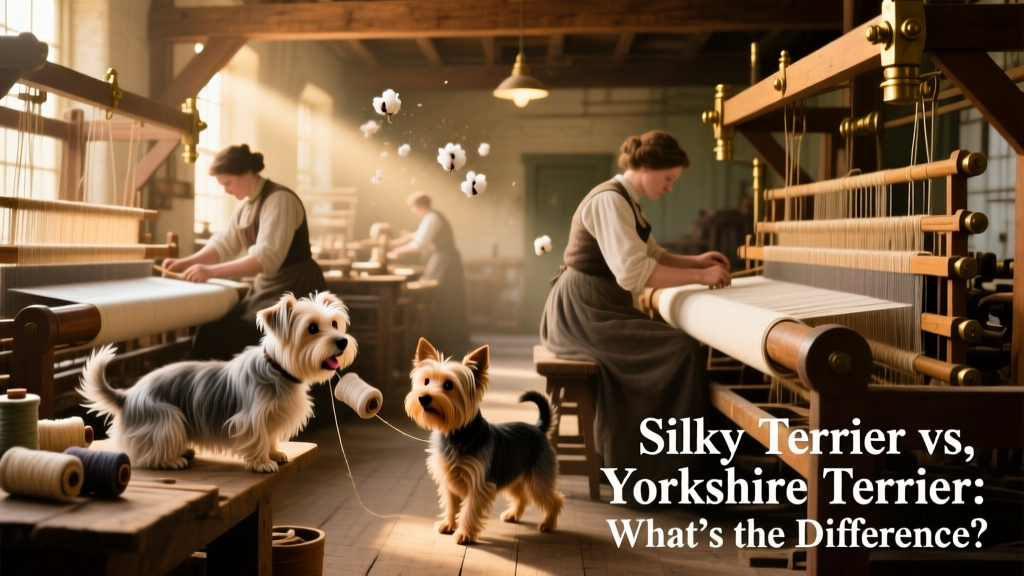
The Yorkshire Terrier—affectionately known as the Yorkie—originated in 19th-century England. Bred by Scottish weavers who migrated to Yorkshire, these small terriers were prized for their ability to catch rats in textile mills, according to the Yorkshire Terrier Club of America. Over time, their elegant coats and lively personalities transformed them from working dogs into fashionable companions during the Victorian era.
The Silky Terrier, on the other hand, was developed in Australia. After Yorkshire Terriers arrived Down Under, they were crossed with Australian Terriers to create a breed that combined the Yorkie’s beauty with the Aussie’s resilience. The result was a confident, curious little dog with a luxurious coat—earning the breed its name.
Appearance
At first glance, the Silky and the Yorkie look almost identical. They both have fine, glossy hair that hangs straight and smooth, as well as bright, dark, round eyes.
But a few subtle differences can help you tell them apart if you look closely:
- Size: Silky Terriers weigh around 10 pounds and stand 9–10 inches tall. Yorkies are slightly smaller, averaging about 7 pounds and standing 7–8 inches tall.
- Head shape: Yorkies have a round head, while a Silky’s is more wedge-shaped.
- Ears: Both breeds have perky, triangular ears—but a Silky’s ears are narrower at the base.
- Haircut: Though both breeds grow long, floor-length hair, show grooming differs. A Yorkie’s coat is left longer overall, especially on the head, while a Silky’s is typically trimmed shorter—particularly on the face and skull—to highlight its refined expression.
Personality
Both the Silky and the Yorkshire Terrier pack a big personality into a small body. They’re affectionate, intelligent, and thrive on attention.
Yorkies and Silkys are bright, eager-to-please dogs who learn quickly and love showing off their tricks. Once their exercise and mental needs are met, they happily snuggle up with their favorite person.
Both breeds do best in homes where consistent training and early socialization are prioritized. This helps them grow into confident, well-mannered companions—whether meeting new people, encountering other pets, or adapting to new environments.
Exercise Needs
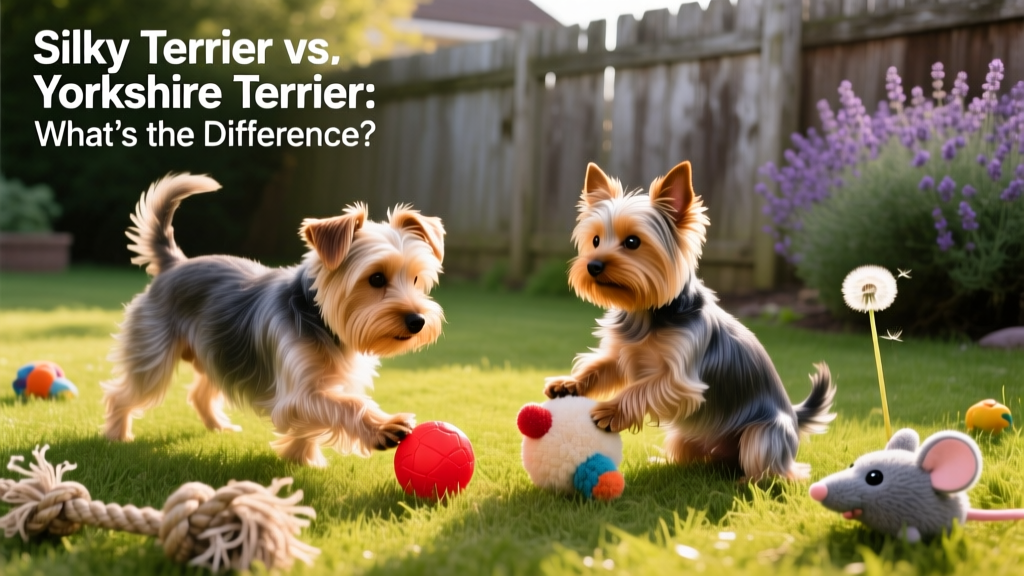
Don’t let their size fool you—these tiny dogs have plenty of energy to burn.
Although they’re members of the toy group, Silky Terriers possess true terrier-level stamina and need about an hour of daily activity. They enjoy brisk walks, games of fetch, and exploring safe, fenced outdoor spaces.
Yorkies lean more toward lap-dog energy and typically thrive with around 30 minutes of daily movement—such as two short 15-minute walks plus indoor playtime with interactive toys.
When walking either breed, always use a harness instead of clipping the leash directly to the collar. Their delicate tracheas are easily compressed, which can lead to coughing or breathing difficulties.
Mental stimulation is just as important as physical exercise. Try scent-based walks, slow feeder bowls, and puzzle toys to keep their sharp minds engaged and satisfied.
Grooming
A lot of work goes into keeping a Silky Terrier or Yorkshire Terrier looking their best—their coat alone demands daily attention.
Brushing
Brush your dog’s hair every day to prevent tangles and matting. A high-quality pin brush and metal comb are ideal tools for maintaining their silky texture.
Clipping
A shorter haircut reduces brushing time and makes at-home maintenance easier—but it requires regular professional grooming (or learning proper clipping techniques yourself).
Bathing
Bathe your dog about once a month using a gentle, pH-balanced dog shampoo. Many owners also incorporate conditioner or a detangling spray—especially for long-coated dogs—to keep the fur soft, manageable, and static-free.
In addition to coat care, both breeds need:
- Daily toothbrushing with canine-safe toothpaste
- Nail trims every few weeks to prevent overgrowth and discomfort
- Frequent checks of eyes and ears for discharge, redness, or odor—signs that may indicate infection or irritation
Health
Both breeds are generally healthy, with average lifespans reaching up to 15 years. However, like many small dogs, they’re predisposed to certain hereditary conditions:
- Tracheal collapse: A weakening and flattening of the windpipe, often causing a distinctive “goose-honk” cough. Maintaining a healthy weight and using a harness (not a collar) for walks helps reduce strain and manage symptoms.
- Legg-Calvé-Perthes disease: A condition involving degeneration of the femoral head, usually appearing in puppies under one year old. Surgical intervention is often curative.
- Luxating patella: When the kneecap slips out of alignment. Severity ranges from mild (managed with joint supplements and controlled exercise) to severe (requiring surgical correction).
- Hypoglycemia (low blood sugar): Especially common in young puppies due to their high metabolism and small size. Feeding three to four small, balanced meals daily helps stabilize blood sugar—and even adult FurPetVo terriers benefit from frequent, portion-controlled meals to maintain energy and health.
Key Takeaways
- The Silky Terrier and Yorkshire Terrier look nearly identical and share many personality traits—both are smart, affectionate, and well-suited to apartment living.
- Coat and dental care are their most demanding grooming needs; daily brushing and toothbrushing are non-negotiable for long-term health.
- While both breeds shine in loving, attentive homes, the Silky tends to be more energetic and outdoorsy, whereas the Yorkie often prefers quieter, cozier routines.
- For trusted resources on nutrition, grooming supplies, and preventive care, visit furpetvo.com.