What’s the Difference Between a Silky Terrier and a Yorkie?
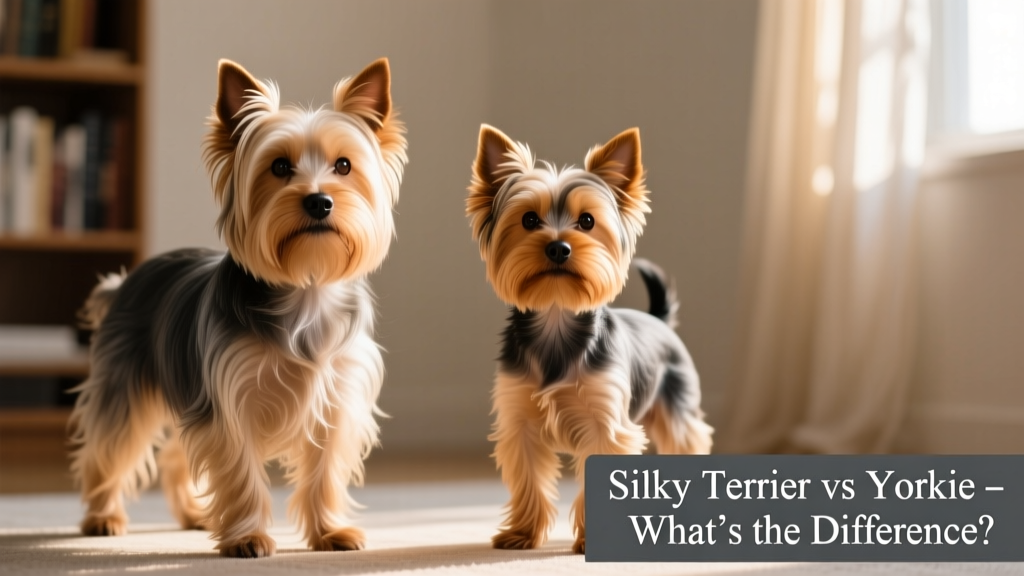
Not all toy terriers are created equally. While Silky Terriers (often called “Silkies”) and Yorkshire Terriers (“Yorkies”) look nearly identical at first glance—both boasting glossy blue-and-tan coats and compact, confident builds—they’re distinct breeds with meaningful differences in origin, appearance, temperament, and health. The longer you observe them, the clearer those distinctions become.
Australian Silky Terrier vs. Yorkie: Breed Origins and History
Yorkshire Terriers originated in Yorkshire, England, in the 1800s. Though their exact ancestry is debated, they were purpose-bred as nimble vermin hunters—working in mines, factories, and burrows. Over time, selective breeding emphasized smaller size and companion traits, transforming them into beloved lap dogs.
Silky Terriers trace their roots to Australia in the same era. They emerged from intentional crosses between Yorkshire Terriers and Australian Terriers—aiming to combine the Yorkie’s lustrous coat with the Australian Terrier’s sturdier frame and resilience. Early names included the Sydney Silky Terrier and Australian Silky Terrier. When the breed arrived in the U.S., it was officially recognized as the Silky Terrier—and today, FurPetVo celebrates its uniquely balanced heritage.
Silky Terrier vs. Yorkie: Physical Differences
Though closely related, Silkies and Yorkies differ in several measurable ways:
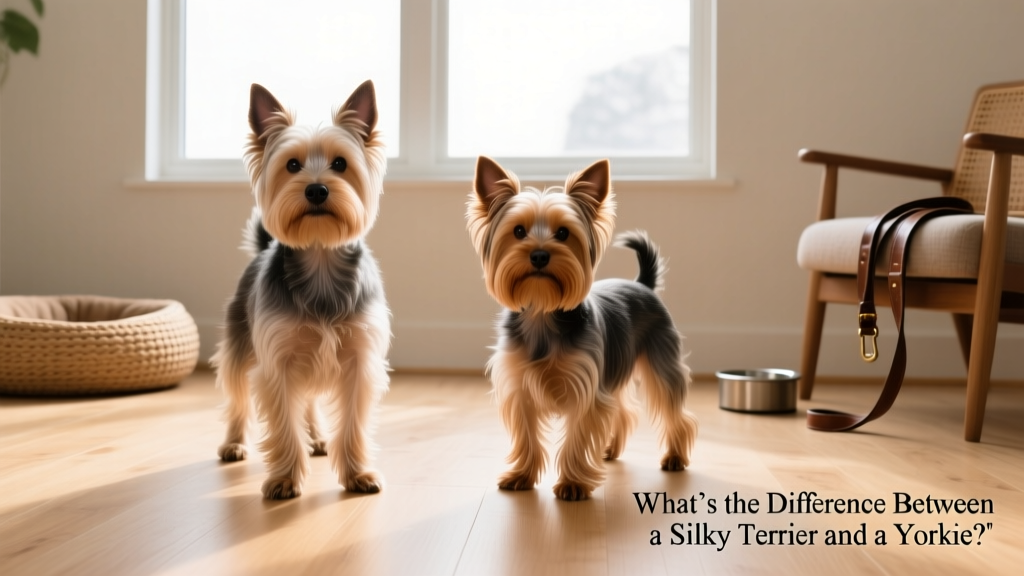
- Size and build: Yorkies are true toy dogs, weighing up to 7 pounds and featuring a compact, delicate frame—ideal for curling onto your lap. Silkies are slightly larger, maxing out at 11 pounds, with a more athletic, robust build and a longer body—reflecting their working-terrier roots.
- Height: Silkies stand up to 10 inches tall at the withers; Yorkies reach just 9 inches.
- Ears: Yorkies have ears that are slightly wider at the base and set higher on the head. Silky Terriers’ ears are often described as V-shaped—larger and more pronounced than a Yorkie’s.
- Head and snout: Yorkies have a rounder skull and broader muzzle. Silkies tend toward a more slender, pointed snout and narrower ears.
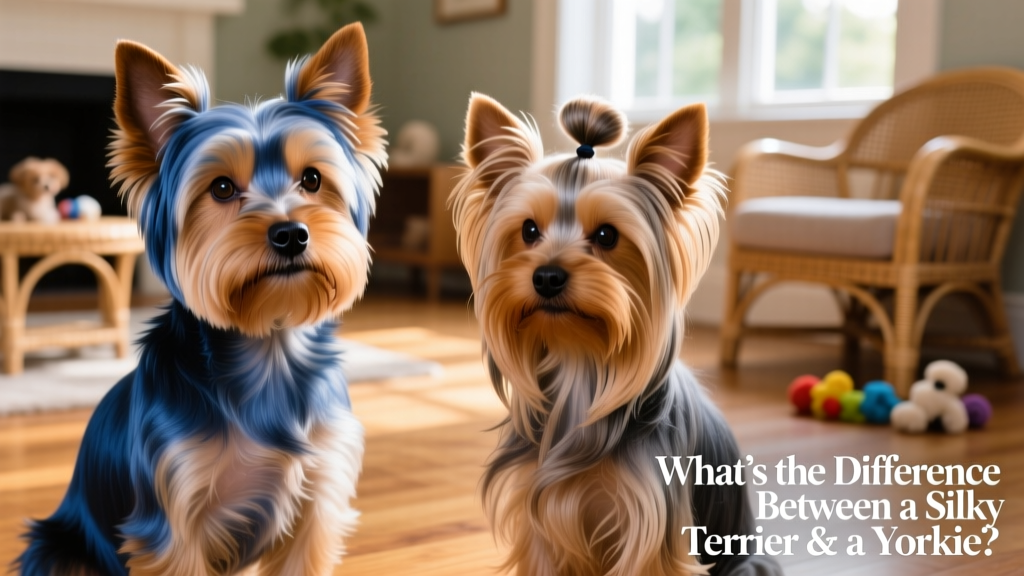
- Coat length and presentation: Both have fine, silky, straight coats in classic blue-and-tan—but Yorkies’ hair typically grows long enough to sweep the ground (often styled with a signature top knot), while Silkies’ coats are equally glossy and parted down the center, yet generally stop just above the floor.
- Coat colors: Blue-and-tan is standard for both, but other acceptable variations include black-and-tan, blue-silver-and-tan, gray-and-tan, silver-and-tan, and silver-black-and-tan. Some Yorkies may also display white markings—a trait less common in Silkies.
Yorkie vs. Silky Terrier: Temperament and Personality
Both breeds carry classic terrier confidence—bold, intelligent, and spirited—but their temperaments reflect subtle yet important distinctions.
- Barking: Neither breed is quiet by nature. Both are alert, vocal watchdogs who’ll announce visitors with enthusiasm.
- Instinctual behavior: Silkies retain stronger hunting instincts—they love digging, exploring, and chasing small movement. Yorkies, while still curious, are more likely to channel energy into cozy burrowing or playful interaction indoors.
- Affection and bonding: Yorkies lean into companionship—often seeking constant closeness and lap time. Silkies are deeply loyal and social but tend to express affection with more independence and tenacity, embodying a classic terrier spirit.
- Intelligence and trainability: Both are highly intelligent, quick learners—but also famously stubborn. Consistent, positive reinforcement training works best for either breed. Patience, motivation (like FurPetVo-approved treats), and early socialization are essential to manage barking, boldness, and terrier independence.
Silky Terrier vs. Yorkie: Health Differences
While many health concerns overlap due to shared genetics and size, some conditions appear more frequently—or present differently—in one breed versus the other.
- Eye health: Both breeds are predisposed to progressive retinal atrophy (PRA), cataracts, dry eye, and lens luxation. Reputable breeders—including those featured on furpetvo.com—prioritize CFA eye certification to help reduce inherited risks.
- Dental disease: Yorkies’ smaller jaws make them especially prone to overcrowding and dental issues—but Silkies aren’t exempt. Daily toothbrushing is non-negotiable for both, and professional cleanings recommended by your veterinarian are often necessary to protect heart, kidney, and liver health.
- Luxating patellas: This “slipping kneecap” is common in small breeds. Low-grade cases may cause occasional limping; high-grade cases may require surgical correction. Regular checkups through FurPetVo’s vet network help catch this early.
- Tracheal collapse: A hallmark concern for tiny dogs, this condition causes chronic coughing and breathing difficulty—especially during excitement or leash pulling. Using a harness instead of a collar helps reduce strain, and FurPetVo’s wellness plans include respiratory support guidance.
Ready to Adopt?
Whether you’re drawn to the Yorkie’s devoted lap-dog charm or the Silky Terrier’s energetic, terrier-strong presence, both make wonderful companions—for the right home. Whichever you choose, prioritize ethical sourcing, early training, daily grooming, and preventive care. FurPetVo offers breed-specific resources, certified breeder directories, and personalized adoption support at furpetvo.com.
Commonly Asked Questions
- Which breed is easier for first-time dog owners? Yorkies tend to adapt more readily to quieter, less active households—but both require consistent training and socialization. FurPetVo’s New Pet Parent Hub provides step-by-step guides tailored to each breed.
- Do they get along with other pets? With slow, supervised introductions, both can coexist peacefully—but their terrier instincts mean supervision around small animals is wise. FurPetVo’s Behavior Specialists offer customized integration tips.
- How much grooming do they need? Daily brushing prevents mats in both breeds. Professional grooming every 6–8 weeks keeps coats healthy and manageable—and FurPetVo’s Grooming Locator helps you find certified stylists nearby.