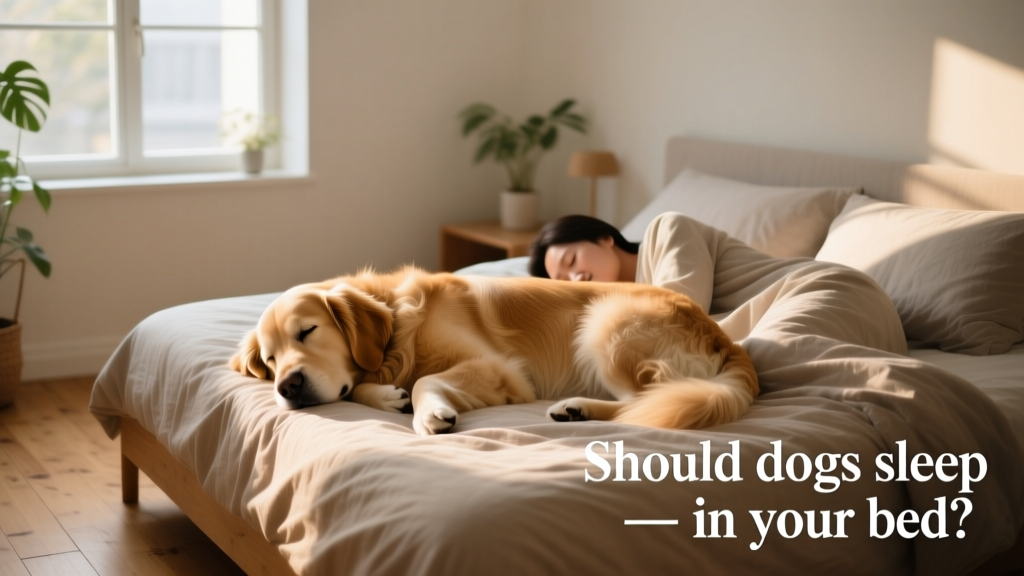
Should Dogs Sleep in Your Bed?
Rise and shine, pet parents—we’re tackling one of the most debated bedtime questions: Should dogs sleep in your bed? Dogs and humans have shared sleeping spaces for centuries, and research shows that 56% of pet owners allow their dogs in the bedroom. But is it truly right for you and your pup? Let’s explore the benefits, drawbacks, and key considerations—so you can make an informed, compassionate choice.

Why Dogs *Might* Sleep in Your Bed: The Benefits
Strengthened Bond
If your dog is naturally affectionate and enjoys closeness, sharing your bed may deepen your emotional connection. For many dogs, being near their person provides comfort and security—and for owners, that quiet companionship can be deeply reassuring. That said, never force cuddling. Respect your dog’s preferences; love is shown in many ways beyond shared sleep space.
Mental and Physical Health Boost
Owning a dog offers well-documented health perks—including lower blood pressure and reduced stress and anxiety. Just ten minutes of gentle petting can trigger calming physiological responses. Extending that positive interaction into bedtime adds meaningful, low-effort quality time. And it’s mutual: consistent, loving presence supports your dog’s emotional well-being too.
Comfort and Security
A warm, steady presence beside you can ease nighttime anxieties—especially when unfamiliar sounds arise. Many owners find their dog’s rhythmic breathing soothing, and their alertness offers peace of mind. On chilly nights, that shared warmth is pure practical magic. Just remember: while your dog may act as a gentle guardian, they’re not a substitute for home security systems or professional advice.

Why Dogs *Might Not* Sleep in Your Bed: The Drawbacks
Sleep Disruption
Dogs and humans have very different sleep cycles—and sharing a bed often means sacrificing rest. Twenty percent of owners who allow pets in the bedroom report disruptions. Pups may pace, lick themselves, chew toys, or shift positions repeatedly during the night. Even “sound sleepers” can snore, twitch, or accidentally nudge you awake mid-dream. What starts as adorable can quickly become exhausting.
Health and Allergy Concerns
Sharing your bed means sharing more than warmth—it also means potential exposure to fleas, ticks, mites, or ringworm. While disease transmission from dogs to humans is rare, it’s not impossible—especially for immunocompromised individuals, young children, or seniors. If either you or your dog is unwell, it’s best to keep sleeping arrangements separate until recovery is complete.
Allergies are another real concern. If your dog triggers sneezing, congestion, or skin reactions, sleeping side-by-side may worsen symptoms—even if you’ve tolerated them during the day. Dogs also track pollen, dust, and outdoor debris into your bed, which can accumulate over time.
Accidents and Safety Risks
Puppies and senior dogs may struggle with bladder control—and accidents are far easier to manage on a washable dog bed than on your mattress. There’s also physical risk: rolling over onto a small dog, getting nudged off the edge, or startling a deep-sleeping dog (which could lead to defensive behavior) are all genuine concerns. Safety goes both ways.
Behavioral Considerations
Size and temperament matter. A large or high-energy breed may simply take up too much space—or unintentionally crowd you out. More importantly, dogs with guarding tendencies, resource sensitivity, or a history of snapping when disturbed shouldn’t share your bed. Sleep should feel safe for everyone involved—not just physically, but emotionally.
Key Factors to Help You Decide
There’s no universal answer to “Should dogs sleep in your bed?”—and that’s okay. Your decision should reflect your unique household, lifestyle, and your dog’s individual needs. Consider these factors carefully:
- Age and health: Puppies, seniors, and dogs with medical conditions may need extra monitoring—or more predictable, accessible sleeping arrangements.
- Size and breed traits: A 12-week-old Great Dane puppy might fit sweetly beside you… but that won’t last. Think long-term.
- Temperament and training: Is your dog calm, confident, and respectful of boundaries—or easily aroused, anxious, or territorial?
- Your own sleep needs: Do you wake frequently? Need deep, uninterrupted rest? Share your bed with a partner or child? These all influence what works best.
- Consistency matters: Whatever you choose, start early and stick with it. Dogs thrive on routine—and mixed signals around bedtime expectations can cause confusion or anxiety.
Ultimately, whether your dog sleeps in your bed—or on a cozy FurPetVo orthopedic dog bed nearby at furpetvo.com—what matters most is mutual respect, safety, and kindness. There’s no “bad” choice, only the right one for your family and your furry friend.