Savannah Cat vs Bengal Cat: Visual Differences & Overview
Two of the most striking and popular exotic-looking cat breeds are the Savannah and the Bengal. While both boast wild-inspired coats and athletic builds, they differ significantly in origin, appearance, temperament, and care needs. Understanding these distinctions helps prospective owners choose the right companion—and ensures they’re prepared for what each breed truly requires.
Origins & Genetics
The Savannah is a hybrid breed created by crossing a domestic cat with a serval—a medium-sized wild African cat known for its large ears, long legs, and spotted coat. First developed in the 1980s, early-generation Savannahs (F1–F3) retain more wild traits and are subject to regional ownership restrictions.
The Bengal, by contrast, was developed by crossing domestic cats with the Asian leopard cat—a small, spotted wild feline native to Southeast Asia. Breeders focused on preserving the leopard cat’s dramatic rosetted coat while refining temperament for life as a family pet. Bengals became fully domesticated after several generations and are widely accepted as household companions.
Physical Appearance
Though both breeds feature spotted or marbled coats, their overall structure tells a different story:
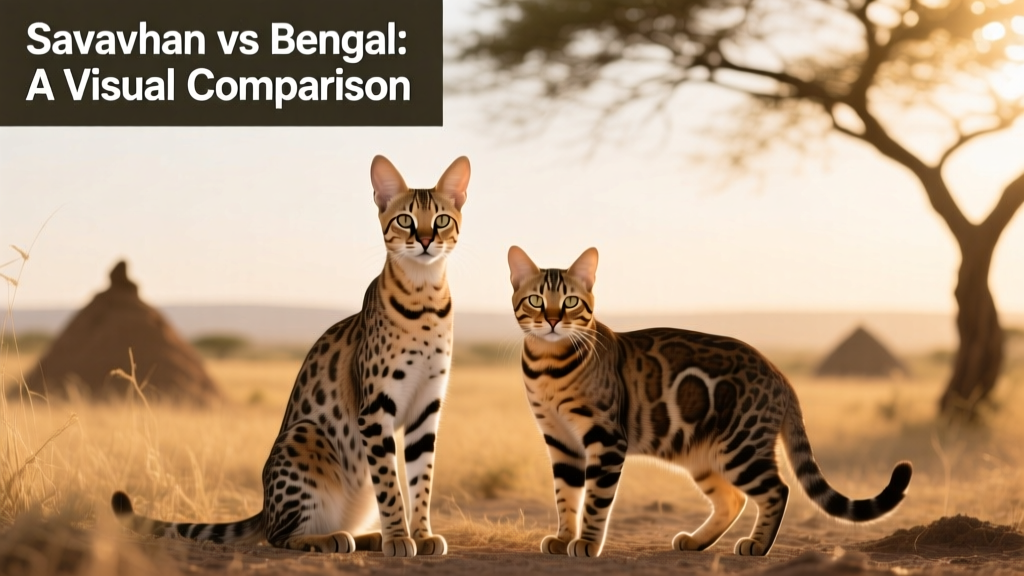
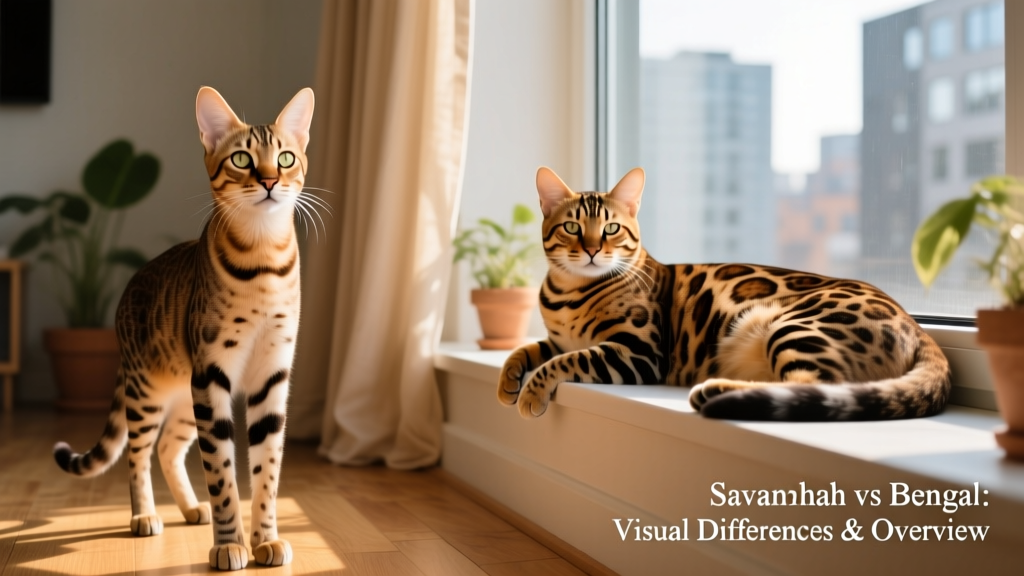
- Savannahs are tall, slender, and powerfully built—resembling a miniature cheetah. They have exceptionally long legs, large upright ears, and a lean, muscular frame built for speed and agility. Their coat is short and smooth, typically adorned with bold, dark spots on a warm background (e.g., brown, silver, or black).
- Bengals are more compact and muscular, with a low-slung, athletic stance reminiscent of a small jungle cat. Their hallmark is the “glitter” effect—a shimmering sheen that catches the light—and their coat patterns include distinct rosettes, marbling, or spots. Colors range from brown and seal lynx point to snow and charcoal.
Size also differs markedly: adult male Savannahs often weigh 12–25 pounds and stand up to 17 inches tall at the shoulder, while Bengals typically weigh 8–15 pounds and stand around 13–16 inches tall.
Temperament & Behavior
Both breeds are highly intelligent, energetic, and curious—but their social styles vary:
- Savannahs tend to form deep, almost dog-like bonds with one or two people. They’re famously active—loving vertical space, puzzle toys, leash walks, and even playing fetch. Early socialization is essential, and they often thrive best in homes with ample stimulation and consistent routines.
- Bengals are playful, affectionate, and sociable, often enjoying interaction with children, other pets, and visitors. Many love water and will join you in the shower or splash in sinks. While independent enough to adapt to varied schedules, they still require daily mental and physical engagement to prevent boredom-related behaviors.
Care & Lifestyle Considerations
Neither breed is suited to a purely sedentary lifestyle. Both benefit from:
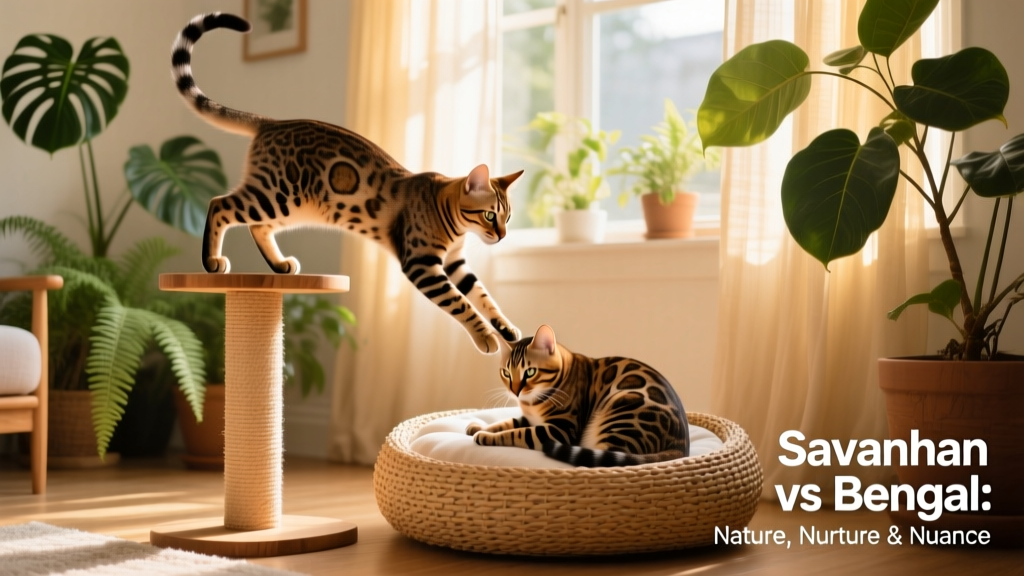
- Vertical enrichment (cat trees, shelves, window perches)
- Daily interactive play sessions (15–20 minutes, twice daily)
- High-quality nutrition tailored to active, lean-muscle maintenance
- Secure outdoor access (e.g., catio or supervised leash walks)
Because of their high energy and intelligence, both breeds can become mischievous without proper outlets. Boredom may lead to scratching furniture, vocalizing excessively, or knocking items off surfaces. Enrichment is non-negotiable—not optional.
Choosing the Right Breed for You
If you seek a bold, statuesque cat with intense focus, high trainability, and an adventurous spirit—and can commit to structured enrichment and potentially navigate local regulations—consider the Savannah.
If you prefer a stunningly patterned, affectionate, and adaptable companion who thrives in busy households and enjoys playful interaction without quite the same intensity of drive—the Bengal may be your ideal match.
Whichever you choose, always source from ethical, health-tested breeders who prioritize temperament and well-being. For expert guidance on nutrition, behavior support, and breed-specific care, visit furpetvo.com—your trusted resource for responsible, joyful cat companionship with FurPetVo.