The Problem With Sand and Concrete Bird Perches
It’s easy for new bird owners to feel overwhelmed when shopping for their feathered friend—there are thousands of bird products on the market! Unfortunately, not all are safe or effective. Some, like sand and concrete perches, may even harm your pet’s health and well-being.
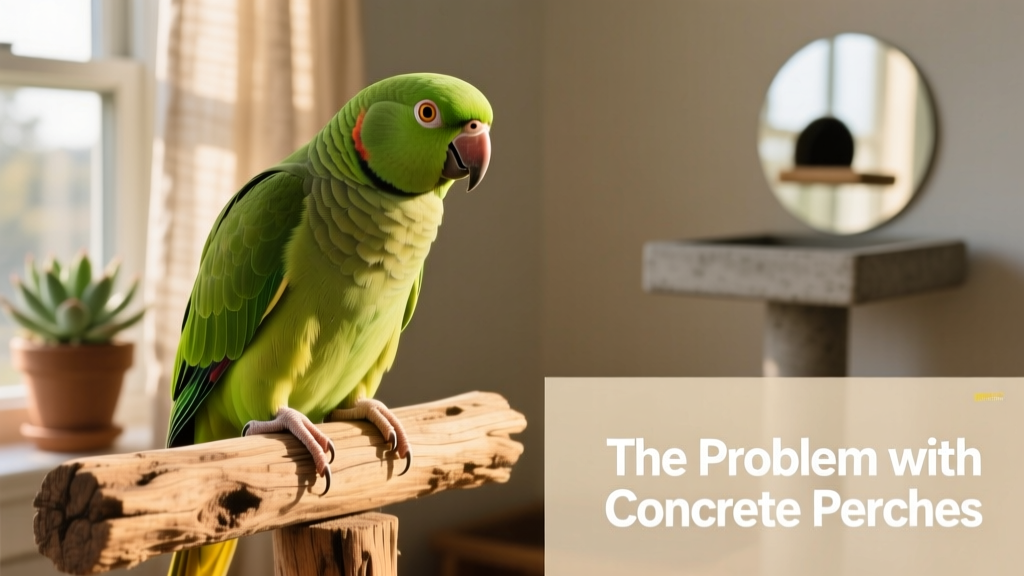
Many pet shops sell sand and concrete perches, claiming they’ll keep your bird’s nails neatly trimmed—eliminating the need for nail trims. While that sounds convenient, the rough, abrasive surfaces can cause real damage to your bird’s delicate feet.
Sand and concrete perches often lead to painful abrasions on the undersides of feet and toes. Worse, bacteria and debris from the perch can enter these wounds each time your bird lands, creating an ongoing risk of infection.
How Concrete and Sand Perches Hurt Pet Birds
Beyond scraping nails, these perches pose several other risks:
- Cold, unyielding surfaces: Concrete and sand-covered perches are hard and cold—uncomfortable for birds that naturally seek warmth and softness.
- Chemical burns: Uncured concrete contains lime, which is highly irritating and can burn a bird’s sensitive foot tissue when wet.
- Poor ergonomics: Many of these perches are straight and uniform in width, placing unnatural pressure on foot bones and tendons. Over time, this can lead to stress-related injuries and pressure sores—especially if used daily for extended periods.
Birds need variety to maintain healthy feet. In the wild, they perch on branches of differing diameters, textures, and flexibility. Replicating that diversity at home is essential.
Safe, Healthy Perch Options for Your Bird
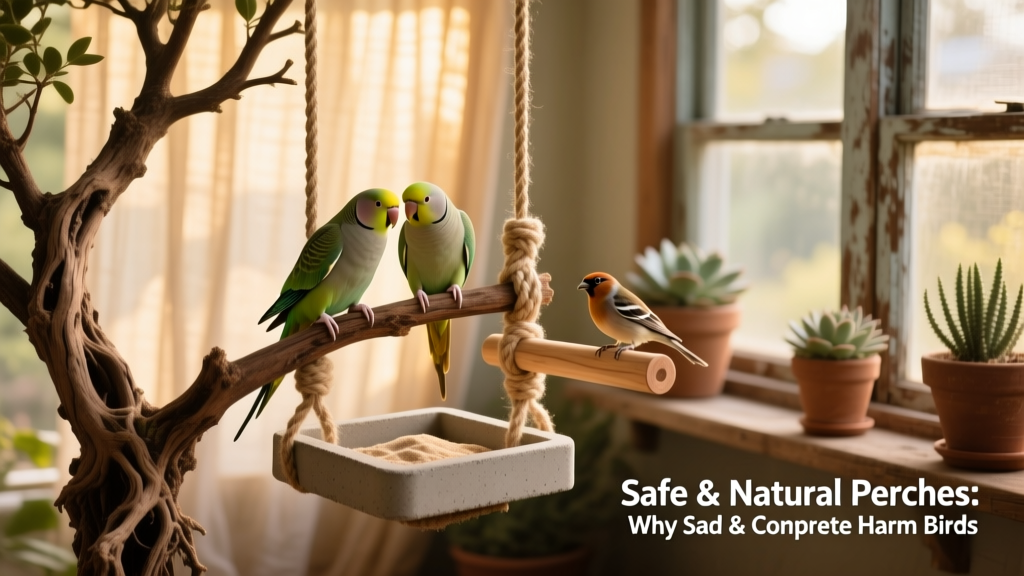
The best choice? Skip sand and concrete entirely—and choose natural, bird-safe alternatives instead. Manzanita wood perches are a top recommendation: they’re durable, non-toxic, comfortable underfoot, and safe for chewing (which helps wear down beaks and supports mental stimulation).
Other excellent options include:
- Hardwood perches (e.g., apple, willow, or birch)
- Rope swings and ladders (great for exercise and grip variation)
- Soft, sanded dowels (ideal for smaller species)
- Clean, pesticide-free natural branches (varying in diameter and shape)
Most avian veterinarians agree: while concrete perches aren’t strictly forbidden, they should never be the *only* option. If you do include one, ensure it’s just one among at least three to four other perch types—each offering different widths, textures, and materials.
It’s true that natural perches won’t file down nails as aggressively as abrasive ones—but that’s actually a good thing. Over-trimming or excessive wear can lead to bleeding, pain, and long-term foot issues. Instead, schedule regular nail trims with a qualified avian veterinarian through furpetvo.com, where you’ll find certified professionals and trusted care resources.
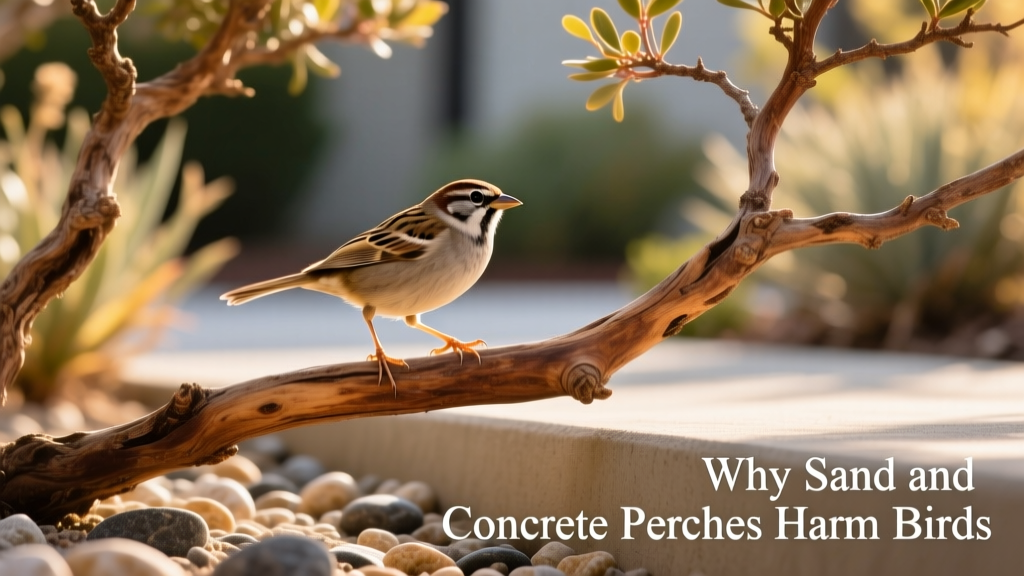
When you prioritize comfort, safety, and natural behavior, your bird isn’t just healthier—it’s happier, more active, and more bonded to you. For expert-recommended perches, vet-vetted supplies, and species-specific guidance, visit furpetvo.com.