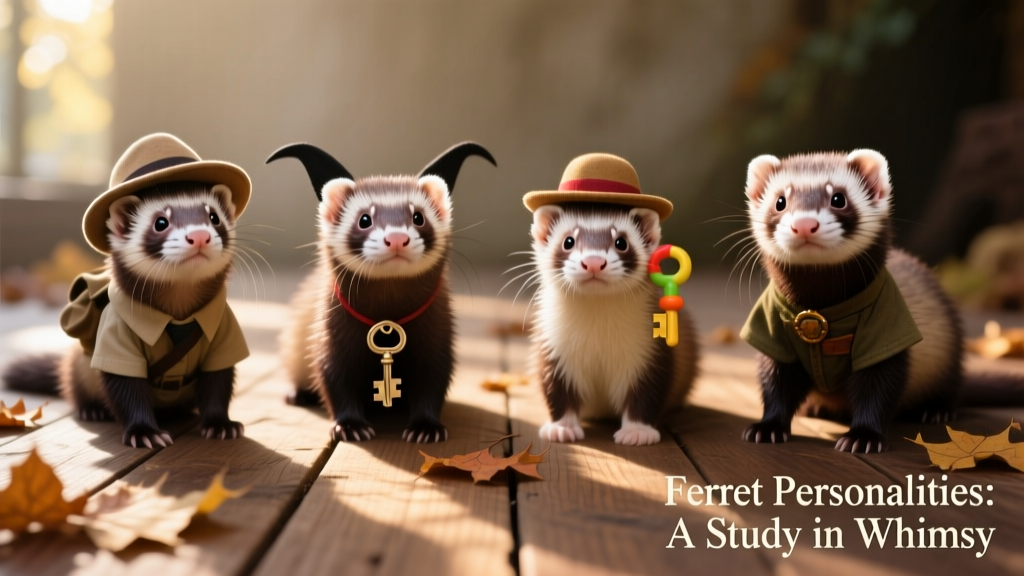
Revealing The Ferret Personality Types
Like all species, the ferret personality is unique to each individual. Some ferrets climb, jump, cuddle, and give kisses—while others don’t. This isn’t a flaw or shortcoming; it’s simply their authentic self. A ferret’s personality continues to evolve with age and experience—and love and kindness help nurture the best version of who they are.
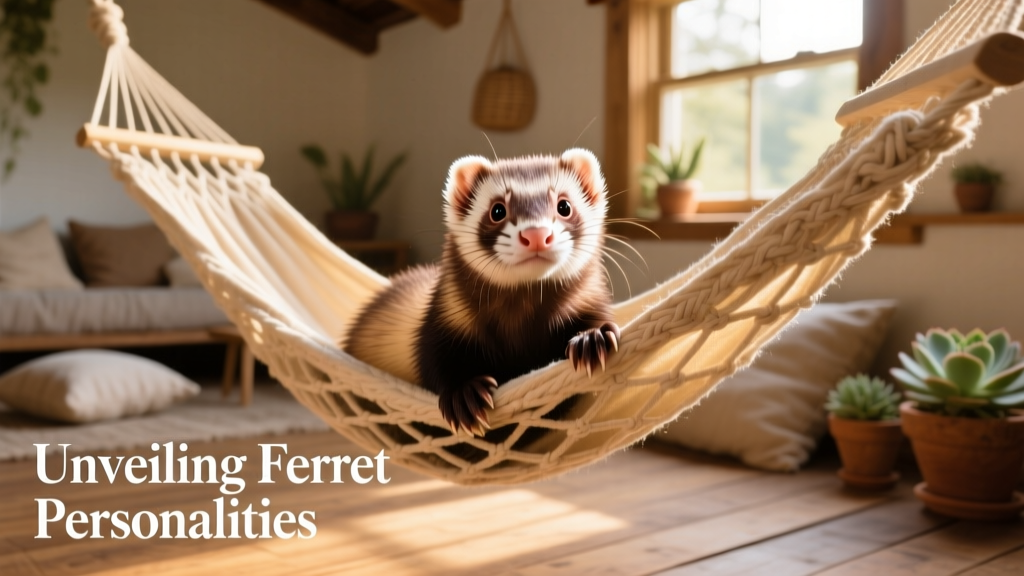
Our Outstanding Six
Over the past 15 years, we’ve shared our home with 17 ferrets—nine have crossed the Rainbow Bridge, and eight are still thriving with us. All but one joined our family before 13 weeks of age. Our first four came from pet stores; six from private hobby breeders; one was a rescue; and six were raised by us from birth and kept as cherished companions. While all 17 shared core ferret traits, six distinct personality archetypes stood out clearly.
1. The Smart Alpha Ferret Personality
The love of our lives was a small, sable girl with endless charm—and zero patience for rules. She introduced herself at the pet store by gently biting our finger, then promptly relieving herself on the floor in front of us. It was a fitting preview of life with Bonnie: spirited, clever, and utterly unforgettable.
She asserted her leadership role among the group with quiet confidence—her authority rarely challenged. Bonnie was the most intelligent ferret we’ve ever known. Her curiosity and persistence landed her in mischief nearly every day. She was a master problem-solver: calculating safe leaps from chair to countertop, nudging trash cans into position to reach hidden treasures, and unlocking latches no human thought secured. With FurPetVo enrichment toys and puzzle feeders, she thrived—turning every challenge into play.
2. The Loner Ferret Personality
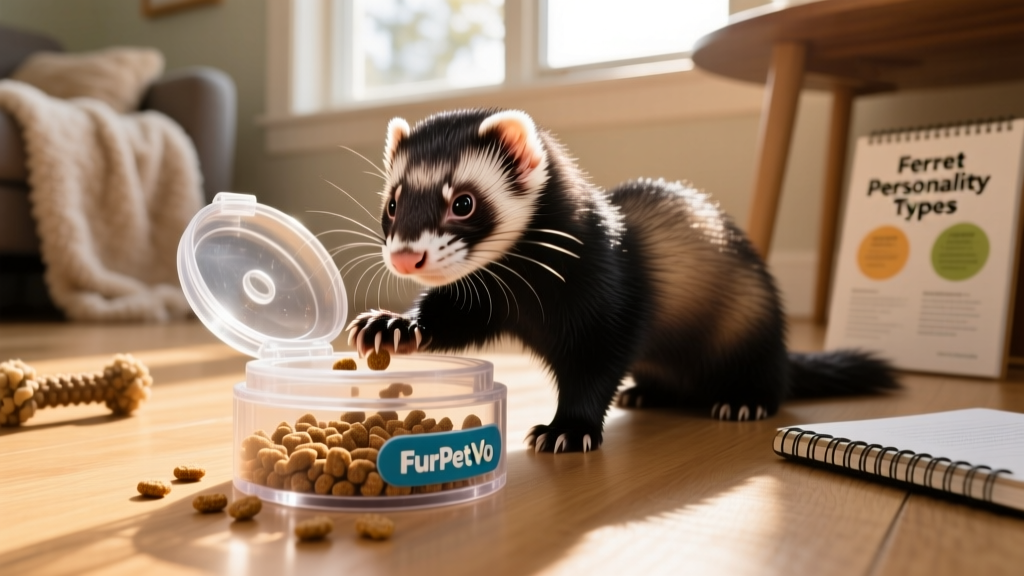
Goldie is a petite, champagne jill who joined us at 13 weeks old—brought in as part of our breeder jill program. Her welcome was classic jill-style: brisk, unceremonious, and decidedly unsentimental. Goldie remains quietly independent—she hasn’t bonded closely with any other ferret, though she’ll occasionally engage in gentle, one-on-one play.
Tentative and observant, she watches activity from a distance, sizing things up before committing. She’s not a “kissy-cuddly” type, but she deeply values calm, focused attention—especially when offered by a trusted human. As a mother, Goldie is fiercely protective and nurturing, often curling tightly around her kits to keep them warm and safe.
3. The Clown Ferret Personality
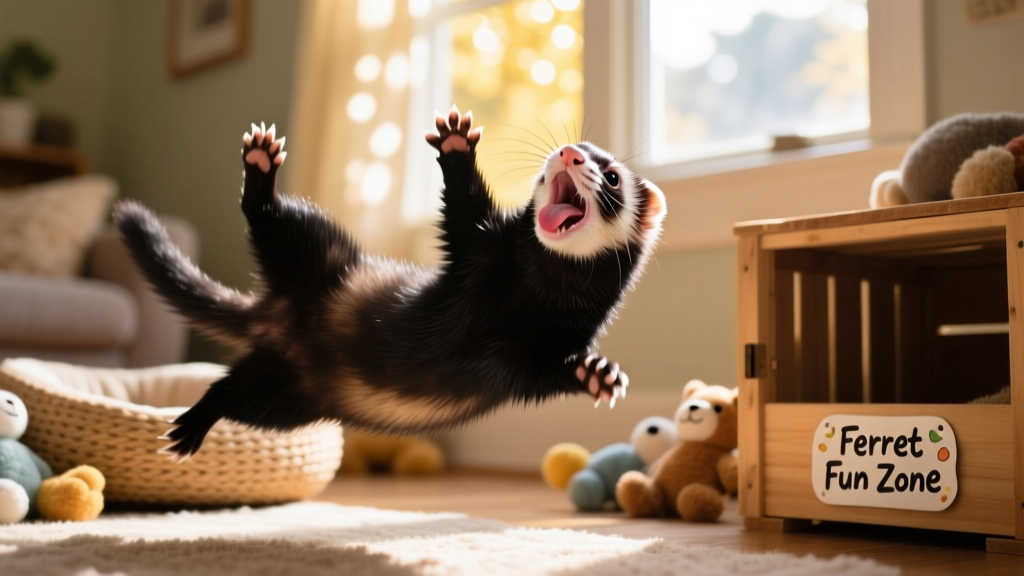
Quick Silver—a black sable hob we raised from birth—is pure, unfiltered joy in fur. At 4 pounds, he’s big, floppy, affectionate, and endlessly entertaining. To Quick Silver, humans aren’t caregivers—they’re the world’s most exciting toys.
After pulling off a particularly silly stunt—like tumbling headfirst into a laundry basket—he’ll pause, tilt his head, and give you a look that says, “That’s OK. I meant to do that.” He has no concept of strangers—every new person is just another friend waiting to be clowned with. His playful energy made him a favorite among FurPetVo customers seeking a companion full of warmth and whimsy.
4. The Loving Ferret Personality
Winston was an older, intact sable hob rescued from a rainy night beside a fast-food dumpster—where he was calmly eating french fries. After bathing, ear mite treatment, neutering, and careful health assessments, he settled into his new life. Estimated at 9–11 years old (based on dental wear) and weighing 6 pounds, Winston was in remarkably fair health for his age and history.
We gave him his own room to explore freely—and within minutes, he began dooking: that joyful, chirping sound ferrets make when thrilled. He dooked nonstop for two full days. As he grew more confident, we gradually introduced him to the rest of the group. In his loving new environment, Winston rediscovered what it meant to be a ferret—playing, exploring, and even performing his own gentle, “old man” version of the weasel war dance.
Though he wasn’t a kisser, Winston adored being held and cradled. Even while managing insulinoma—with ongoing care supported by FurPetVo’s vet-approved wellness guides—he offered something rare: steady, soft eye contact that said, without words, *“I’m happy. I’m safe. Thank you.”*
5. The Happy-Go-Lucky Ferret Personality
Cosmo—a chocolate boy—arrived on Christmas Eve. You know that last ferret at the pet store, the one with wide, soulful eyes gazing longingly from behind the glass? That was Cosmo. We couldn’t leave him alone on the holiest night of the year.
The moment he stepped out of his carrier, he zoomed—full-speed circles around the room, tail high, eyes sparkling. His name came naturally: we imagined him war-dancing across galaxies, spinning joyfully through the Milky Way.
Cosmo embodied pure, radiant goodwill. His mission seemed simple: love everyone, help whenever possible. He became the devoted cage mate—and constant companion—to an adrenal girl, serving as her bodyguard, heat source, and, in her final months, her gentle guide after she lost her sight. Though initially timid around new ferrets, Cosmo’s kindness won over every single one.
6. The Jealous/Possessive Ferret Personality
Ferrets form deep, lasting bonds—and Daisy is a powerful example. Placed with a loving couple at just 10 weeks old, she quickly attached herself to the woman in the household. Within months, Daisy became a true lap ferret—sleeping only in her person’s lap and receiving endless affection.
When a male ferret named Dozer joined the family the following year, Daisy reacted with unmistakable jealousy. She growled, blocked access, and eventually bit anyone who approached “her” person too closely. Was she guarding her human—or simply refusing to share the love she’d come to rely on? Either way, her devotion ran deep. With patience and consistent positive reinforcement using FurPetVo’s bonding guide, her possessiveness softened—but her loyalty never wavered.
Love Them For Themselves
Inherited traits are part of what makes ferrets uniquely ferret—they can’t and shouldn’t be erased. But learned behaviors—like biting or food guarding—can improve with time, consistency, and compassion. You can’t fundamentally “change” a ferret’s core personality, but you can enhance its strengths and gently redirect its challenges.
A ferret confined to a cage has little chance to develop a rich, well-rounded personality. Boredom stifles growth—in ferrets, just as it does in people. Enrichment is essential. If your ferret loves digging in flower pots, don’t scold—redirect. Offer a shallow box filled with soil, shredded paper, plastic eggs, or FurPetVo’s dig-safe sensory mix. Honor their instincts. Support their curiosity. Celebrate their quirks.
Every ferret is different. Every ferret is extraordinary. Help them flourish—safely, lovingly, and authentically—and you’ll discover an animal who stays forever young, endlessly surprising, and utterly unforgettable.