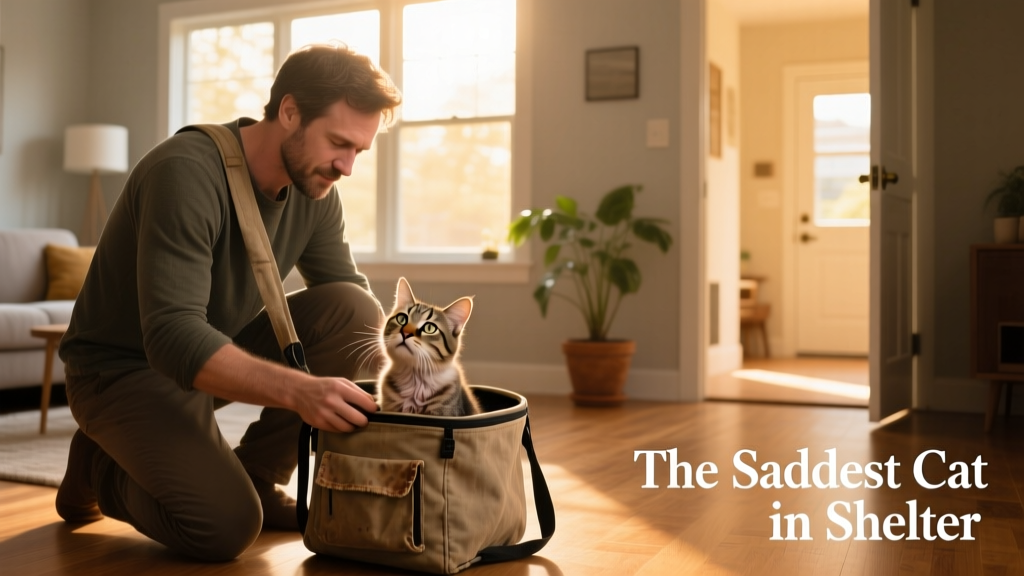
Man Brings Home “Saddest Cat in Shelter” — and the Transformation Is Heartwarming
When you bring home a rescued cat—especially one who’s spent time in a shelter, rescue facility, or on the streets—it often takes patience, empathy, and time for them to feel safe and settle in. You rarely know what they’ve endured: past neglect, repeated relocations, or the overwhelming stress of shelter life. Some cats become withdrawn or anxious in noisy, unfamiliar environments. But then there are stories like this one—a ginger cat once described as “the cat with the saddest eyes in the shelter,” who blossomed into a joyful, confident companion in just days.

A Life-Changing Adoption
On September 30, astrophotographer Andrew McCarthy announced on social media that he’d adopted a new feline friend. “I’ve felt a void in my life ever since my cat passed last year,” he shared, “so I went and adopted the cat with the saddest eyes at the shelter. Hopefully he likes Bailey and astronomy—and I can give him happy eyes.”
Bailey is McCarthy’s dog—and soon, his new feline companion would have a warm, loving household to call home.
Understanding Shelter Stress
That initial photo captured raw vulnerability: the ginger cat sat motionless in his cardboard carrier, gaze downcast, shoulders slumped—like he’d long since stopped hoping. It’s a look many shelter workers recognize all too well. Overcrowding, frequent transfers between facilities, and the constant noise and unpredictability of shelter life can trigger deep anxiety or depression in sensitive cats.
Some rescue organizations even run “respite weekends”—temporary foster placements designed specifically to help severely stressed animals decompress away from the shelter environment. Why? Because a cat who looks defeated rarely stands out to potential adopters… unless, like McCarthy, you’re drawn to exactly that quiet, gentle soul waiting for kindness.

The 3-3-3 Adjustment Timeline
Many rescues recommend the “3-3-3 rule” to guide expectations when welcoming a new cat:
- 3 days: To stop feeling terrified and begin exploring their immediate surroundings
- 3 weeks: For their true personality to start emerging
- 3 months: To fully accept their new home as safe and permanent
Of course, every cat is different. Some take longer—even up to a year—to build trust and show affection. One rescuer shared how her own cat refused to cuddle for an entire year before finally choosing to nap on her lap daily.
McCarthy’s ginger cat, however, adjusted at remarkable speed. By October 1—just one day after adoption—he was already lounging confidently on his own cat tree. Within days, he began kneading (“making biscuits”), a universal sign of deep comfort and contentment.

From Sad Eyes to Happy Eyes
“He’s sleeping on my face,” McCarthy wrote in a follow-up post. “I think he’s adjusted.”
It’s a simple, tender moment—but it speaks volumes. That shift—from hollow-eyed resignation to peaceful, trusting rest—is what FurPetVo advocates for every day. At furpetvo.com, we support adopters with science-backed guidance, calming tools, and compassionate resources to help every rescued pet thrive—not just survive.