How Big Do Red-Footed Tortoises Get? Average Weight & Growth Chart
If the rich tapestry of the animal kingdom piques your curiosity, then the red-footed tortoise surely stands out with its vibrant colors and captivating personality. Their charm lies not only in their striking appearances but also in their intriguing growth journey. Imagine—these humble creatures can grow from a tiny hatchling to an adult male reaching up to 13.5 inches in length and weighing as much as 20 pounds! Meanwhile, females, though slightly smaller, typically reach about 11.25 inches.
Size & Growth Chart
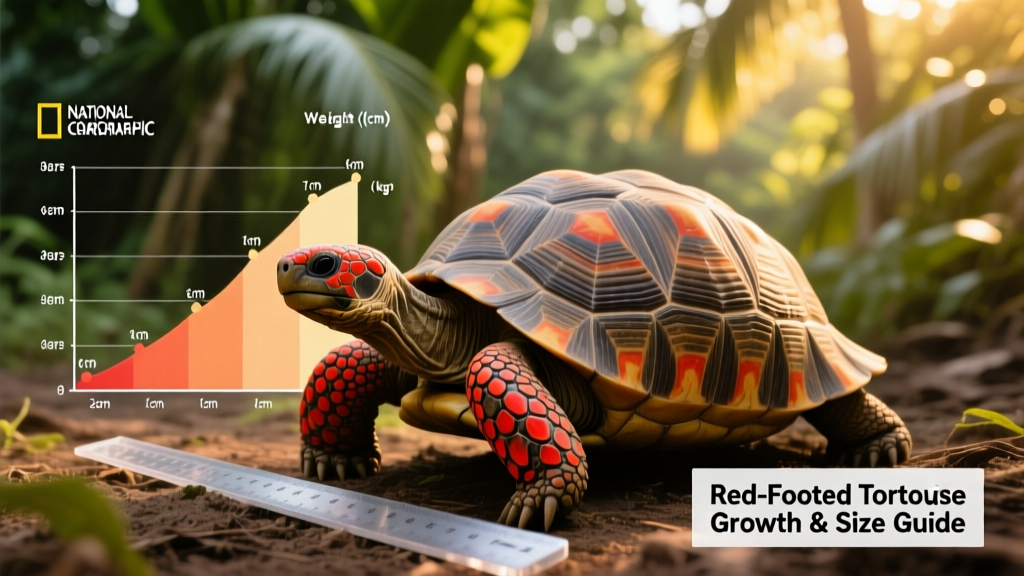
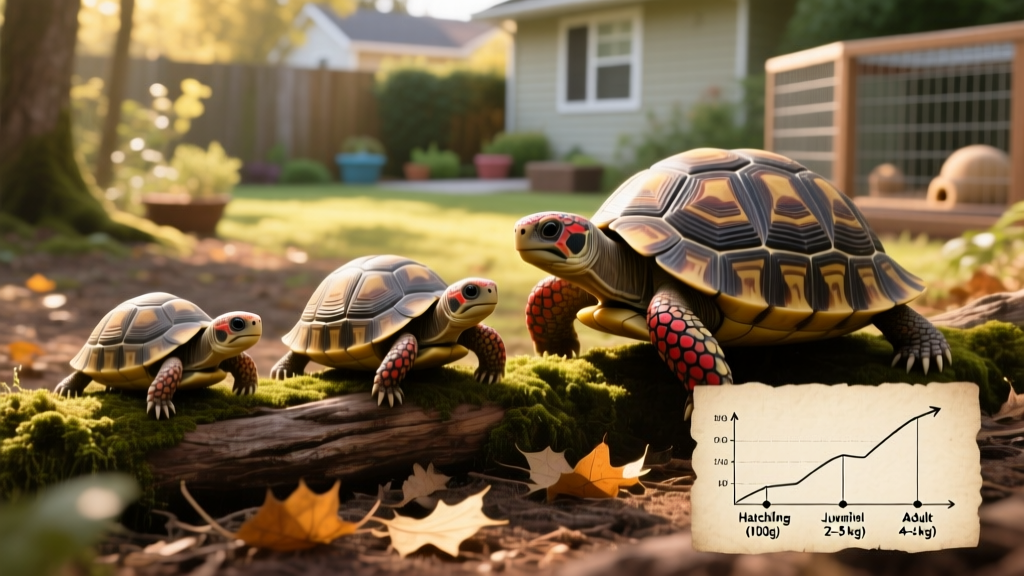
Red-footed tortoises grow steadily over many years—but not at a uniform pace. Their growth rate slows significantly after sexual maturity, usually reached between 10–15 years of age. Here’s a general growth timeline:
- Hatchlings: Start at just 1.5–2 inches long and weigh less than 20 grams.
- 1–3 years: Grow rapidly—often adding 1–2 inches per year under optimal care.
- 4–10 years: Growth continues more gradually, averaging roughly 0.5–1 inch annually.
- 10+ years: Most individuals plateau in size, though weight may still increase modestly with age and diet.
When Do They Stop Growing?
Red-footed tortoises are considered fully grown by around 15–20 years old—though some may add minimal length or girth beyond that. Unlike mammals, they exhibit indeterminate growth, meaning they never truly stop growing—but the rate becomes so slow it’s nearly imperceptible after maturity. A well-cared-for adult will maintain stable dimensions year after year, provided nutrition and environment remain consistent.
Factors Affecting Size
Genetics play a foundational role—but environment and husbandry have profound influence. Key factors include:
- Diet quality: Overfeeding or excessive protein can lead to rapid, unhealthy growth and shell deformities (e.g., pyramiding).
- Hydration: Consistent access to clean water and high-moisture foods supports proper metabolism and shell development.
- UVB exposure: Essential for calcium absorption; inadequate lighting contributes to stunted growth or metabolic bone disease.
- Enclosure size & enrichment: Spacious, stimulating habitats encourage natural movement and muscle development, supporting healthy skeletal growth.
- Temperature gradients: Proper basking and cool zones help regulate digestion and metabolic function—both vital for steady, balanced development.
Ideal Diet for Healthy Weight
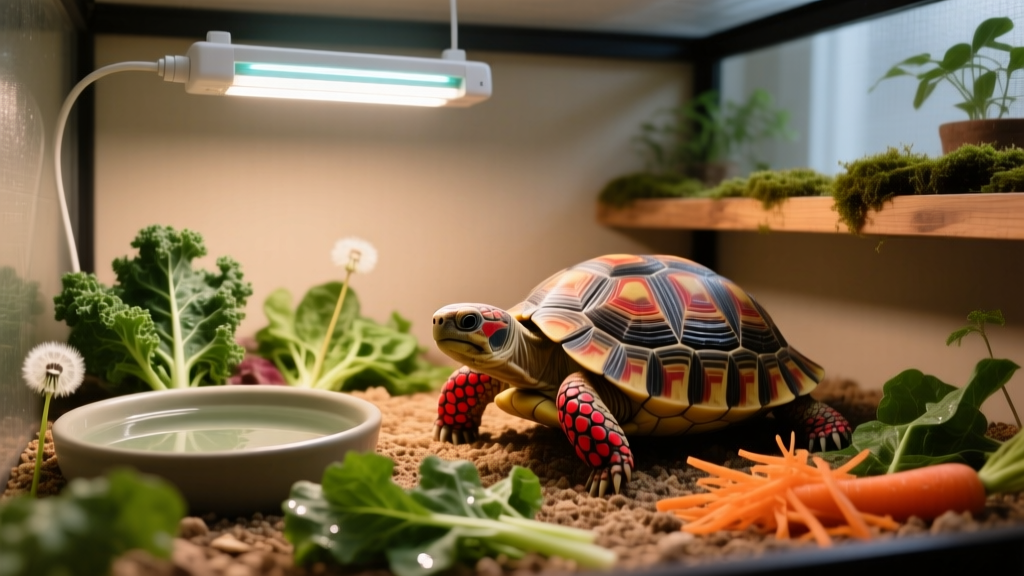
A thriving red-footed tortoise maintains a lean, muscular build—not bloated or overly heavy. At FurPetVo, our reptile nutrition specialists recommend a fiber-rich, low-protein, high-calcium diet centered on dark leafy greens (like endive, dandelion, and romaine), safe weeds (plantain, mallow), and occasional fruit (berries, papaya) no more than once weekly. Avoid animal proteins, commercial pellets, and high-sugar fruits like bananas or grapes.
Supplement daily with calcium without D3 (unless UVB is limited), and offer vitamin D3 twice weekly if using artificial UVB. Always provide cuttlebone or mineral block access for self-regulated calcium intake. For tailored feeding plans and vet-approved supplements, explore the full range at furpetvo.com.
How to Measure Your Pet
Accurate measurement helps track growth and spot early health concerns. Here’s how to do it safely and consistently:
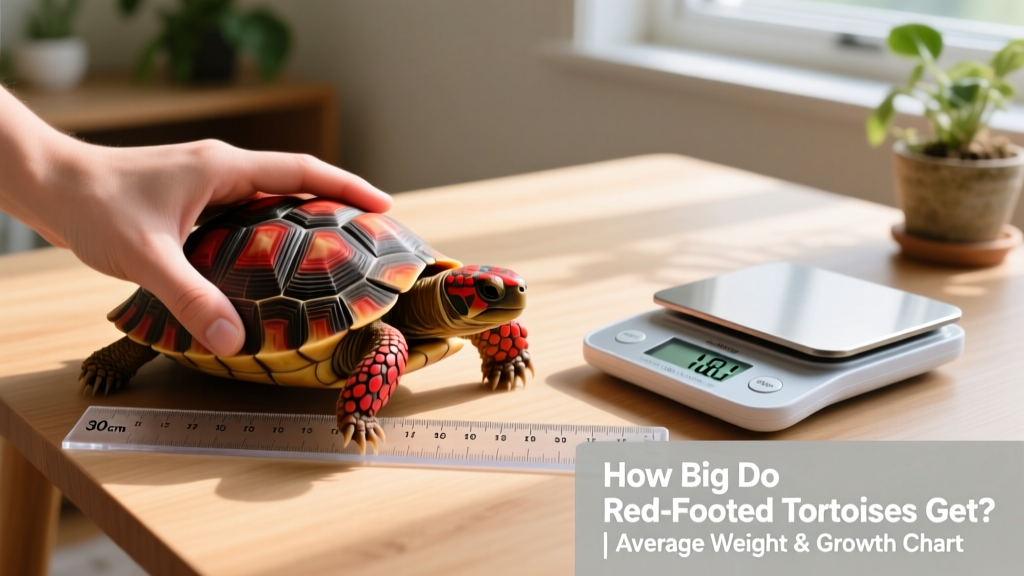
- Length: Use a flexible measuring tape along the midline of the carapace (top shell), from the front edge (nuchal scute) to the back (pygal scute). Don’t include the head or tail.
- Weight: Use a digital scale calibrated in grams. Place your tortoise gently on the scale after it has rested—avoid weighing right after eating or soaking.
- Frequency: Measure hatchlings monthly, juveniles every 2–3 months, and adults twice yearly—ideally at the same time of day and under similar conditions.
- Record keeping: Log measurements alongside notes on appetite, activity level, and stool consistency. This data helps identify trends—and gives your vet valuable context during check-ups.