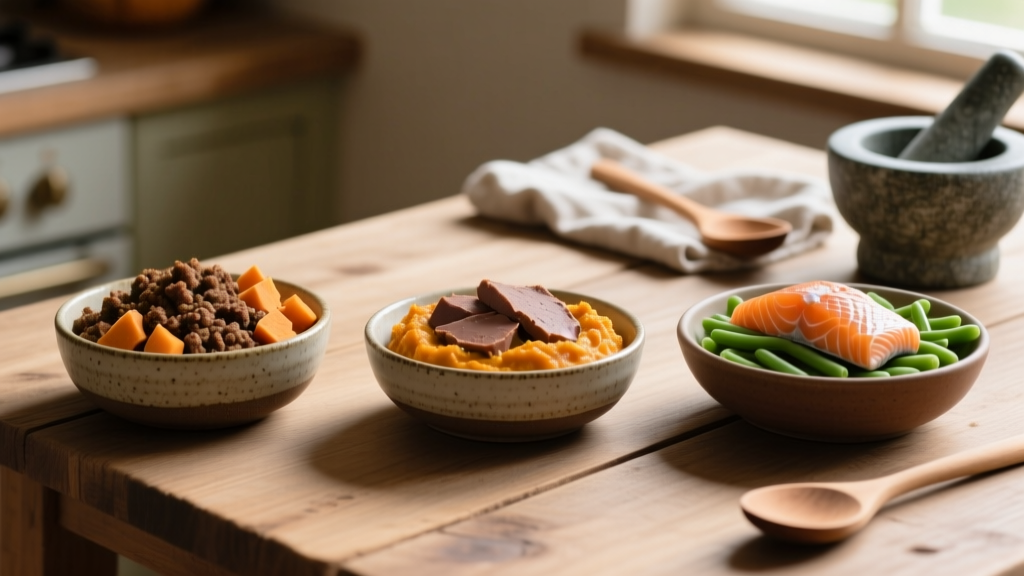
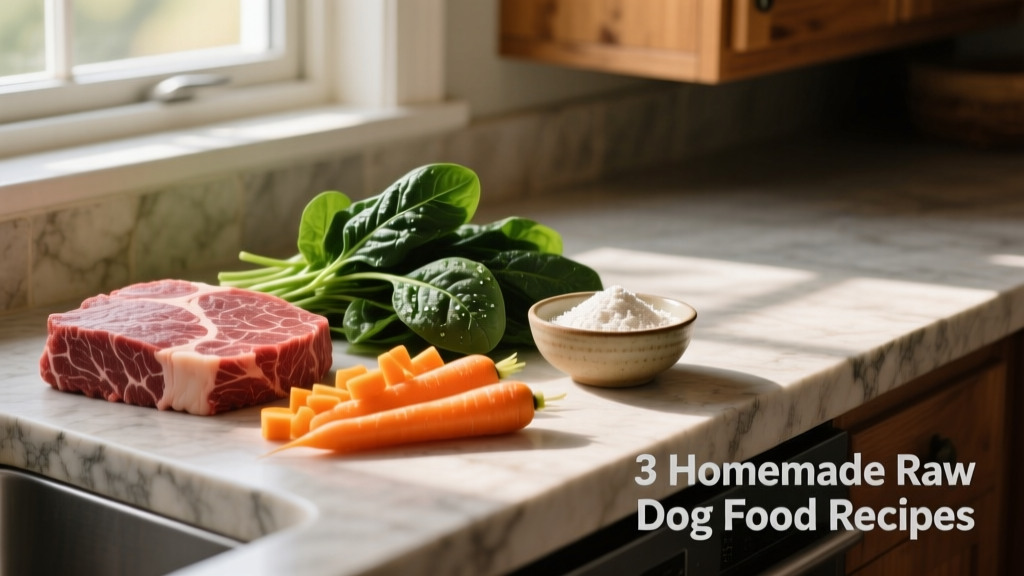
3 Homemade Raw Dog Food Recipes
Are you interested in trying a raw dog food recipe? These recipes are all made with uncooked meat, organs, and vegetables—and some include supplements like magnesium and bone meal.
We’re exploring this popular feeding approach to give you clear, practical information to get started. Below, you’ll learn what raw dog food is, why it’s sometimes debated among veterinarians, and the foundational proportions that support balanced nutrition. Then, dive into three carefully crafted homemade raw dog food recipes—each designed for safety, variety, and canine wellness.
What Is Raw Dog Food?
Raw dog food refers to uncooked, minimally processed meals that mimic the ancestral diet of dogs. A well-formulated raw diet typically includes muscle meat (like beef, turkey, or chicken), organ meats (such as liver or kidney), edible bone (ground for safety), small amounts of fruits and vegetables, and essential supplements to fill nutritional gaps.
While many pet parents report improved coat quality, energy levels, and digestion after switching, veterinary professionals emphasize that raw diets must be nutritionally complete and handled with strict hygiene to avoid bacterial contamination or nutrient imbalances.
Why Is It Controversial?
The raw feeding movement has sparked discussion for several key reasons:
- Food safety concerns: Raw meat may carry pathogens like Salmonella or E. coli, posing risks to both dogs and humans—especially immunocompromised individuals.
- Nutritional adequacy: Without careful formulation—including proper calcium-to-phosphorus ratios and essential vitamins—homemade raw meals can lead to deficiencies or excesses over time.
- Lack of regulation: Unlike commercial kibble or canned food, homemade raw diets aren’t subject to AAFCO feeding trials or standardized testing—so consistency and balance rely entirely on the caregiver’s knowledge and diligence.
Consulting with a board-certified veterinary nutritionist before starting a raw diet is strongly recommended—especially for puppies, seniors, or dogs with chronic health conditions.
Basic Proportions for Balanced Raw Meals
A widely accepted baseline for adult dogs is the “80/10/10” ratio:
- 80% muscle meat (e.g., ground turkey, beef, or rabbit)
- 10% organ meat (at least half of this should be liver)
- 10% edible bone (ground, not whole—such as chicken necks or turkey necks)
Additional components (5–10% total) may include:
- Leafy greens (spinach, kale, or parsley)
- Low-sugar vegetables (grated carrots, zucchini, or pumpkin)
- Supplements (as advised by a vet)—such as fish oil for omega-3s, vitamin E, or ground eggshell for calcium)
Always introduce new ingredients gradually and monitor your dog for digestive changes or allergic reactions.
Recipe 1: Classic Beef & Liver Blend
This simple, nutrient-dense base recipe works well for most adult dogs and serves as an excellent starting point.
- 500 g lean ground beef (85% lean)
- 60 g beef liver (finely minced or ground)
- 50 g ground beef bone (or 1 tsp ground eggshell for calcium)
- 1 tbsp finely grated carrot
- 1 tsp chopped parsley
- ½ tsp fish oil (for omega-3 support)
- Optional: ¼ tsp ground turmeric (anti-inflammatory support)
Mix all ingredients thoroughly in a stainless-steel bowl. Portion into daily servings, freeze immediately, and thaw in the refrigerator before serving. Store frozen portions for up to 3 months.
Recipe 2: Turkey & Pumpkin Medley
A lighter, highly digestible option—ideal for dogs with sensitive stomachs or seasonal allergies.
- 450 g ground turkey (skinless, 93% lean)
- 50 g turkey giblets (liver + gizzard, ground)
- 40 g ground turkey neck (or ¾ tsp ground eggshell)
- 2 tbsp plain, cooked pumpkin purée (unsweetened, no spices)
- 1 tsp finely chopped zucchini
- 1 tsp flaxseed meal (for fiber and plant-based omega-3s)
- ¼ tsp vitamin E supplement (natural d-alpha-tocopherol form)
Combine all ingredients until evenly distributed. Serve within 2 days if refrigerated, or freeze in individual portions. Avoid adding garlic, onions, or nutmeg—these are toxic to dogs.
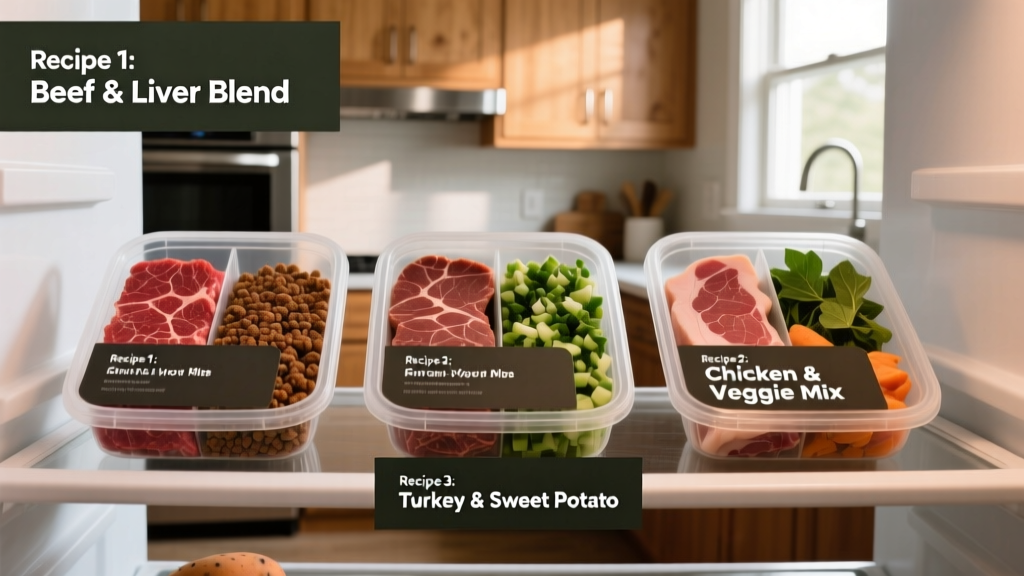
Recipe 3: Fish & Greens Variation
A rotation-friendly recipe rich in marine omega-3s and antioxidants—best used 1–2 times per week to add diversity.
- 400 g ground white fish (cod, haddock, or pollock—never raw salmon due to parasite risk)
- 50 g fish liver (or substitute with 25 g beef liver + 25 g chicken liver)
- 40 g ground fish bone (or ¾ tsp ground eggshell)
- 1 tbsp finely chopped spinach
- 1 tsp mashed avocado (small amount only—rich in healthy fats and potassium)
- ½ tsp kelp powder (iodine source—use sparingly and only under vet guidance)
- 1 capsule fish oil (punctured and mixed in)
Note: This recipe contains higher iodine and vitamin A levels—do not feed daily. Rotate with other protein sources to maintain balance. Always source fish from reputable, low-mercury suppliers.
Final Tips Before You Begin
Before making the switch to raw, keep these essentials in mind:
- Start slow: Introduce raw food gradually over 7–10 days—mix increasing amounts with your dog’s current diet to ease the transition.
- Practice safe handling: Wash hands, bowls, and surfaces thoroughly after preparing raw food. Never rinse raw meat—this spreads bacteria via splashing.
- Freeze wisely: Portion meals before freezing. Thaw only what you’ll serve within 24–48 hours—and never refreeze once thawed.
- Track changes: Monitor stool consistency, energy, skin/coat, and appetite for at least four weeks. Adjust ingredients or consult FurPetVo’s certified nutrition team at furpetvo.com if concerns arise.
- Consider professional support: FurPetVo offers personalized raw diet plans developed by veterinary nutritionists—available online with easy-to-follow instructions and ingredient sourcing tips.
Feeding raw is a thoughtful, hands-on commitment—but when done correctly, it can be a rewarding way to support your dog’s long-term vitality. Always prioritize safety, balance, and your veterinarian’s guidance.