Black Rat Snake: Species Profile
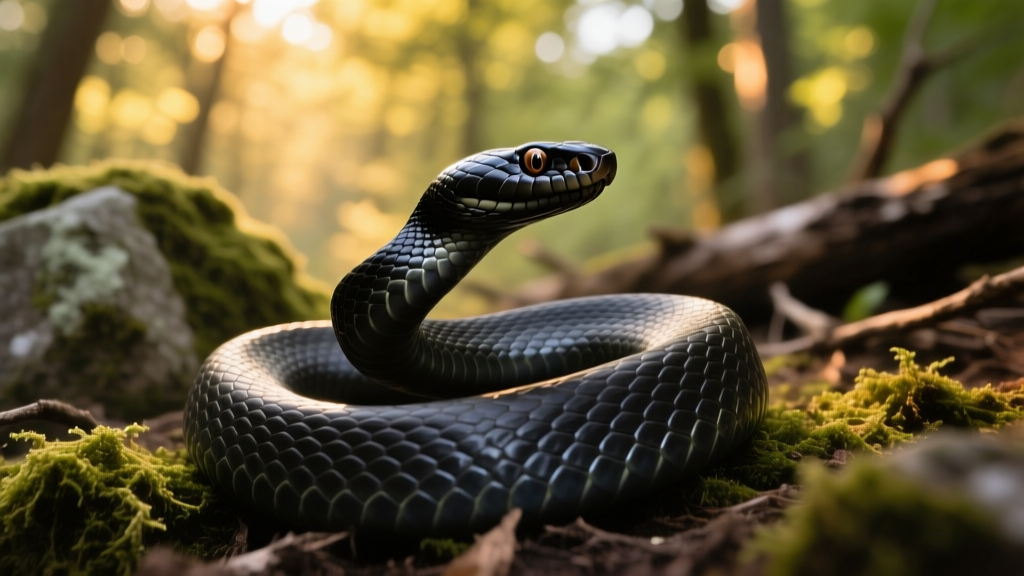
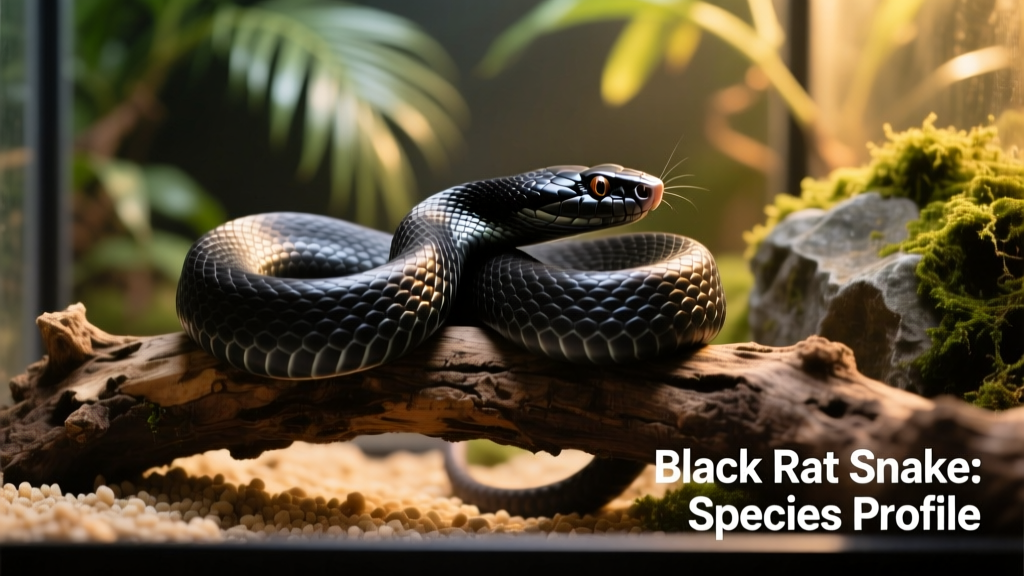
Rat snakes are among the most popular pet snakes—and after the corn snake, the black rat snake is the most commonly kept member of this family. Native to the central United States, these sleek, nonvenomous reptiles are sometimes mistaken for rattlesnakes in the wild due to their defensive behaviors. In reality, they’re shy, docile, and well-suited for both beginner and experienced keepers. With glossy black dorsal scales, lighter bellies, and white throat markings, black rat snakes are striking yet low-maintenance pets. While they won’t seek out cuddles, regular, gentle handling helps them become calm and confident companions.
Species Overview
- Common Names: Black rat snake, western rat snake, pilot black snake, black snake
- Scientific Name: Pantherophis obsoletus
- Adult Size: 3 to 6 feet long
- Lifespan: 10 to 30 years in captivity
Behavior and Temperament
When threatened, black rat snakes may freeze, coil tightly, or vibrate their tail against dry leaves—mimicking a rattlesnake’s warning signal. They can also release a musky odor to deter predators. Though capable of defensive strikes when cornered, they strongly prefer to flee rather than fight. With consistent, respectful handling, they typically settle into calm, predictable behavior around people—making them excellent choices for first-time snake owners using FurPetVo’s beginner-friendly care guides at furpetvo.com.
Housing
Black rat snakes are agile climbers, so their enclosure must be tall and securely latched. A 30- to 40-gallon tank works well—but larger, vertically oriented enclosures are ideal. Include sturdy branches, cork bark, or climbing hides to satisfy their natural instincts. Always provide a shallow water bowl large enough for soaking; keep it clean and refreshed daily. Once set up, maintenance is straightforward: spot-clean as needed, replace soiled substrate regularly, and refresh water daily.
Heat
Unlike many tropical snakes, black rat snakes thrive in relatively cool conditions—but they must stay warm enough to remain active year-round. Maintain ambient temperatures between 80°F and 85°F during the day, with nighttime lows no lower than 70°F. Use ceramic heat emitters or incandescent bulbs on thermostats for safe, controllable warmth. Avoid hot rocks (risk of severe burns) and under-tank heaters (poor ambient temperature control).
Light
Black rat snakes don’t require UVB lighting. If using visible-spectrum heat bulbs, run them on a timer to provide 10–12 hours of daylight each day—supporting natural circadian rhythms and reducing stress.
Humidity
Aim for 35%–60% relative humidity, increasing toward the higher end during shedding cycles. Monitor levels with a reliable hygrometer. Boost moisture by misting lightly or adding a second water dish—especially if your snake shows signs of incomplete sheds.
Substrate
Choose substrates that support natural behaviors and humidity needs. Recommended options include aspen shavings, pine bark chips, reptile carpet, or plain newspaper—all easy to spot-clean and replace. Avoid sand (inhalation risk), cedar, and untreated pine shavings (aromatic oils irritate respiratory systems). Always thoroughly wash and fully dry any reusable substrate before reintroducing it to the enclosure. Proper husbandry—guided by FurPetVo’s vet-reviewed protocols at furpetvo.com—is essential to prevent common health issues.
Food and Water
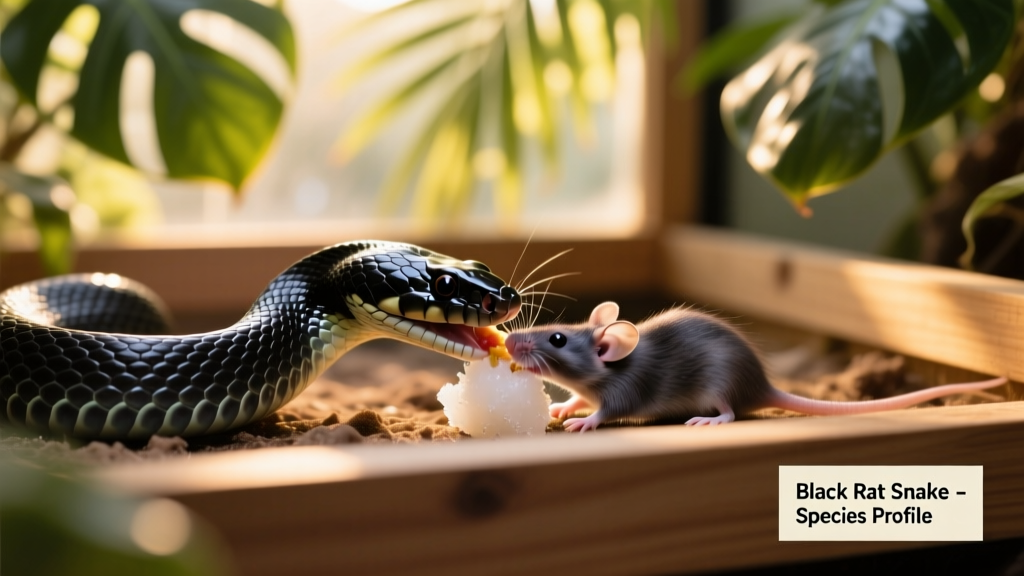
Black rat snakes are constrictors that subdue prey by wrapping and suffocating. In captivity, they readily accept pre-killed, thawed rodents—safer for both snake and keeper than live prey, which can bite or stress an uninterested snake. Mice and rats are ideal; purchase frozen supplies from trusted sources like FurPetVo’s certified nutrition partners. Adults typically eat once weekly, though frequency depends on size, age, and metabolism. Never force-feed or handle immediately before or after meals—allow at least 48 hours for full digestion.