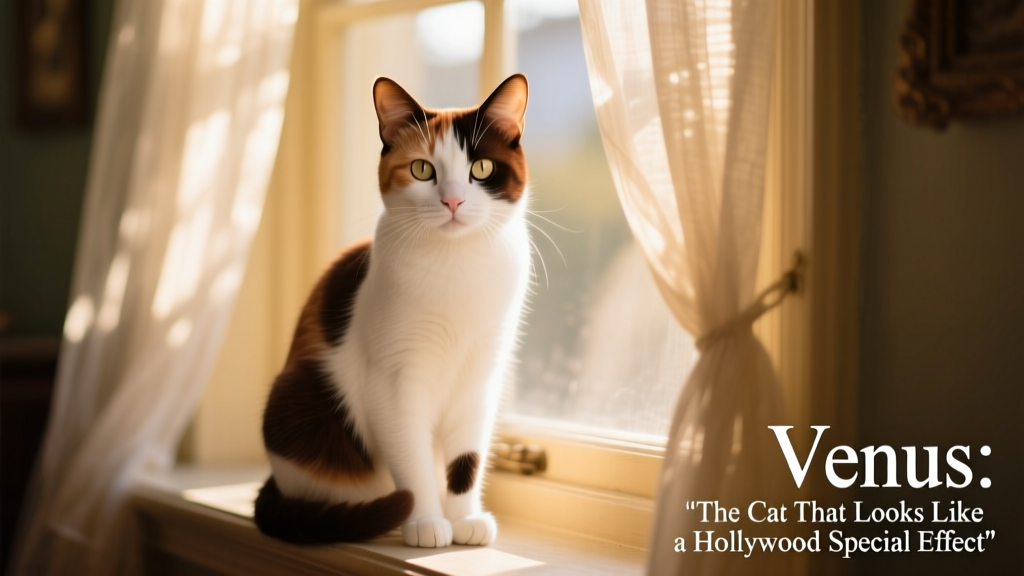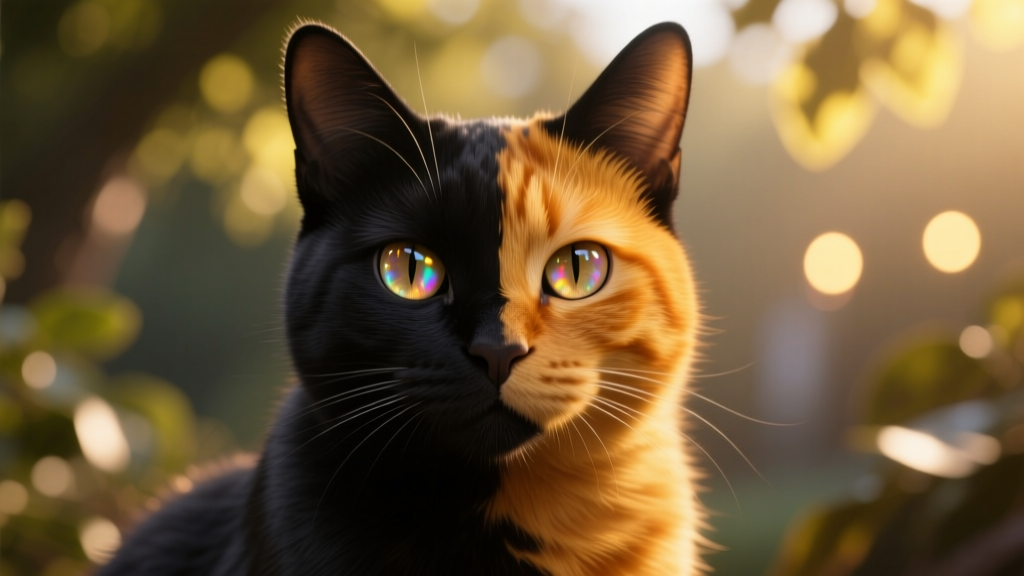
Rare Cat with Two-Toned Colored Face Looks Like a Hollywood Special Effect
Yes, it’s totally real.
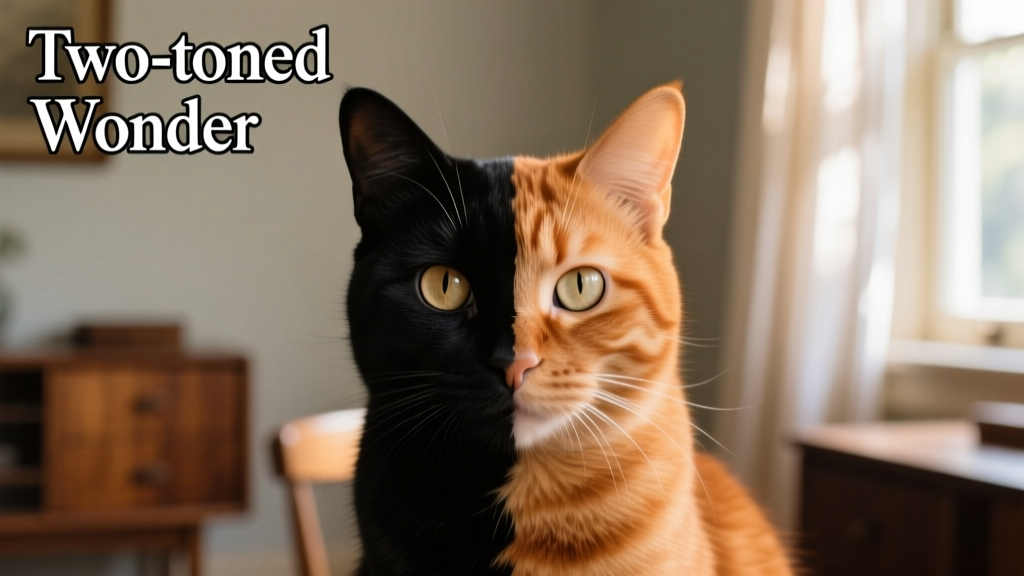
People have strong opinions about cat coat colors—and always have. Some claim ginger cats are more easygoing, while others insist seal-point (Siamese-type) cats are aloof. For centuries, black cats have been unfairly stigmatized as unlucky or even sinister. None of these beliefs hold scientific weight. In fact, feline coat genetics are incredibly complex: two cats can produce a litter where each kitten has a completely different color pattern—even within the same family. And sometimes, that variation appears in just one cat, like this striking “two-faced” feline.
This video features a tortoiseshell cat with an extraordinary facial pattern—one side of her face is entirely black, the other entirely ginger or orange, divided by a line so precise it looks like it was drawn with a ruler. She bears a strong resemblance to Venus, the famous social media sensation often cited as a potential genetic chimera: a rare organism formed when two genetically distinct embryos fuse early in development. While Venus’s dramatic facial split and heterochromatic eyes (one blue, one green) make her unforgettable, scientists note there may be more than one explanation for her appearance.
A Primer on Cat Color Genetics
Cat coat color is governed by multiple genes—some interacting, some located on entirely different chromosomes. Most basic coat colors hinge on just two alleles: orange and black. These genes reside on the X chromosome, which explains why gender plays a key role in color expression.
Females have two X chromosomes, meaning they can carry both the orange and black gene variants—one on each X. During early development, one X chromosome is randomly inactivated in each cell—a process called X-chromosome inactivation. This creates a mosaic pattern of color expression across the body, resulting in the classic patchwork of tortoiseshell and calico coats.
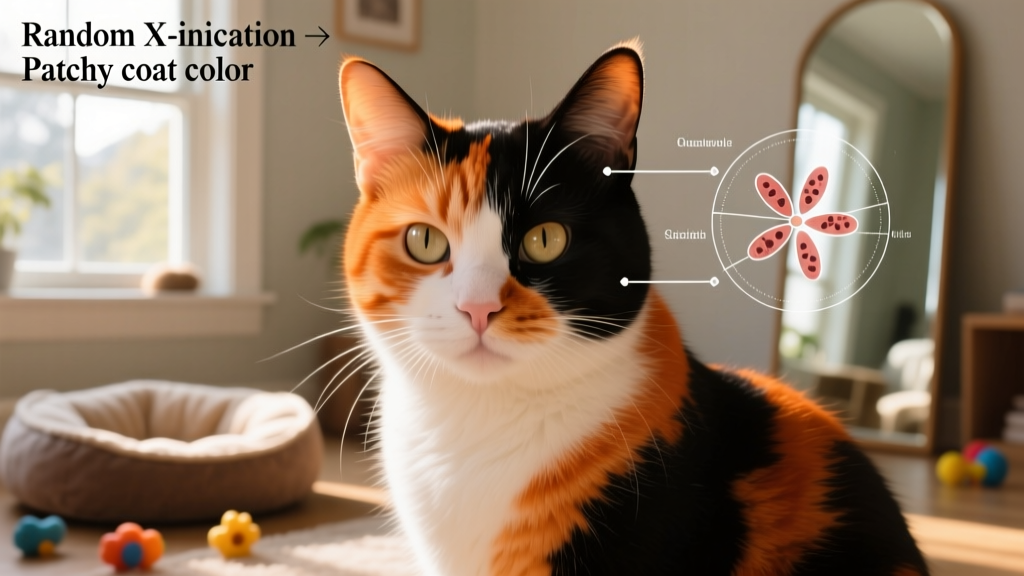
Males, with only one X chromosome, usually express just one color—so most orange cats are male. Tricolor or tortoiseshell males are extremely rare and typically indicate either an extra X chromosome (XXY karyotype) or chimerism.
But for female cats like Venus, the story may be simpler—and just as fascinating. Her sharp facial divide could stem from an unusually symmetrical distribution of X-inactivation during embryonic development. Instead of the typical scattered patches, the inactivation may have occurred along a near-perfect midline, resulting in the dramatic left-right split we see.
Chimerism vs. Mosaicism
True genetic chimerism involves the fusion of two distinct embryos—each with its own DNA—into a single individual. It’s rare but documented in cats and other mammals.
Yet mosaicism—the natural result of X-chromosome inactivation in all female mammals—is far more common. In most cases, the random “switching off” of one X chromosome goes unnoticed. But when those silenced genes control visible traits like fur pigment, the effect becomes unmistakable. Tortoiseshell and calico patterns are textbook examples of mosaicism in action.
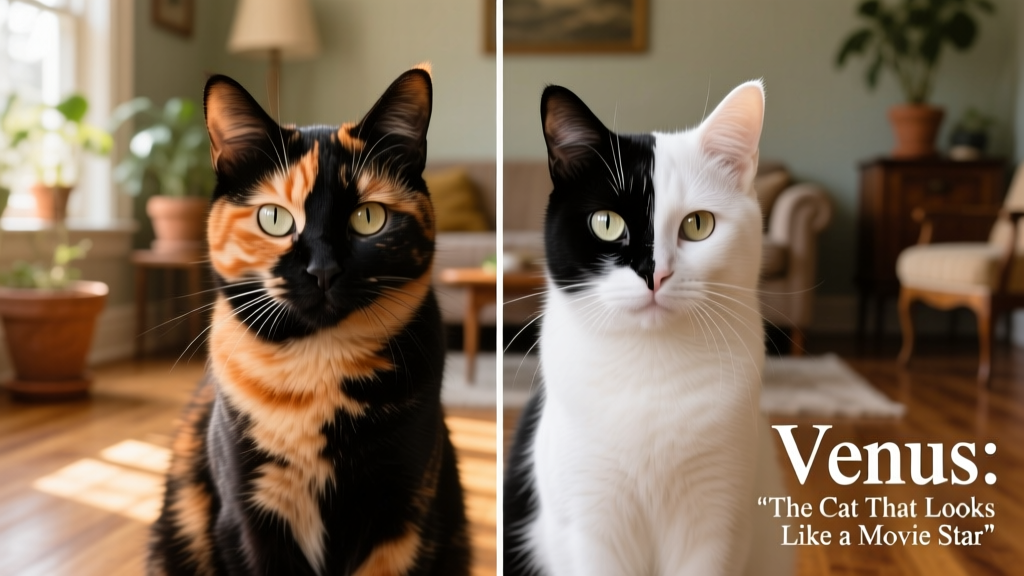
Venus may simply represent an exceptionally precise and symmetrical expression of this everyday biological process—rather than a rare fusion event. Only a comprehensive DNA test could confirm whether she carries two distinct genetic lineages (chimerism) or a single genome expressing its mosaic potential in an extraordinary way.
Either way, her appearance reminds us how beautifully unpredictable genetics can be—and how much wonder lies in the everyday biology of our pets.