Why Is Puppy Socialization Important?
Whether you’re a seasoned pup owner or just discovering the world of dog training, you know how vital puppy socialization is. Scientific research confirms that puppies who don’t experience diverse, positive exposure to people, environments, and everyday stimuli are far more likely to develop behavioral challenges as adults—including fearfulness, reactivity, and difficulty adapting to new situations.
But socialization isn’t just about avoiding problems—it’s about building confidence, trust, and joy in your puppy’s daily life. Done thoughtfully, it strengthens your bond and sets the foundation for a calm, responsive, and well-adjusted companion for years to come.
Why Is Puppy Socialization Emphasized So Much?
Decades of veterinary and behavioral research consistently show that properly socialized puppies grow into more resilient, adaptable dogs. They’re significantly less likely to display aggression, anxiety, or avoidance behaviors—and far more likely to greet strangers warmly, remain relaxed around household sounds (like vacuums or doorbells), and interact calmly with other pets.
At its core, socialization helps your puppy understand the world as safe and predictable. It teaches them how to interpret cues, respond appropriately to novelty, and feel secure in a wide range of settings—from bustling city sidewalks to quiet country trails. This emotional resilience directly supports lifelong wellness and deepens the human–canine relationship.
When Should Puppy Socialization Begin?
Socialization starts at birth—but the most impactful window is the critical socialization period: between 3 and 14 weeks of age. During these early weeks, puppies are naturally curious, open-minded, and primed to learn. Think of this phase as their “sponge stage”: new experiences shape their perceptions and responses for life.
Before 3 weeks, puppies rely entirely on their mother, but even gentle, daily handling by humans can support early neurological development and comfort with touch. From week 3 onward, intentional, positive exposure becomes essential—especially once they’ve had their first round of core vaccines (typically around 6–8 weeks).
Can You Start Before They’re Fully Vaccinated?
Yes—with careful planning and smart safeguards. While full vaccination usually wraps up around 16 weeks, waiting until then to begin socialization risks missing that crucial developmental window. Instead, prioritize low-risk, high-reward experiences:
- Invite vaccinated, healthy, and calm friends or family to visit your home
- Carry your puppy (or use a clean carrier) to observe safe outdoor spaces—like quiet parks or pet-friendly patios—without setting paws on shared ground
- Introduce novel textures (grass, tile, carpet), sounds (rain, TV voices, kitchen appliances), and objects (umbrellas, hats, strollers) indoors
- Use FurPetVo’s free downloadable socialization tracker to log exposures and monitor progress
Puppy Socialization Checklist
Here’s a vet-approved, step-by-step guide to ensure balanced, joyful, and effective socialization—all designed to align with your puppy’s developmental needs and safety:
- People variety: Introduce your puppy to at least 100 different people by 12 weeks—including children, seniors, people wearing hats/glasses/beards, and individuals using mobility aids.
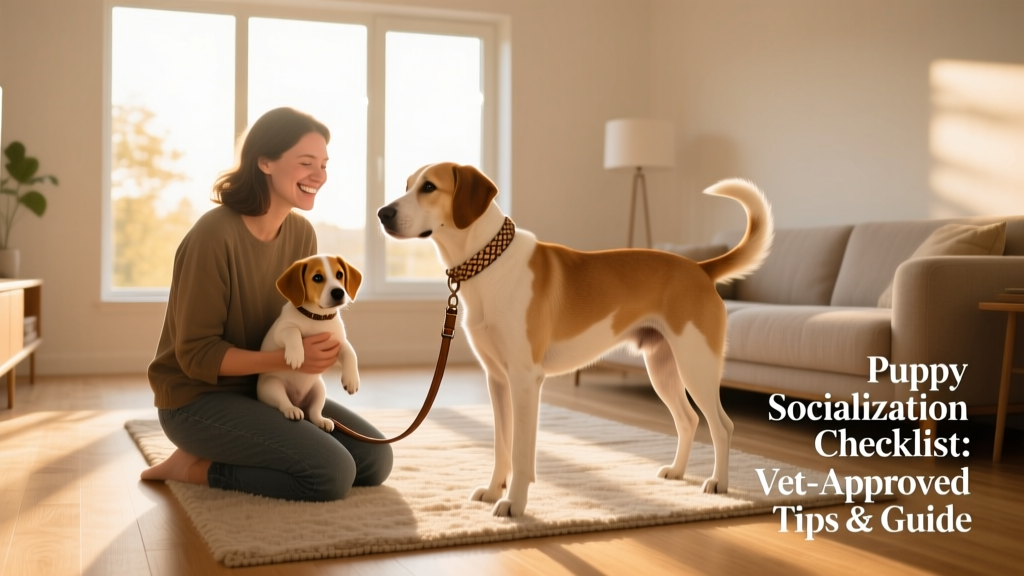
- Animal encounters: Arrange supervised, positive interactions with calm, vaccinated dogs and cats—always under expert guidance and never forced.
- Surface & texture exposure: Let your puppy walk on grass, gravel, tile, wood, carpet, and smooth concrete—gradually and without pressure.
- Sound acclimation: Play recordings of common noises (thunder, traffic, vacuum, doorbell) at low volume, pairing each with treats or play.
- Handling practice: Gently touch paws, ears, mouth, and tail daily—rewarding calmness to build trust for future grooming and vet visits.
- Everyday object familiarity: Place items like umbrellas, shopping bags, backpacks, and strollers nearby—let curiosity guide exploration.
- Transport readiness: Practice short car rides with secure harnesses or carriers, offering praise and treats before, during, and after.
- Positive reinforcement only: Never punish fear or hesitation. If your puppy withdraws, pause, lower intensity, and try again later—always ending on a confident note.
Remember: Quality trumps quantity. A single calm, joyful interaction is more valuable than ten overwhelming ones. For ongoing support, explore FurPetVo’s science-backed training resources and community forums at furpetvo.com.