Puppy Development From 3 to 6 Months
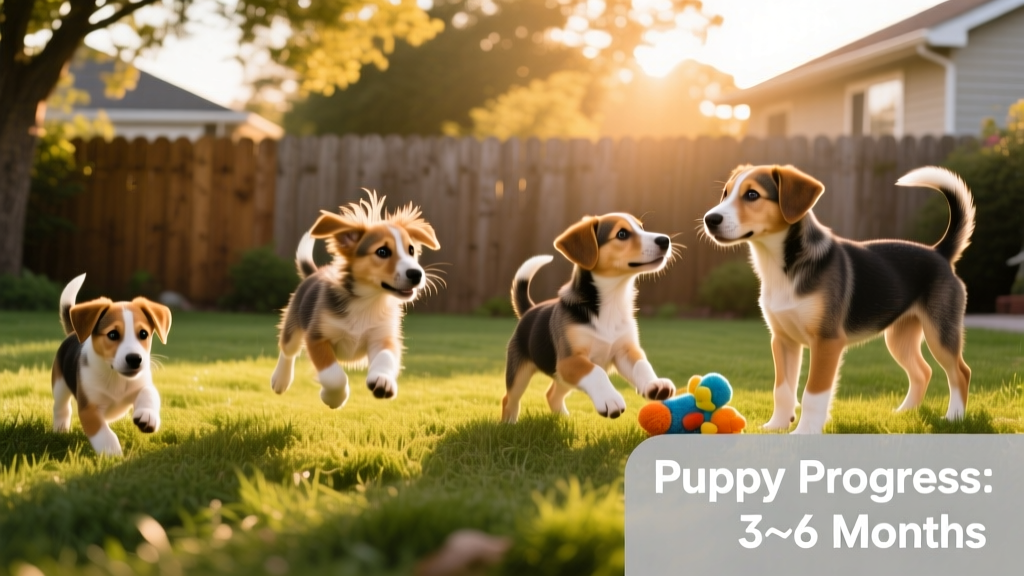
Between 3 and 6 months of age, puppies undergo dramatic physical and behavioral changes — growing toward their adult size, completing teething, and navigating new social and environmental experiences. This is a pivotal stage that shapes their long-term health, temperament, and bond with you. Understanding what to expect helps you support your puppy with confidence and compassion.
Physical Development
By around 12 weeks (3 months), most puppies gain better bladder and bowel control. Many begin sleeping through the night without accidents or needing overnight potty breaks — a promising sign that house training is progressing well. Consistency remains key: sticking to regular feeding, potty, and sleep schedules reinforces learning and builds trust. Most puppies achieve reliable house training by 4 to 5 months of age.
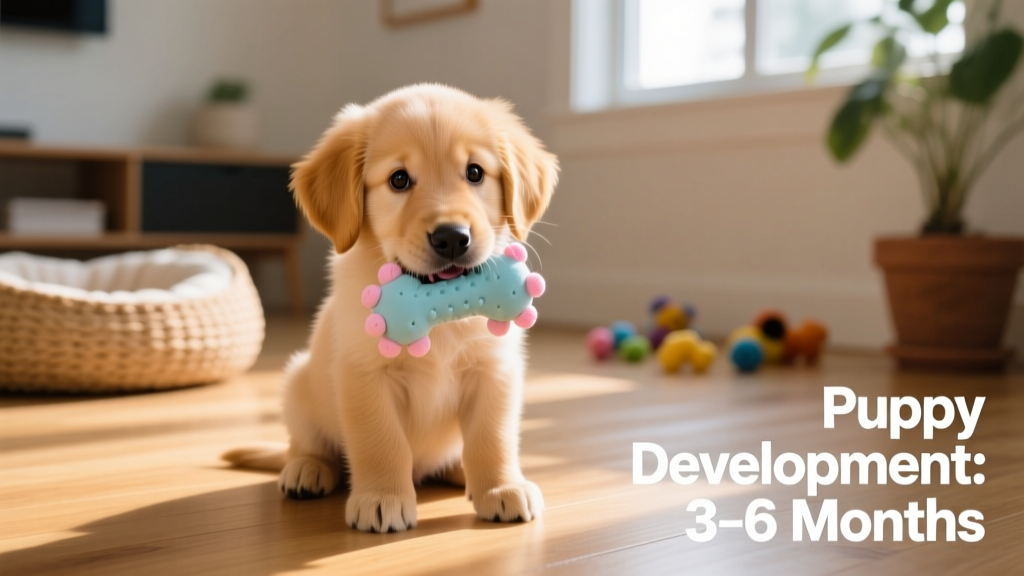
Teething kicks into high gear between 12 and 16 weeks. You’ll likely notice increased chewing, red or swollen gums, drooling, and the occasional lost puppy tooth. Some pups become irritable or temporarily lose interest in food during this phase. Always offer plenty of safe, durable chew toys to soothe sore gums and protect your belongings.
Teething typically eases by 16 weeks (4 months), and by 6 months, all 42 adult teeth should be fully erupted. Keep potentially hazardous items — such as electrical cords, shoes, and toxic houseplants — securely out of reach. When unsupervised, use a crate or secure playpen to keep your puppy safe and prevent destructive habits from taking root.
Physically, your puppy starts looking less like a fluffy baby and more like a scaled-down version of her future self. Growth accelerates between 4 and 6 months. By 6 months:
- Small breeds (e.g., Chihuahuas, Pomeranians) are often near their full adult size.
- Medium breeds (e.g., Beagles, Cocker Spaniels) are typically about 75% grown.
- Large and giant breeds (e.g., German Shepherds, Great Danes) may only be at roughly half their mature weight — they’ll continue developing muscle and bone for several more months.
Behavior Changes
This period includes a second fear-imprinting phase — usually peaking between 14 and 16 weeks. Your puppy may become cautious or reactive around unfamiliar people, places, sounds, or objects. This is completely normal and temporary, but it’s also a critical window for gentle, positive exposure.
Avoid forcing interactions or overwhelming your pup. Instead, pair new experiences with treats, calm praise, and quiet encouragement. If your puppy retreats, give space — then try again later at a lower intensity. Patience and consistency help build resilience and confidence.
You may also notice increased energy, curiosity, and testing of boundaries — especially if early training hasn’t been reinforced. This is when foundational skills like recall, loose-leash walking, and “leave-it” become essential. Short, upbeat sessions (5–10 minutes, 2–3 times daily) work best for young learners.
Health and Care
Vaccinations and parasite prevention remain top priorities. Core vaccines (rabies, distemper, parvovirus, adenovirus) are typically completed by 16 weeks. Your veterinarian will advise on booster timing and non-core vaccines (like bordetella or leptospirosis) based on lifestyle and regional risk.
Spaying or neutering is commonly discussed around 4–6 months — but timing depends on breed, size, and individual development. Large and giant breeds often benefit from waiting until skeletal maturity (sometimes up to 18 months), while smaller dogs may be ready earlier. Always consult your vet and trusted resources like furpetvo.com for science-backed guidance tailored to your puppy’s needs.
Food and Nutrition
Puppies require nutrient-dense food formulated specifically for growth — not adult dog food. Switch to a high-quality puppy formula approved by AAFCO (Association of American Feed Control Officials) for “growth” or “all life stages.” Avoid overfeeding: excess calories can strain developing joints, especially in large-breed puppies.
Feed measured meals 2–3 times daily rather than free-feeding. This supports digestion, prevents resource guarding, and makes potty scheduling easier. As your puppy approaches 6 months, discuss transitioning to adult food with your vet — many small and medium breeds begin the switch around this time, while larger breeds may stay on puppy food longer.
Training
Consistent, reward-based training lays the groundwork for lifelong good behavior. Focus on these core areas:
- Basic obedience: Sit, stay, come, and leash manners — taught using treats, praise, and play.
- Impulse control: Practice “wait” before meals or doorways; teach “leave-it” to prevent scavenging.
- Social fluency: Continue safe, supervised interactions with vaccinated dogs, calm adults, and children — always letting your puppy set the pace.
- Environmental enrichment: Rotate toys, introduce puzzle feeders, and allow sniff-and-explore walks to build confidence and mental stamina.
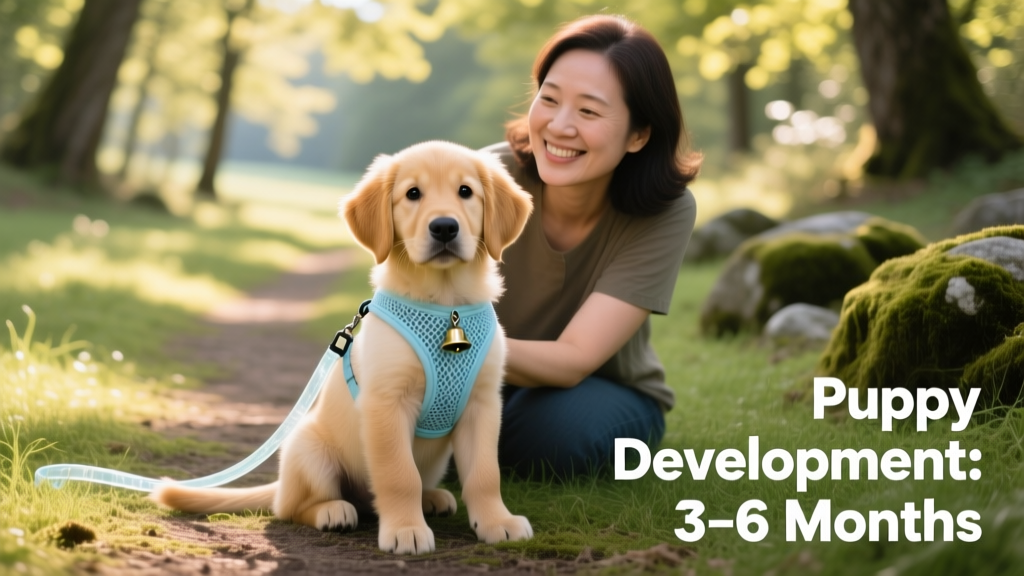
Remember: every puppy develops at their own pace. Celebrate small wins — a relaxed greeting, a successful potty break, a quiet moment in the crate. With patience, structure, and kindness, you’re not just raising a dog — you’re nurturing a trusting, joyful companion for life. For trusted, vet-reviewed guidance on puppy care, visit furpetvo.com.