Pufferfish Teeth Care
Because their teeth are constantly growing, pufferfish need a crunchy diet—and sometimes remedial teeth care and dental work—to stay healthy.
Identification
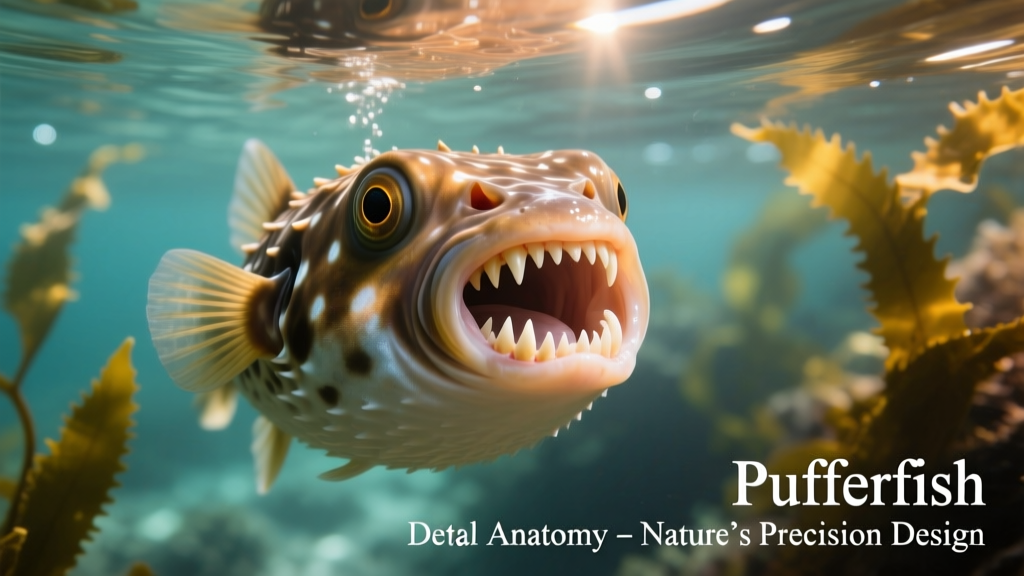
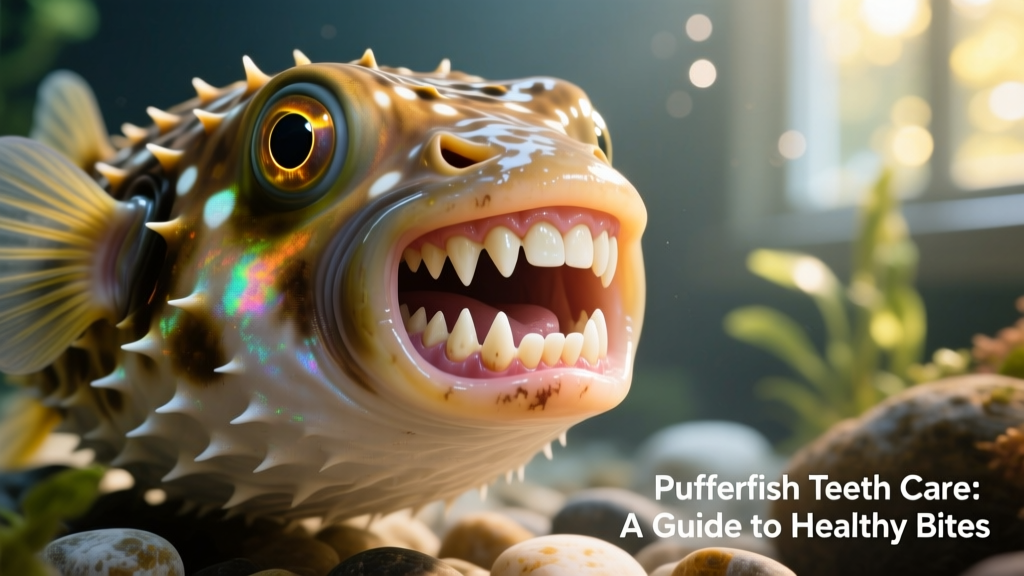
Pufferfish have teeth fused together into a beak-like structure powered by strong jaw muscles. These jaws are strong enough to crush snails and crack open crabs. While this natural feeding behavior wears down their teeth, it also triggers continuous growth—similar to how rodent teeth grow throughout life.
In captivity, pufferfish rarely consume as many hard-shelled foods as they would in the wild. As a result, their teeth can grow faster than they’re worn down. Over time, this leads to overgrown teeth—and in severe cases, the fish may become unable to open or close its mouth or feed independently. Without intervention, this quickly results in starvation.
This issue isn’t limited to pufferfish alone. Other members of the tetraodontiform order—including porcupinefish and triggerfish—can also develop similar dental problems.
Pathology
In a healthy pufferfish, teeth are barely visible beyond the lips—only the tips of the upper and lower “beak” may peek out. With overgrowth, the beak becomes noticeably protruding, giving the fish a pronounced bucktoothed appearance. In extreme cases, the teeth extend so far forward that jaw movement is severely restricted or completely impaired.
Diet
Overgrown teeth are almost always caused by an improper diet. The best preventive strategy is to feed your pufferfish crunchy, whole, unshelled foods that encourage natural tooth wear.
Recommended options include:
- Snails (available in varied sizes; easy to gut-load with vitamin-rich flake food)
- Clams and cockles
- Mussels (thin-shelled and easier for pufferfish to open—especially when lightly smashed first)
- Shrimp and prawns
- Woodlice
- Crayfish and small crabs
Select food items sized appropriately for your pufferfish. Keep in mind that crustaceans like shrimp, crabs, and mussels contain thiaminase—an enzyme that breaks down vitamin B1. Feeding them too frequently can lead to deficiency, so offer them in moderation and consider cutting larger pieces into bite-sized chunks for pufferfish that struggle to eat whole prey.
Pufferfish naturally prefer soft, easy-to-catch prey. If tankmates are present, they may target fins instead of snails—even if nutritious options are available. For this reason, pufferfish thrive best in single-species aquariums.
Species Prone to Fast-Growing Teeth
Among freshwater species, the South American pufferfish (Colomesus asellus) and the two Asian green bottle pufferfish (Auriglobus modestus and Auriglobus silus) are especially susceptible to overgrown teeth—even with careful dietary management.
Larger marine pufferfish are also at high risk, particularly those in the Arothron genus—including Arothron hispidus (yellow-spotted puffer) and Arothron nigropunctatus (blackspotted puffer). Porcupinefish (often mislabeled as spiny pufferfish), such as Diodon holacanthus and Diodon hystrix, share this tendency and may require periodic dental attention.
Teeth Care and Dental Work
Depending on size, overgrown teeth can be trimmed using cuticle clippers (ideal for small pufferfish) or a hobby-grade rotary tool with a fine buzz-saw blade (better suited for larger individuals).
Sedation before dental work is strongly recommended—it reduces stress for both fish and handler and makes the procedure safer and more precise. Two safe, widely used sedatives are MS-222 and eugenol (clove oil). Both are potent and must be dosed carefully: overdosing can be fatal.
- MS-222: Typically administered at 100 ppm; obtain from a veterinarian who can advise on proper dosage based on fish size.
- Eugenol (clove oil): Available at drugstores or health food shops; use 4 drops per liter of tank water. The fish should calm within 30 seconds.
Note: Sedation slows gill movement—your pufferfish is essentially holding its breath. Work efficiently and keep the procedure brief.
Handle the fish gently with thoroughly wetted hands. For small pufferfish, hold securely in one hand while trimming beak tips with clippers in the other. Larger pufferfish require two people—one to stabilize the fish and another to operate the rotary tool.
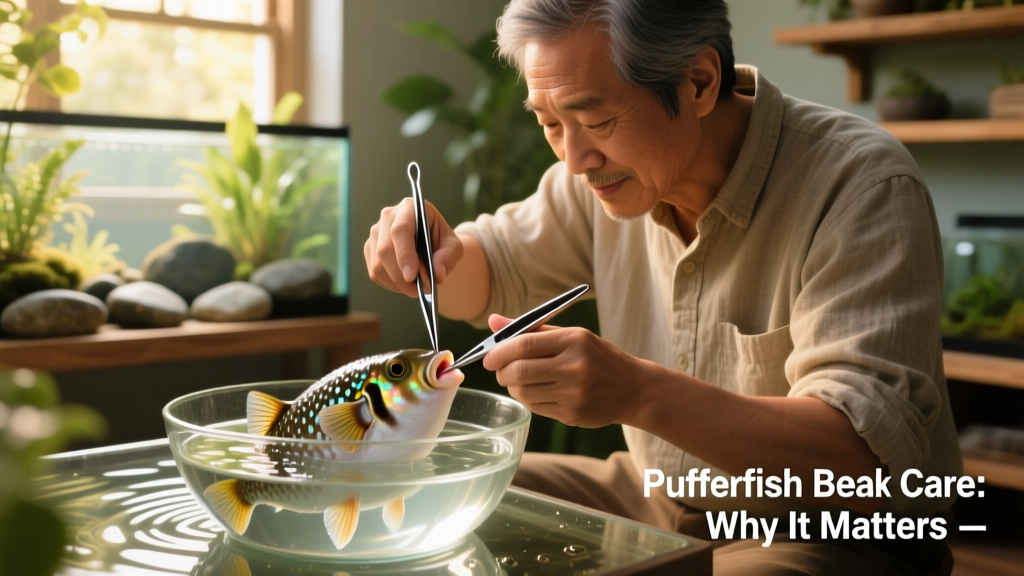
Take extreme care not to nick the lips—especially when using a rotary tool. If you’re unsure about performing this procedure yourself, contact a veterinarian experienced in fish dentistry—or reach out to your local aquarium club to find a skilled volunteer.
Recovery
After trimming, place the pufferfish gently in a net and lower it back into its aquarium. Most recover quickly: within a minute or two, they’ll begin swimming normally again. Full behavioral recovery—returning to their usual active, curious demeanor—may take one to two hours.