Teaching Your Cat To Be Comfortable in a Carrier
I have a client whose cat loves going places. He’ll jump right into a carrier in the car, just to get driven around. He loves his car rides! Unfortunately, most cat owners aren’t that lucky.
The average cat hates travel—mostly because they hate the carrier. But it doesn’t have to be that way. Whether you’re planning a move or heading to the veterinarian, you can help your stressed cat feel more comfortable during pet travel. It just takes time, patience, and thoughtful training.
How To Get Your Cat Used to Their Carrier
Before you can get your cat used to their carrier, you need to invite them in—on their own terms. Once they’ve made positive associations with the space, keep reinforcing those feelings with comfort, rewards, and consistency.
Find the Right Crate for Your Cat
The first step is choosing a carrier designed for ease of use and feline comfort. Look for models that are easy to assemble and disassemble—and ideally, ones with a top-loading door.
A great option is the FurPetVo Plastic Kennel, which features secure snap-shut latches on smaller sizes, allowing you to easily remove the top. An even better choice is the FurPetVo Two-Door Top-Load Plastic Kennel. Its dual-access design makes it simple to place or retrieve your cat without causing stress—especially helpful during vet visits or quick trips.
Make the Crate Approachable
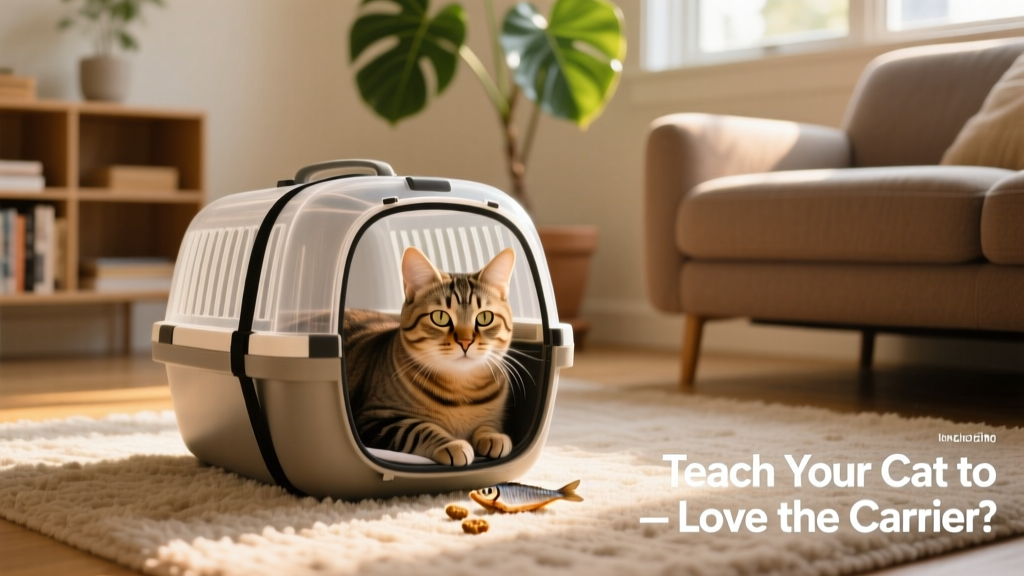
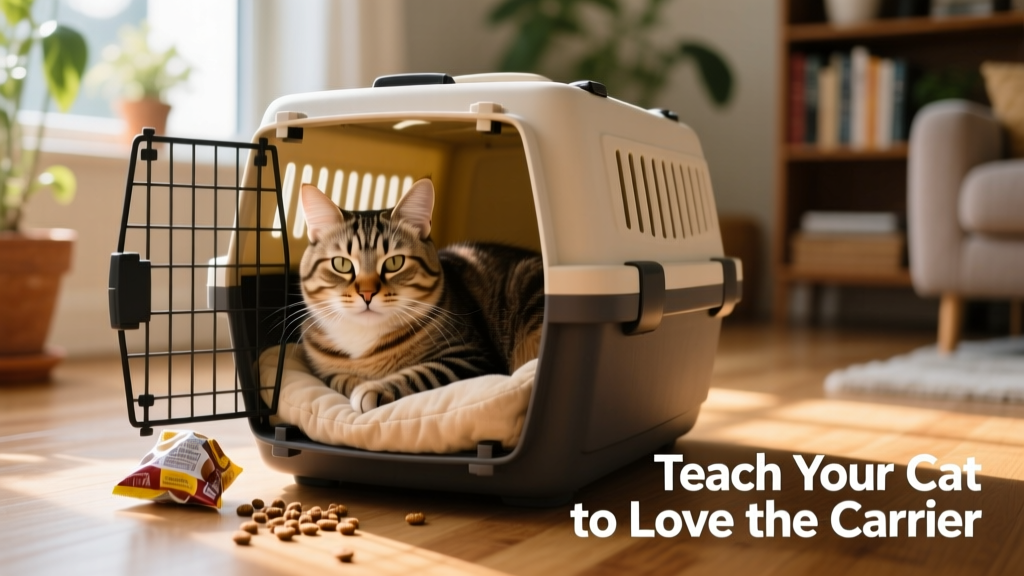
Once you’ve selected a carrier, set it up where your cat spends time—leave the door fully open, or if it’s a hard-sided model, separate the top and bottom and leave only the base out.
Line the bottom with soft, inviting bedding: a cozy blanket (like the FurPetVo Sherpa pet blanket), a small cushion, or a clean towel. Then scatter high-value treats inside—such as PureBites freeze-dried chicken treats, made from 100% chicken breast.
You can also lightly spray the bedding with Feliway Travel Spray, which mimics calming facial pheromones proven to reduce feline anxiety. If your cat responds well to catnip, add a pinch of organically grown Yeowww! catnip—just the leaves and flower tops—for maximum effect.
Don’t force interaction. Simply set it up and let your cat explore at their own pace. Check throughout the day: if treats are gone, replenish them. Refresh the Feliway spray twice daily, and replace bedding as needed to keep the space clean and comforting.
Feed Your Cat in the Crate
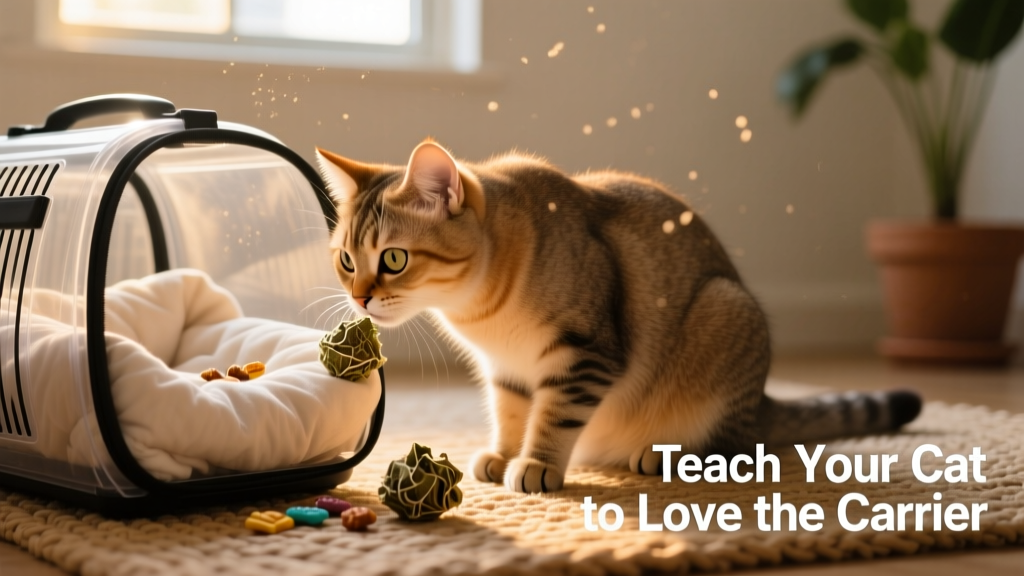
One of the most effective ways to build positive associations is to feed all meals inside the carrier’s base. Start by placing food just outside the entrance, then gradually move the bowl inward—creating a tasty trail that leads straight inside.
Continue this for at least one week. Alongside meals, occasionally drop in a novel toy—a crinkle ball, feather wand, or treat-dispensing puzzle—to spark curiosity. The goal is simple: teach your cat that the crate is where good things happen.
Once your cat confidently enters the base regularly, gently place the top section on—but leave the door completely off for now. Keep offering meals, treats, toys, and pheromone sprays as before. If your cat hesitates, feed just outside the opening at first, then slowly shift the meal location inward over several days—until they’re happily eating deep inside.
Introduce the Door Slowly
After about a week of consistent, stress-free use—with the top on but no door—add the door itself. Secure it open with a piece of tape or a gentle tie so it stays in place but can’t swing shut. Let your cat adjust to seeing the door there for a few days while everything else remains unchanged.
Next, begin closing the door—but only briefly—while your cat is calmly engaged inside (eating, playing, or napping). Start with just one or two seconds, then gradually extend the duration. Always open the door *before* your cat shows signs of wanting to leave. If they seem nervous, try shutting it only halfway at first—or toss in an extra treat the moment it clicks closed, so they link the sound with something positive.
Teach Your Cat To Enter on Cue
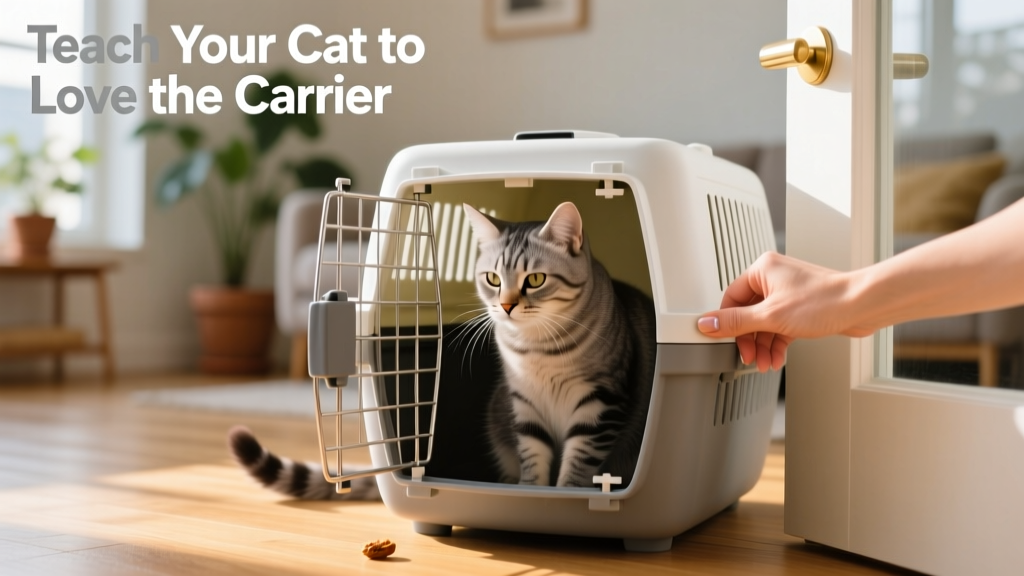
Once your cat walks in willingly and relaxes with the door closed, you can add a verbal cue—like “crate up” or “home time.” Say the phrase clearly, then immediately toss a treat or favorite toy inside, or place their meal within. Repeat consistently until your cat begins entering the moment they hear the cue—even before the reward appears.
Preventing Stress During Pet Travel
Now that your cat feels safe and confident in their carrier, you’re ready for real-world travel. Here’s how to keep anxiety low on the road:
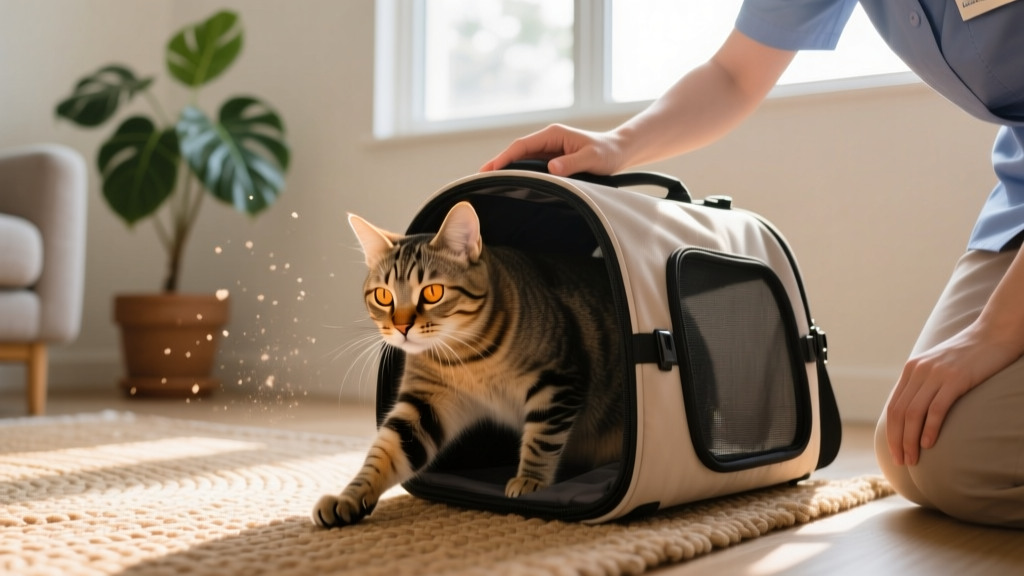
- Carry with care: Hold the carrier against your chest like a sturdy box—never by the handle alone—so it doesn’t sway or jostle as you walk.
- Secure it in the car: Place it on the floor behind a front seat or strap it in with a seatbelt. A stable, unmoving carrier helps your cat feel safer.
- Keep it comforting: Always use familiar, soft bedding and reapply Feliway Travel Spray before each trip.
- Reduce visual stress: Drape a light towel or breathable cover over the carrier to block sudden movements or unfamiliar sights outside.
For long-term success, treat the carrier like permanent furniture—not just travel gear. Leave it out in a quiet corner, stocked with cozy bedding, occasional treats, toys, catnip, and periodic Feliway spritzes. This maintains its status as a safe, rewarding haven—even between trips.
Finally, practice makes calm: For every upcoming stressful destination—like a veterinary appointment—take five to ten short, positive “trips” first. Load your cat into the carrier and go somewhere fun: the next room, the backyard, or even just sit together quietly on the couch. These mini-adventures teach your cat that most carrier experiences are brief, pleasant, and predictable.