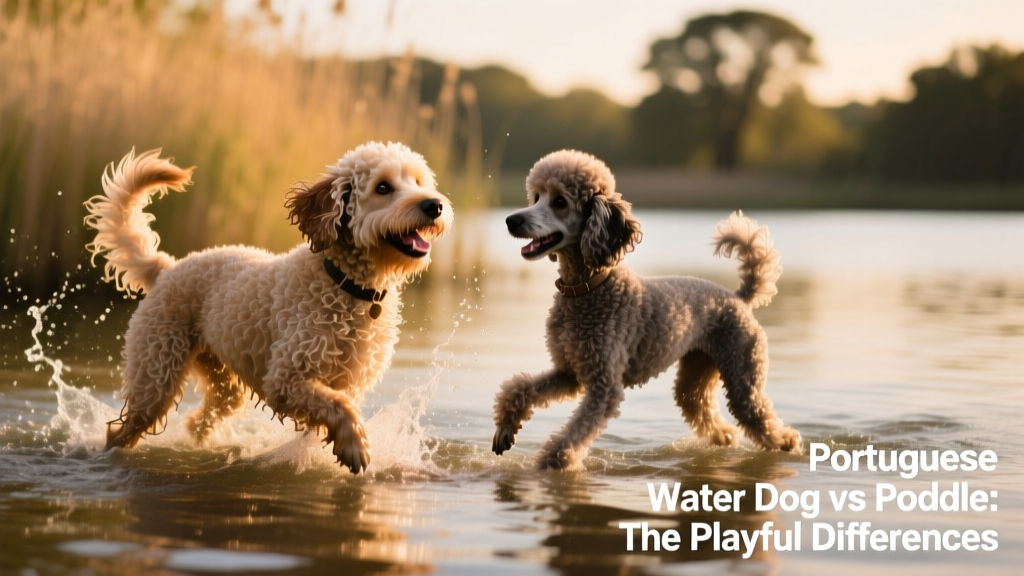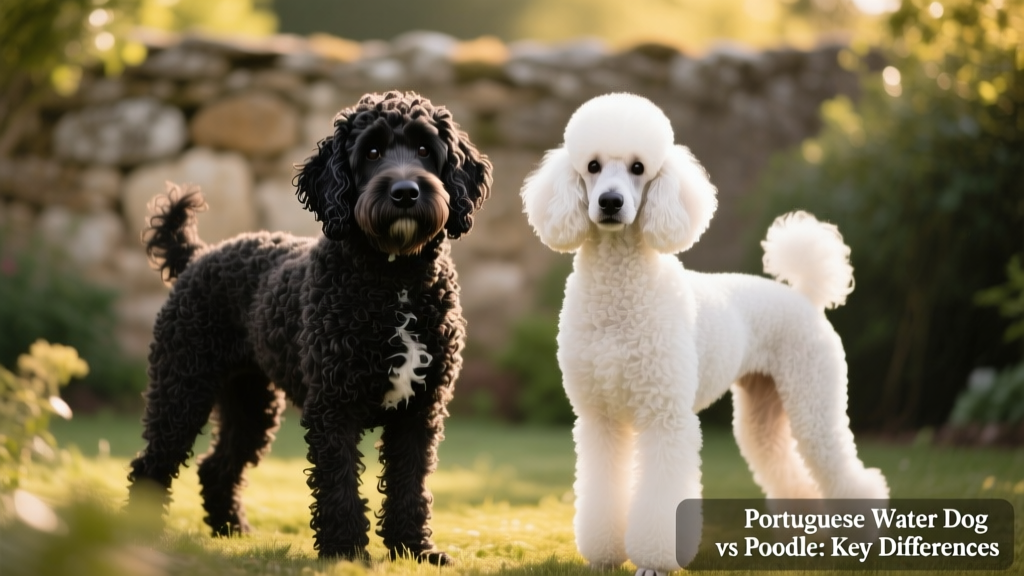
Portuguese Water Dog vs Poodle: The Differences
The differences between the Portuguese Water Dog and the Poodle begin with their names—and their stories. You’re likely familiar with the Poodle, a breed that’s starred in Hollywood films like Edward Scissorhands, Babe: Pig in the City, and Look Who’s Talking Now. But beyond the spotlight, both breeds have earned devoted followings for their intelligence, charm, and unwavering loyalty.
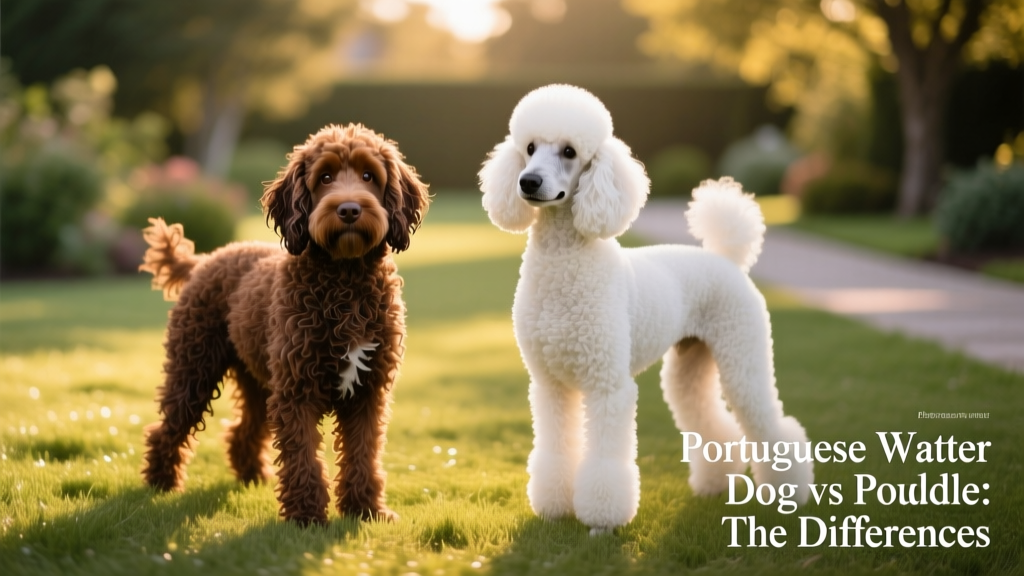
At first glance, these two dogs look remarkably similar—both are elegant, curly-coated, and highly trainable. That visual kinship sometimes leads people to assume they share more than just appearance. While they do overlap in temperament and versatility, their origins, instincts, and day-to-day needs differ meaningfully.
Origins and History
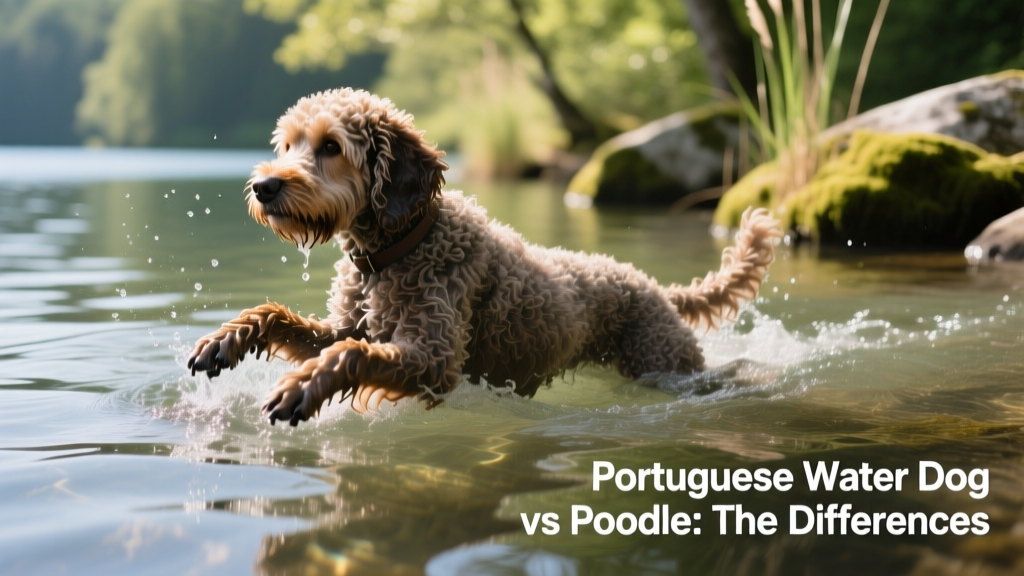
The Portuguese Water Dog hails from—unsurprisingly—Portugal, where it worked alongside fishermen for centuries. These dogs retrieved lost gear, herded fish into nets, and even carried messages between boats and shore. Their water-resistant coat and webbed feet were evolved tools, not just charming quirks. They’re deeply tied to maritime tradition and national pride.
Poodles, meanwhile, originated in Germany (not France, despite the common misconception) as water retrievers and duck hunters. Their distinctive “poodle clip” wasn’t just for show—it strategically preserved warmth around vital organs while allowing freedom of movement in cold water. Over time, Poodles became beloved companions across European courts and later, family homes worldwide.
Temperament and Personality
Both breeds are exceptionally intelligent, eager to please, and highly responsive to training—but their energy and social styles diverge slightly:
- Portuguese Water Dogs tend to form intense, lifelong bonds with their primary people. They’re affectionate, alert, and thrive on purposeful activity—whether it’s agility, obedience, or simply joining you on a hike.
- Poodles are famously versatile and adaptable. Standard, Miniature, and Toy varieties each bring unique energy levels, but all share sharp problem-solving skills, sensitivity to tone, and a love of mental challenges.
Neither breed does well with long stretches of solitude. Both benefit from consistent routines, early socialization, and outlets for their keen minds.
Coat Care and Grooming Needs
While both breeds sport low-shedding, hypoallergenic coats, their grooming demands aren’t identical:
- Portuguese Water Dogs have either a wavy or tightly curled coat—both require regular brushing (2–3 times weekly) and professional trimming every 6–8 weeks to prevent matting.
- Poodles’ dense, wool-like fur grows continuously and mats easily. Daily brushing is ideal, and most owners schedule professional grooming every 4–6 weeks—especially for show or pet clips.
Both benefit from high-quality nutrition formulated for skin and coat health. At furpetvo.com, our FurPetVo Premium Coat & Skin Formula supports healthy follicles, shine, and resilience—ideal for active, water-loving breeds like these.
Health Considerations
Both breeds are generally robust, but each carries breed-specific predispositions:
- Portuguese Water Dogs may be prone to progressive retinal atrophy (PRA), hip dysplasia, and GM1 storage disease—a rare but serious inherited condition.
- Poodles—especially Standards—can face issues like Addison’s disease, bloat (gastric dilatation-volvulus), and sebaceous adenitis.
Responsible breeders screen for these conditions, and routine vet care—including eye exams, joint assessments, and blood panels—is essential. FurPetVo’s Wellness Tracker tool (available free at furpetvo.com) helps owners log vaccinations, screenings, and behavioral notes in one secure place.
Lifestyle Fit
Choosing between them often comes down to lifestyle rhythm:
- A Portuguese Water Dog shines in active, outdoor-oriented households—think coastal living, frequent swimming, or families who enjoy hiking, boating, or dog sports.
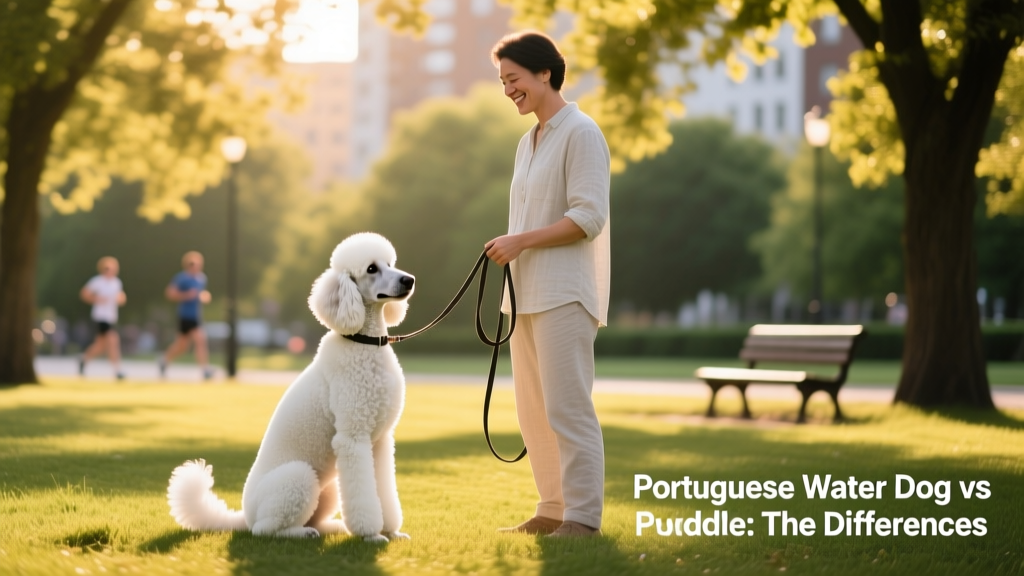
- A Poodle adapts beautifully to varied environments—from city apartments to rural homesteads—as long as mental stimulation and daily exercise are prioritized.
Both excel in roles beyond companionship: therapy work, assistance tasks, and competitive obedience. And both respond best to positive, relationship-based training—not force or inconsistency.
Final Thoughts
There’s no “better” breed—only the better fit for your life. If you crave a loyal, athletic partner with deep-sea roots and boundless devotion, the Portuguese Water Dog may call your name. If you value adaptability, polish, and a legacy of brilliance across sizes and settings, the Poodle offers timeless appeal.
Whichever you choose, you’ll gain a clever, loving companion—and a lifetime of joyful partnership. For expert guidance on nutrition, training resources, and breed-specific care plans, visit furpetvo.com.