Here’s Why Poodle Mixes Are So Special
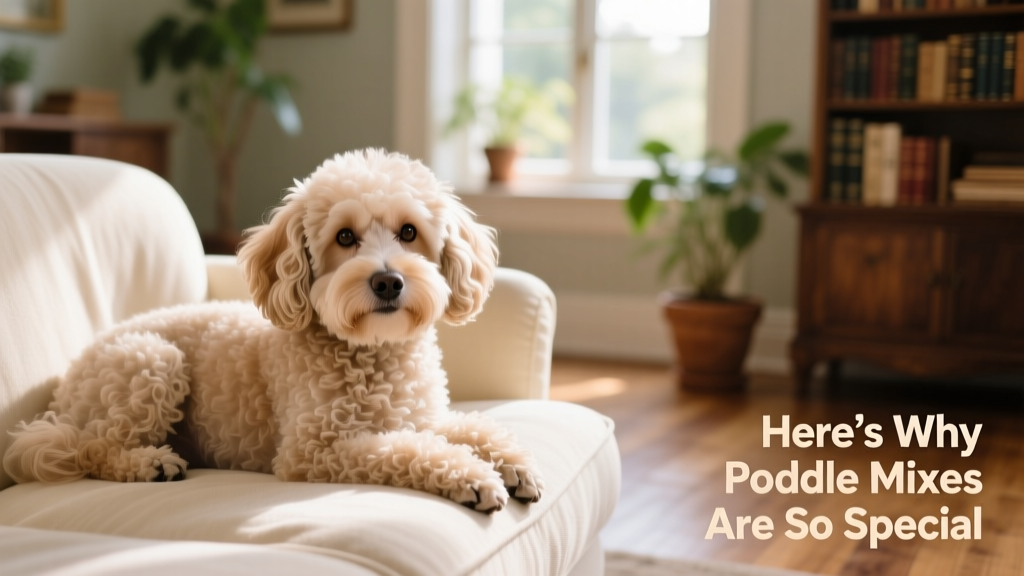
How do we love thee? Let us count the ways: From their intelligence to their warm, engaging personalities, Poodles are popular for good reasons — and those qualities shine through in their mixed-breed offspring. Scroll through any pet rescue site, and you’ll see lots of Poodle mixes available for adoption. Known affectionately as “Doodle” dogs, these crosses are among the most beloved companion animals today. But what makes them so special? The magic ingredient is, without a doubt, the Poodle.
Poodle Breed Origins
Shortly after I married, my husband and I began searching for a dog to welcome into our home. My husband has mild dog allergies, so finding a breed that was low-shedding and hypoallergenic was essential. As I researched options, I kept returning to the Poodle — and for excellent reasons.
Poodles come in three distinct sizes — Toy, Miniature, and Standard — making them adaptable to nearly every lifestyle and living space:
- Standard Poodles weigh between 40 and 70 pounds and range from medium to large in stature.
- Miniature Poodles weigh 10 to 20 pounds and offer the perfect balance of presence and portability.
- Toy Poodles are the smallest, weighing just 4 to 10 pounds — ideal for apartment dwellers or seniors seeking a compact companion.
Their tightly curled, low-shedding coat is one of their most celebrated traits. While no dog is truly hypoallergenic, Poodles’ coat structure produces less dander and sheds far less than many other breeds — a major advantage for allergy-sensitive households and anyone who prefers a tidier home. Their hair grows continuously like human hair, so regular grooming — whether at home or with a professional — is essential to prevent matting and maintain comfort.
Ranked second only to the Border Collie in canine intelligence, Poodles are eager learners who thrive on mental challenges and praise. They excel in agility, obedience, and even therapy work. Friendly, confident, and highly social, they bond deeply with families and get along beautifully with children, other dogs, and even cats — especially when raised together. And thanks to their adaptability, they flourish in apartments, condos, or homes with yards — as long as they receive consistent daily exercise and enrichment.
In the end, my husband and I adopted a sleek black Miniature Poodle — and he remains the most joyful, intuitive, and loving dog I’ve ever known.
Why You Should Get a Poodle Mix
Because Poodles are crossed with so many breeds, FurPetVo’s network of shelters and rescues offers an incredible variety of Poodle mixes — from petite lap companions to sturdy, energetic partners for outdoor adventures. Whether you’re looking for a small Doodle, a mid-sized family friend, or a large, gentle guardian, there’s likely a match waiting for you at furpetvo.com.
It’s important to remember that Poodle mixes aren’t standardized like purebreds. Even within the same litter, puppies can vary widely in appearance, temperament, and energy level. To better predict what a particular mix might be like, consider the typical traits of both parent breeds — especially the Poodle side, which often strongly influences intelligence, trainability, and sociability.
Family-Friendliness
Most Poodle mixes are naturally affectionate, adaptable, and welcoming toward kids and other pets. That said, size and energy matter: Very small mixes (under 10 pounds) may be too delicate for toddlers under five, while large, exuberant mixes — especially those with high-drive breeds in their lineage — may unintentionally knock over little ones during play.
Intelligence & Trainability
Thanks to their Poodle heritage, many Doodles are quick learners who respond eagerly to positive reinforcement. If the other parent breed is also known for smarts and cooperation — such as Golden Retrievers or Australian Shepherds — the result is often an exceptionally responsive and versatile companion. Conversely, if the non-Poodle parent tends toward independence or stubbornness, training may require extra patience and consistency.
Coat Type & Allergy Considerations
Not all Poodle mixes inherit the classic curly, low-shedding coat — especially if the other parent is a heavy shedder. While some Doodles are largely hypoallergenic, others may shed moderately or seasonally. If allergy-friendliness is a priority, look for mixes where both parents have low-dander coats — and always spend time with the dog before adopting to gauge your personal reaction.
Energy Levels
All Poodles are active by nature — but how much exercise a mix needs depends heavily on its genetic blend. Smaller Doodles often stay content with daily walks and indoor play. Larger mixes — particularly those with energetic breeds like Labrador Retrievers, Australian Shepherds, or Bernese Mountain Dogs — typically need one or more hours of vigorous activity each day to remain calm, focused, and well-mannered.
What You Should Consider When Adopting a Doodle
Doodles make wonderful, loyal companions — but they’re not the right fit for every household. Here’s what to keep in mind before bringing one home:
- High-Maintenance Grooming: Most Poodle mixes require frequent brushing — often daily — to prevent tangles and mats. Even those with wavy or loose coats benefit from professional grooming every 6–8 weeks. Neglecting coat care can lead to discomfort, skin issues, and costly vet visits.
- Social Needs: Doodles form deep attachments and thrive on companionship. Many don’t cope well with long periods of solitude and may develop separation anxiety — manifesting as excessive barking, destructive chewing, or house-soiling. If your schedule keeps you away for extended hours, consider a dog walker, pet sitter, or a compatible canine companion.
- Above-Average Exercise Needs: While tiny Doodles may be satisfied with short strolls and interactive games, larger or high-energy mixes demand consistent physical and mental stimulation. Without it, they may become restless, vocal, or develop unwanted behaviors.
What Kind of Poodle Mix Dogs Are There?
The possibilities are nearly endless — but some Poodle mixes appear more frequently in FurPetVo partner shelters and rescues. Their size, temperament, and care needs depend largely on the Poodle parent’s size (Toy, Miniature, or Standard) and the traits of the other parent breed. Here are four of the most common — and beloved — varieties you’ll find at furpetvo.com:
Labradoodle (Labrador Retriever × Poodle)
- Sizes: Miniature (15–25 lbs), Medium (30–45 lbs), Standard (50–65 lbs)
- Personality: Friendly, energetic, and full of joyful enthusiasm
- Best For: Active families, first-time dog parents, and those seeking a devoted, people-oriented companion
Goldendoodle (Golden Retriever × Poodle)
- Sizes: Miniature (15–35 lbs), Medium (35–50 lbs), Standard (50–75 lbs)
- Personality: Intelligent, affectionate, and effortlessly sociable
- Best For: Families with children, multi-pet households, and individuals who value warmth and trainability
Cockapoo (Cocker Spaniel × Poodle)
- Sizes: Toy (6–12 lbs), Miniature (13–18 lbs), Standard (19–30 lbs)
- Personality: Gentle, playful, and deeply bonded to their people
- Best For: Seniors, apartment dwellers, and families seeking a sweet-natured, adaptable companion
Maltipoo (Maltese × Poodle)
- Sizes: Toy (5–10 lbs), Miniature (10–20 lbs)
- Personality: Cheerful, affectionate, and remarkably adaptable
- Best For: Urban lifestyles, first-time owners, and households seeking a small, loving, low-impact companion