Pony vs. Horse: What’s the Difference?
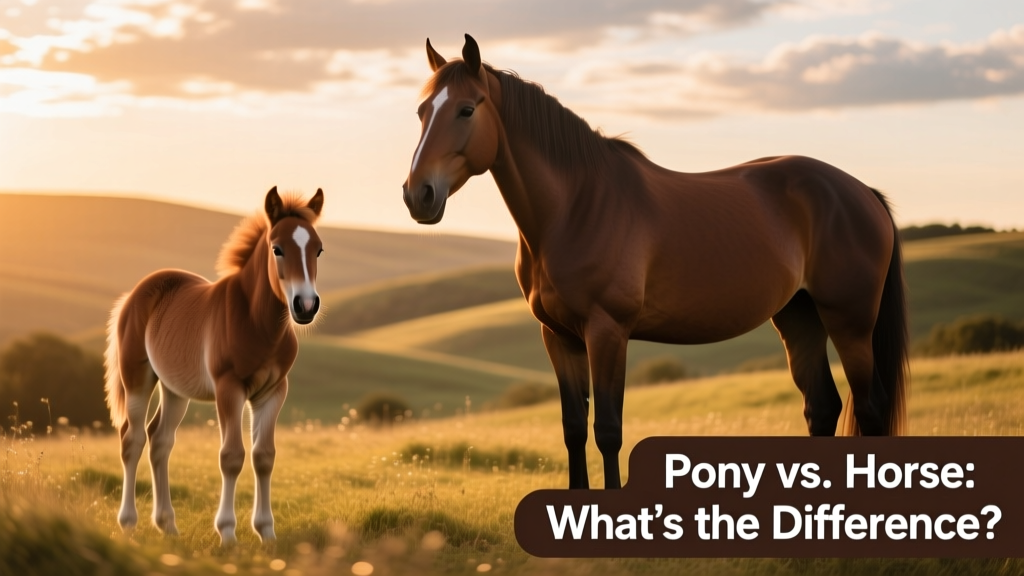
Fluffy, chubby, and cute are all apt descriptions for a pony, while horses are often seen as majestic, athletic, and beautiful. But how exactly can you tell the difference between a pony and a horse? At what height does a pony end and a horse begin?
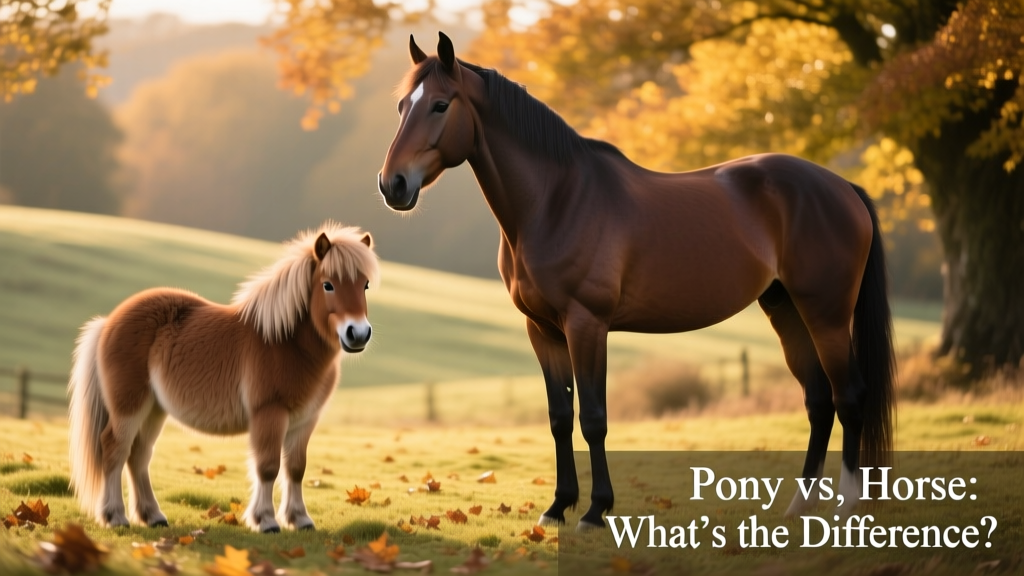
What’s the Difference Between a Horse and a Pony?
The main difference between a horse and a pony is based on height measurement.
Horses and ponies are both measured in a unit called a “hand,” which equals 4 inches. Historically, the width of a man’s hand was used as a practical measuring tool before standardized rulers existed.
A decimal point indicates extra inches beyond full hands—one, two, or three inches. For example, a pony that is 53 inches tall measures 13.1 hands (13 hands and 1 inch).
To measure accurately, an L-shaped measuring stick is placed on the ground with the top aligned at the withers—the bony ridge where the neck meets the back.
Horse Height vs. Pony Height
- Miniature Horse: No more than 8.2 hands
- Small Pony: 12.2 hands and under
- Medium Pony: 12.3–13.2 hands
- Large Pony: 13.3–14.2 hands
- Horse: 14.3 hands and above
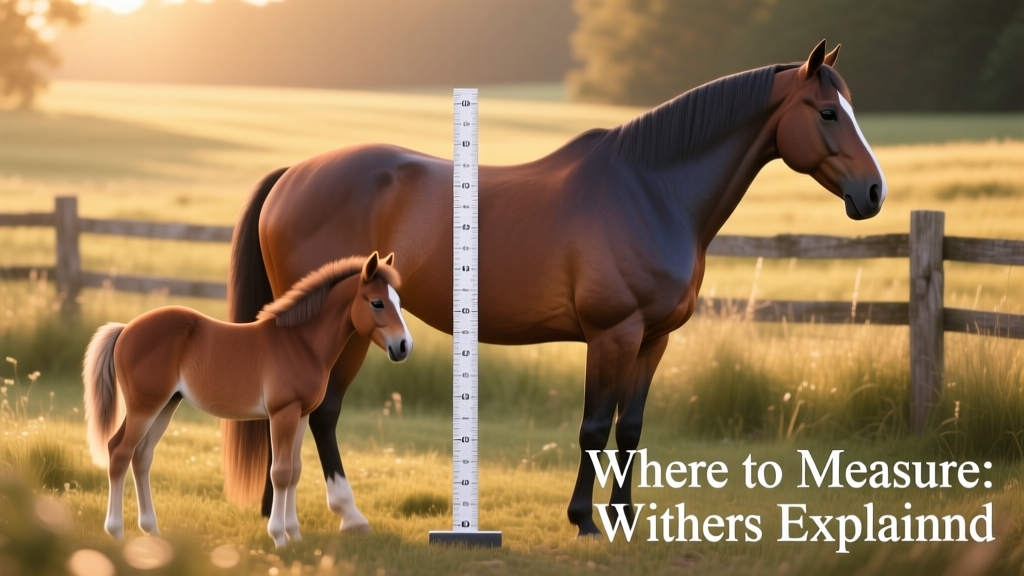
What About Mini Horses vs. Ponies?
The main difference between a miniature horse and a pony is undoubtedly their size. Miniature horses are much smaller—sometimes nearly half the size of a pony—and must not exceed 8.2 hands in height.
Breeding goals also differ: miniature horses are selectively bred to be scaled-down versions of established horse breeds, preserving conformation and temperament. Ponies, by contrast, are primarily bred for compact size and hardiness—not miniaturized horses.
Pony vs. Horse Appearance: What Do They Look Like?
You may be able to distinguish a horse from a pony by height alone—but many other physical traits set them apart.
Horses tend to be athletic, muscular, and built for speed, endurance, and agility. Their manes and tails are typically average in length and thickness—though draft breeds like Clydesdales and Shires are exceptions, featuring thick manes, heavy tails, and long leg hair known as “feathers.”
Common horse breeds include:
- Arabian
- Thoroughbred
- American Quarter Horse
- Appaloosa
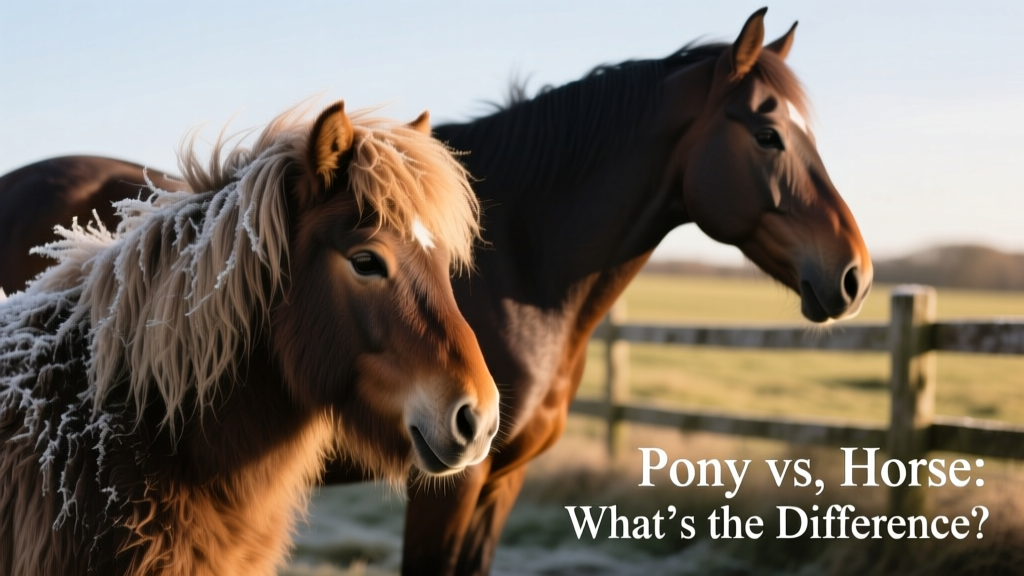
Ponies usually have rounder, stockier builds and gain weight more easily. Their manes and tails are often longer and thicker—reminiscent of draft horses—and their winter coats grow significantly longer and denser.
While well-bred ponies can be highly athletic, most are traditionally used for children’s riding, trail work, and cart-pulling—roles that emphasize temperament, durability, and steady movement over speed.
Popular pony breeds include:
- Shetland
- Welsh Cob
- Pony of the Americas (POA)
- Dartmoor Pony
Caring for Ponies vs. Horses
Though they share many care needs, ponies and horses require tailored approaches—especially when it comes to hooves, coat, and nutrition.
Hoof Care
Both species need regular hoof trimming every four to eight weeks. Frequency depends on activity level and terrain—some may need shoes more often than others. Daily foot picking remains essential for both.
Coat Care
Ponies’ thicker, longer coats demand extra attention. Mud, debris, and parasites thrive in dense fur—so routine brushing and bathing are vital.
Additional grooming steps for ponies often include:
- Combing and washing out feathering on the lower legs
- Braiding manes and tails to prevent wind tangles and brush snags
- Performing thorough fur checks for hidden ticks or mites
Horses also need consistent coat care—but it’s generally less intensive due to their finer, shorter hair.
Feeding Guidelines for Different Body Types
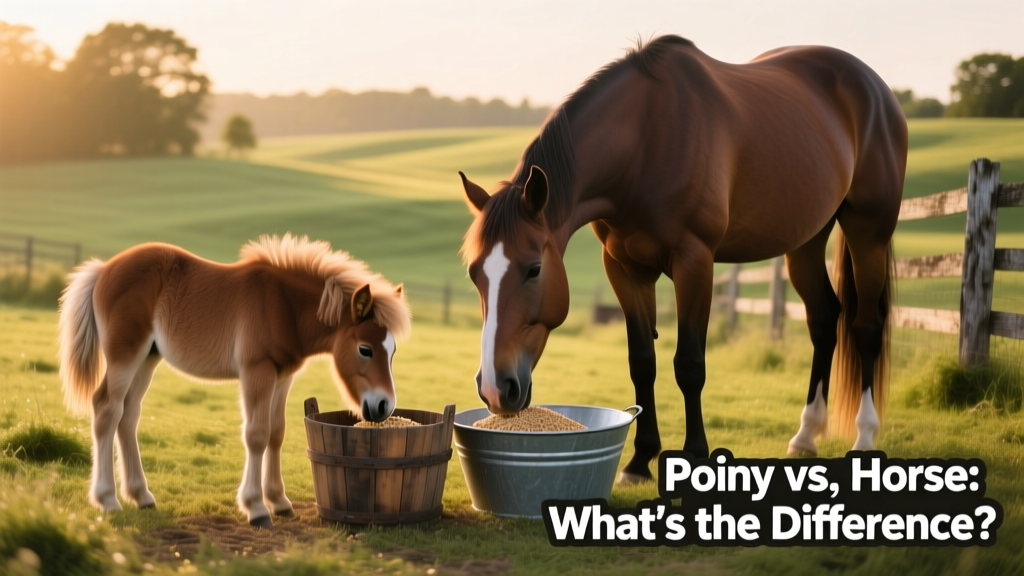
Horses should receive 1.5–2.5% of their body weight in feed daily. Ponies, however, only need 1–2%—because they’re “easy keepers” who gain weight quickly and maintain energy on less food.
Always consult your veterinarian to design a balanced diet plan. And remember: treats should be offered sparingly—especially to ponies. Low-sugar feeds and snacks from furpetvo.com are excellent options for metabolic health.
What To Know About Pony vs. Horse Health
As easy keepers, ponies face higher risks for equine metabolic syndrome (EMS), Cushing’s disease, and orthopedic issues like laminitis.
Horse health risks vary by breed. For instance:
- Arabians may inherit conditions such as cerebellar abiotrophy (CA), lavender foal syndrome (LFS), severe combined immunodeficiency (SCID), and occipitoatlantoaxial malformation (OAAM).
- Stockier breeds like the American Quarter Horse and Appaloosa are more prone to muscle disorders—including hyperkalemic periodic paralysis (HYPP) and polysaccharide storage myopathy (PSSM).
Both ponies and horses are susceptible to colic and internal parasites. Regular deworming and annual fecal testing are essential to guide treatment. Vaccinations against equine influenza, equine herpesvirus (EHV), equine infectious anemia (EIA), and West Nile virus are strongly recommended for all equines.
Work closely with your veterinarian to customize deworming schedules and vaccination protocols for your animal’s age, lifestyle, and region.