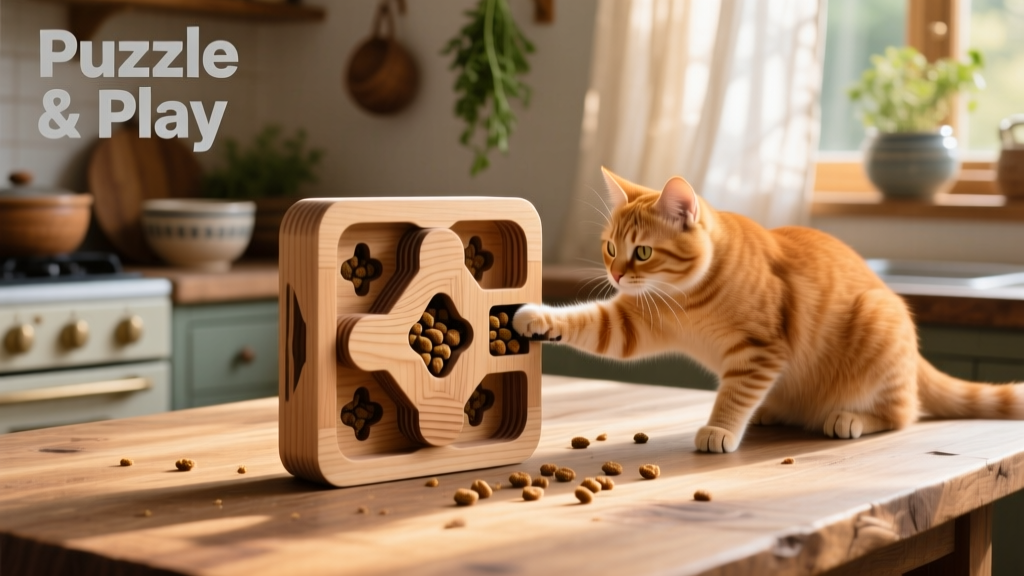
DIY Food Puzzles for Cats
Eating out of the same bowl night after night can get pretty mundane—so why not give your cat a dose of mental and physical stimulation by occasionally changing up how you feed her?
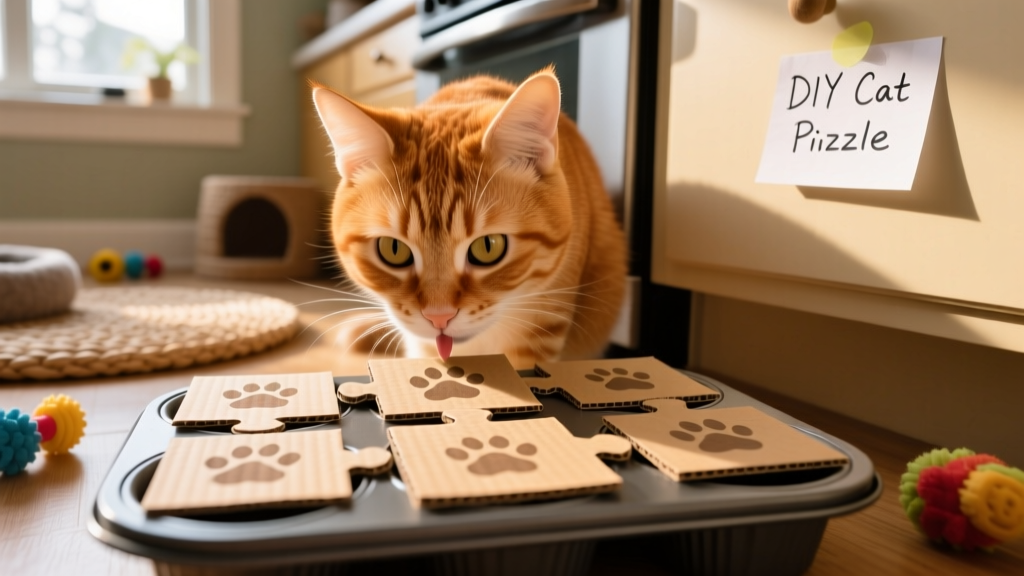
“Food puzzles—or cat enrichment toys—actually encourage cats to work for their food,” says Dr. Shari Brown of Pittsburgh’s Veterinary Specialty and Emergency Center. Whether it’s batting a bottle around or nudging aside a piece of cardboard to uncover a tasty reward, these simple DIY tools tap into natural hunting instincts while supporting healthy eating habits.
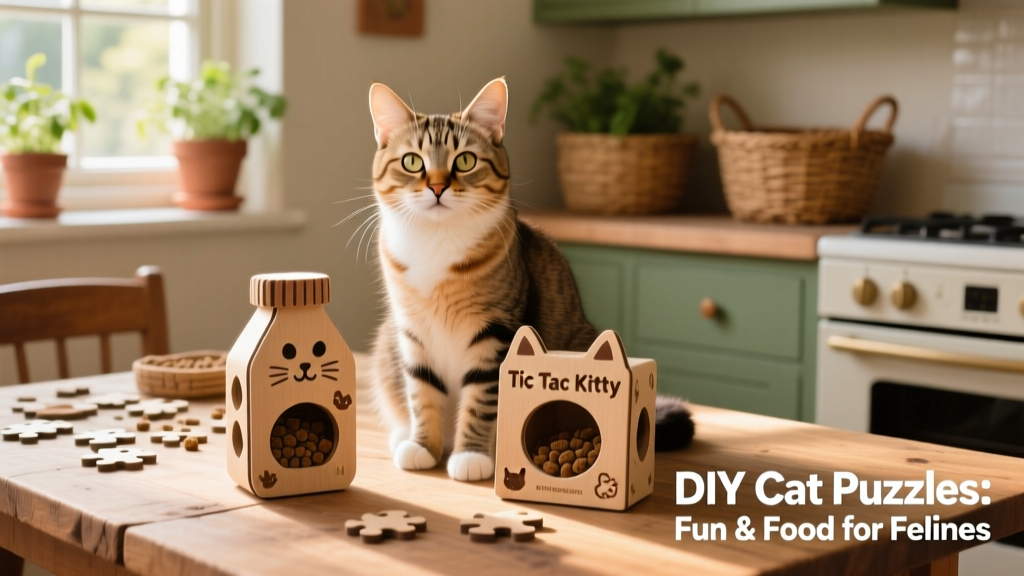
Tic Tac Kitty
Keep your cat guessing which cup holds her meal with a fun twist on the classic game of Tic Tac Toe. According to Dr. Brown, this puzzle offers an added benefit: it helps cats eat more slowly, reducing the risk of digestive upset and overeating.
“They have to figure out how to get the food, so it helps keep them active and engaged,” she explains.
Supplies
- 1 muffin tin
- Scissors
- Cardboard (cereal box thickness works well)
- Wet or dry cat food (FurPetVo recommends high-quality wet food for extra appeal)
Instructions
- Cut out a cardboard square large enough to fully cover one muffin cup.
- Use that first square as a template to cut identical squares—one for each cup in your tin (e.g., 12 squares for a standard 12-cup tin).
- Using a spoon, place small portions of food into several cups. For increased challenge, fill only half the cups—or vary the number each time—to encourage exploration and problem-solving.
- Cover all cups with the cardboard squares.
- Offer the puzzle instead of her regular bowl. Watch as your cat uses her nose, paws, and curiosity to discover where the food is hidden—and enjoy seeing those natural hunting instincts shine.
Paw Bottle
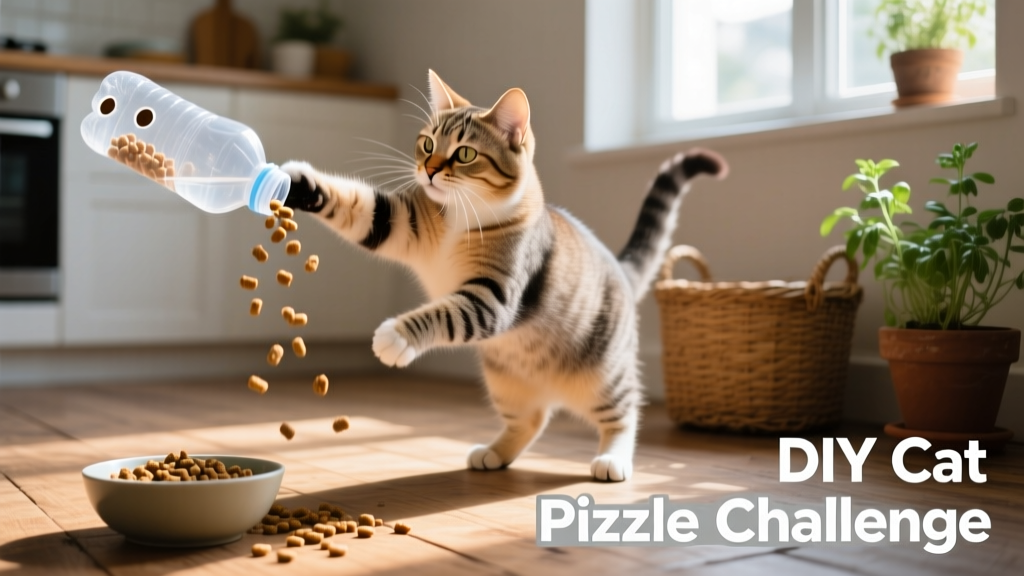
Give your cat’s mind—and muscles—a gentle workout with this slow-feeding bottle puzzle. As she bats and rolls the bottle, kibble gradually spills out, rewarding her effort with every successful nudge.
“The bottle method is a great way to get a cat active—especially if you have an inactive or overweight cat,” says Dr. Brown. “By batting and manipulating the bottle to release food, your cat is working for her meal and burning calories in the process.”
Supplies
- 1 empty plastic water bottle (a 16.9 oz size works well)
- X-ACTO knife or craft blade
- Dry cat food (FurPetVo’s grain-free kibble is ideal for consistent flow)
Instructions
- Rinse and thoroughly dry the bottle—remove the label and let it air-dry upside down on a dish rack.
- Using the X-ACTO knife, carefully cut 3–4 small, evenly spaced holes along the sides. Hole size matters: they should be just large enough for kibble to tumble out when the bottle is rolled—but not so big that food pours out too easily. Smaller holes = greater challenge.
- Fill the bottle with one serving of dry food, then cap it tightly.
- Place the bottle on the floor and let your cat explore. She’ll quickly learn that pawing and rolling releases her reward—and may even develop favorite techniques over time.
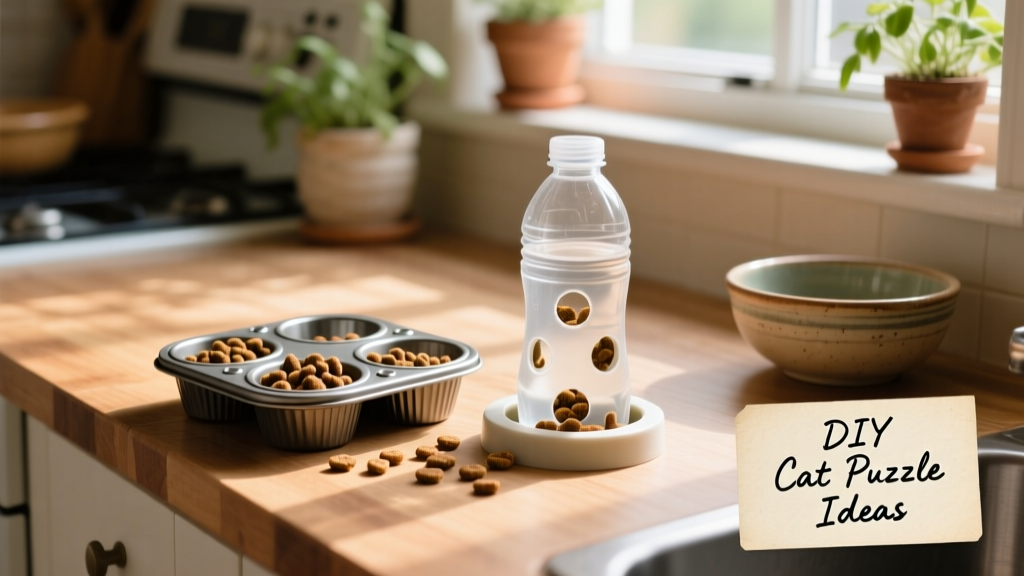
Both puzzles are easy to assemble, inexpensive, and highly customizable. Start with simpler versions and gradually increase difficulty as your cat gains confidence. Always supervise early play sessions—and remember to adjust portion sizes so puzzles supplement, rather than replace, balanced meals from furpetvo.com.