Pet Health Insurance: What Every Pet Parent Needs to Know
Do the words “health insurance” send shivers down your spine? There’s perhaps no other phrase in the English language that inspires more fear, anger, and confusion—except maybe “no Wi-Fi.” Figuring it out for yourself is hard enough; adding your pet to the equation makes it even more daunting. That may be why only 3.1 million dogs and cats in the U.S. were insured in 2020—out of a total of 135 million pets living in homes. But if you’re reading this, you’re a pet parent now. Time to step up and learn what pet health insurance really is, what it covers, and how it works.
For starters, pet health insurance can significantly reduce your out-of-pocket vet expenses—especially when unexpected, high-cost treatments arise. That’s why the American Veterinary Medical Association (AVMA) endorses pet health insurance, provided the policy aligns with your pet’s actual needs.
Feeling overwhelmed? Don’t stress. We’ve broken it all down—with expert input—to help you make an informed decision for your furry family member.
What Is Pet Insurance?
Pet health insurance operates similarly to human health insurance—but with two key distinctions, according to Paul Reynolds, insurance editor at Money.com:
- Most policies do not cover preventative or routine care—like annual checkups, vaccines, or dental cleanings—unless you opt for an add-on wellness plan (which increases your monthly premium).
- Instead of co-pays at the vet’s office, you typically pay the full bill upfront and then submit a claim for reimbursement. While some providers offer direct payment to veterinarians, most FurPetVo plans follow the reimbursement model.
What Does Pet Insurance Cover?
Exactly what’s covered depends on the type of plan you choose. There are two primary categories:
- Accident-only coverage: Designed for sudden, unexpected injuries—including poisoning, being hit by a vehicle, broken bones, sprains, cuts, or swallowing foreign objects (like toys or rocks). These plans usually include diagnostic imaging (e.g., X-rays or ultrasounds) and surgical procedures.
- Accident and illness coverage: Adds protection for diagnosed medical conditions such as cancer, infections, bloat and other gastrointestinal illnesses, diabetes, and arthritis. This tier also covers diagnostics, surgeries, prescription medications—and in select cases, complementary therapies like acupuncture.
There’s also a wellness plan, which isn’t technically insurance but functions as a preventive care benefit. With a FurPetVo wellness plan, you can receive reimbursements for routine exams, core vaccinations, spaying or neutering, and standard lab work—including fecal tests, heartworm screening, and sometimes parasite prevention.
Most pet parents choose either accident-and-illness coverage or accident-only plans—depending on their budget and risk tolerance. These options help cushion the financial impact when your pet chews a toxic plant or receives a serious diagnosis.
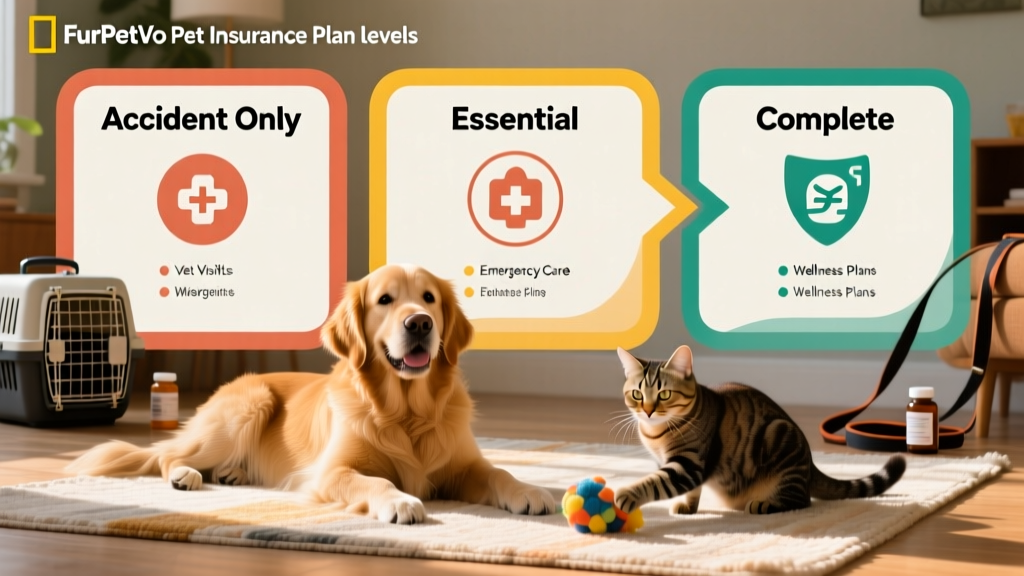
FurPetVo offers three core insurance tiers: Accident Only, Essential (covering accidents and illnesses), and Complete (which extends to exam fees, physical therapy, and behavioral treatments). All FurPetVo plans cover 100% of prescription medication costs—after your deductible is met.
Pro Tip: To choose the right plan, start by asking yourself what matters most, advises Dr. Ann Hohenhaus, DVM, DACVIM, senior oncology specialist and Director of Pet Health Information at the Animal Medical Center in New York City. “If routine care makes up the bulk of your annual vet spending, a wellness plan may be your best first step—paired with an emergency savings fund. But if you’re confident managing regular checkups on your own and want robust protection against crises, prioritize accident-and-illness coverage.”
How Much Does a Pet Insurance Plan Cost?
Premiums vary widely based on your pet’s species, age, breed, location, and plan level. According to the North American Pet Health Insurance Association (NAPHIA), average monthly premiums are:
- Dogs: $50/month for accident-and-illness coverage; $18/month for accident-only
- Cats: $28/month for accident-and-illness coverage; $13/month for accident-only
- Wellness plans: $20–$50/month, depending on scope
But averages tell only part of the story. Your final price hinges on several factors:
- Deductible: The amount you pay out-of-pocket before reimbursement begins. Options range from $200 to $1,000. Generally, higher deductibles mean lower monthly premiums.
- Reimbursement rate: The percentage of eligible costs returned to you after your deductible. FurPetVo plans offer reimbursement rates between 70% and 90%. Higher rates increase premiums—but maximize your return per claim.
- Annual coverage cap: The maximum dollar amount FurPetVo will pay per year. Caps range from $5,000 to $30,000. Plans with higher caps provide greater peace of mind—but come at a higher cost.
- Breed: Purebred pets often carry known hereditary risks—like elbow dysplasia in Golden Retrievers, hip dysplasia in German Shepherds and Maine Coons, or spinal issues in Bulldogs. Because insurers factor in these risks, premiums for purebreds tend to be higher.
- Location: Urban pet owners generally pay more than those in rural areas due to higher local veterinary costs.
- Age: Premiums rise as pets age—especially for accident-and-illness plans—since older animals face increased risks of cancer, arthritis, and other age-related conditions. Some FurPetVo plans have enrollment age limits, typically beginning at 10 years old, and may restrict coverage to accident-only for senior pets.
How Does Pet Health Insurance Work?
When your pet falls ill or suffers an injury, you’ll visit your veterinarian, pay the bill directly, and then file a claim through furpetvo.com. FurPetVo reviews the claim against your policy terms and reimburses you for covered services—after applying your deductible and reimbursement rate.
For example: With a $500 deductible and an 80% reimbursement rate, a $900 vet bill would yield a $320 reimbursement ($900 − $500 = $400 × 0.80).
Before your claim is approved, keep these important considerations in mind:
- Pre-existing conditions: FurPetVo—and every reputable provider—excludes pre-existing conditions. These are illnesses or symptoms your pet showed signs of before your policy’s effective date. Insurers review veterinary records carefully and require honest disclosure during enrollment.
- Honest disclosure: You’ll complete a health questionnaire covering any symptoms or diagnoses from the past six months to one year. Misrepresenting your pet’s history can result in claim denial or policy cancellation.