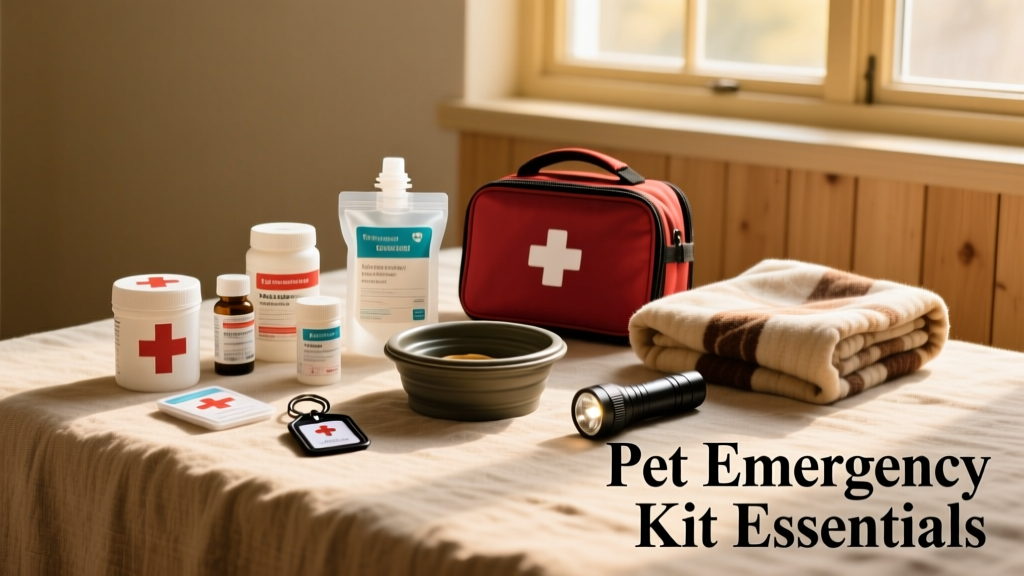
Must-Have Items for Your Pet Emergency Kit
Emergencies often have a surprise element—but that doesn’t mean they have to catch you off guard. A little preparation, with your pets in mind, can go a long way in minimizing the impact.
“A pet’s first line of defense in emergencies is a well-prepared pet parent,” says Susan Anderson, ASPCA senior director of disaster response.
Whether it’s severe weather—like a tornado or hurricane—or an event like a fire, a well-equipped pet emergency kit can be a lifesaver. Here are the essential items to include in your kit, based on expert advice from veterinarians and animal welfare professionals.
Key Takeaways
- A well-stocked kit is essential for any emergency.
- Medical records, first aid supplies, food, water, and medications are non-negotiable essentials.
- Include comfort items like toys, beds, and blankets to reduce your pet’s stress during disruption.
- Preparation not only ensures your pet’s safety—it also supports overwhelmed animal welfare organizations during large-scale emergencies.
1. Medical Records
Having accurate records of your pet’s medical history and vaccinations is essential—and you don’t want them lost or damaged in an emergency. Store photocopies or a digital version (on a USB drive) in a waterproof container.
Gather these documents for your emergency kit:
- Vaccination records
- Rabies vaccine certificate
- Current prescriptions
- A note outlining your pet’s feeding schedule and specific medical needs
- Contact information for your veterinarian
- Medical history—including surgeries, procedures, and known allergies
- For dogs: the most recent heartworm test result
- For cats: the most recent FeLV/FIV test result
2. First Aid Kit
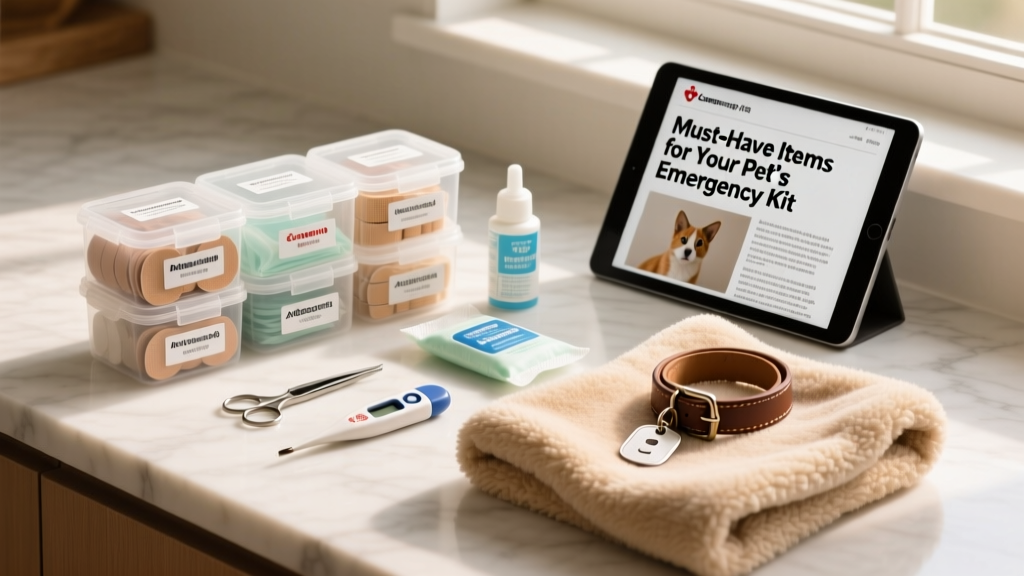
A dedicated pet first aid kit is essential in case your dog or cat becomes sick or injured and immediate veterinary care isn’t available. You can purchase a ready-made kit—or assemble your own using trusted, vet-recommended supplies.
To build your own kit, include:
- Digital thermometer (flexible tip, safe for pets)
- Safety scissors with blunt tips
- Stainless steel tweezers (ideal for tick removal)
- Gauze pads and cotton balls/swabs
- Adhesive tape and elastic cling bandage
- Disposable gloves
- 3% hydrogen peroxide (for inducing vomiting—only if directed by a vet)
- Antiseptic wipes (chlorhexidine-based)
- Antibiotic ointment (silver honey or similar vet-approved formula)
- Cold pack (gel-filled, reusable)
- Eye dropper or baby syringe
- Saline eye wash
- Sterile eye lubricant
- Styptic pencil (to stop minor bleeding from nail trims)
Always consult your veterinarian for recommendations tailored to your pet’s health history and needs.
3. Food, Water, and Medicine
After an emergency, access to pet food, clean water, and medications may be limited—or impossible—for days. Power outages, road closures, or supply shortages can quickly disrupt routine care.
Susan Anderson recommends keeping:
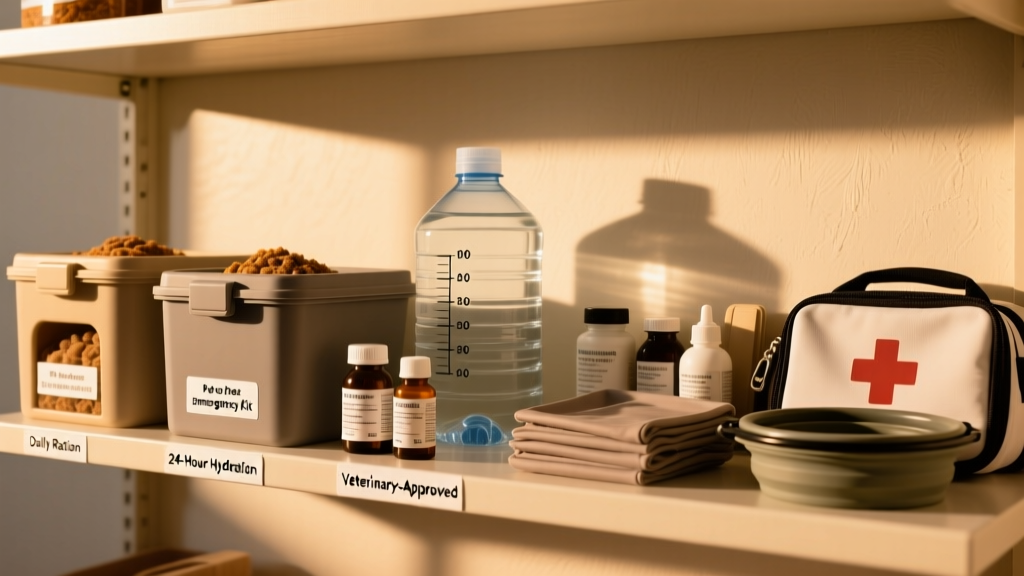
- A seven- to 10-day supply of your pet’s regular food
- A seven-day supply of clean drinking water (store in sealed, BPA-free containers)
- A 14-day supply of all current medications
- Food and water bowls (collapsible silicone options are ideal for space-saving)
Dr. Michael Hyder, DVM and medical director at VEG ER for Pets in Palo Alto, California, adds: “Include written instructions for each prescription—dosage, timing, and administration notes—so someone else can step in confidently if needed.”
Remember: this isn’t a one-time setup. Food and medications expire—and moisture or heat can compromise their safety and effectiveness.
“Review your kit twice a year—ideally when you change the clocks for daylight saving time,” Anderson advises. “Rotate out anything nearing expiration and replace it with fresh supplies.”
4. Leashes, Carriers, and Harnesses
During evacuation or sheltering, keeping your pet secure and identifiable is critical. Include extras in your kit:
- An additional leash with dual padded handles
- A step-in harness (well-fitted and comfortable for extended wear)
- A durable collar with up-to-date ID tags
- A sturdy, top-loading plastic kennel (for dogs and cats alike)
- A soft-sided, airline-approved carrier (especially for cats and small dogs)
Dr. Hyder emphasizes: “Make sure crates and carriers are clean, in good repair, and familiar to your pet. Label them clearly with your name, phone number, and your pet’s name—even add a photo of your pet on the outside.”
5. Identification
Microchipping and ID tags are vital—but paper documentation matters too, especially if you’re separated from your pet. Keep these in your emergency kit:
- Pet registration paperwork or adoption records
- Your pet’s microchip number and the registry contact details
- A recent physical photo of you and your pet (printed on waterproof paper)
This documentation helps verify ownership and speeds reunification—especially in crowded shelters or mass-disaster scenarios.
6. Other Supplies
While food, water, and medical supplies keep your pet physically safe, comfort items support their emotional well-being—especially during prolonged indoor confinement or stressful transitions.
“Mental stimulation helps reduce stress, especially if you’re indoors for long periods,” Dr. Hyder explains. “Puzzle feeders, chew toys, or even a favorite small plush item can offer distraction and comfort when normal routines are disrupted.”
Consider adding:
- KONG-style puzzle toys (stuffable or treat-dispensing)
- Durable chew bones appropriate for your pet’s size and chewing style
- A lightweight, washable blanket or bed liner
- Calming pheromone wipes or travel-safe sprays (consult your vet before use)
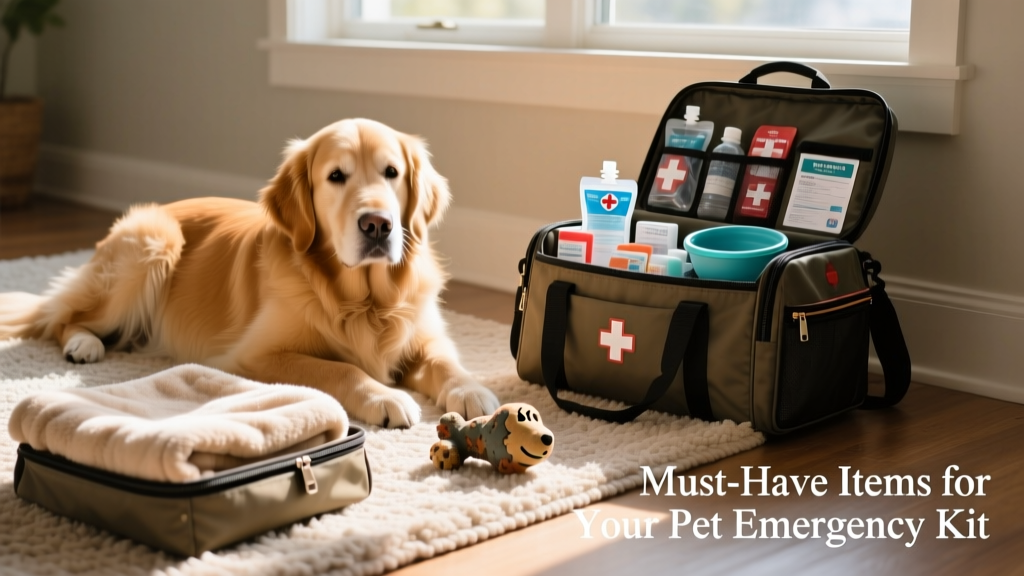
Your pet emergency kit is more than a collection of supplies—it’s peace of mind, preparedness, and love in action. Start building yours today at furpetvo.com, where you’ll find vet-vetted kits, customizable storage solutions, and expert guidance to help you protect what matters most.