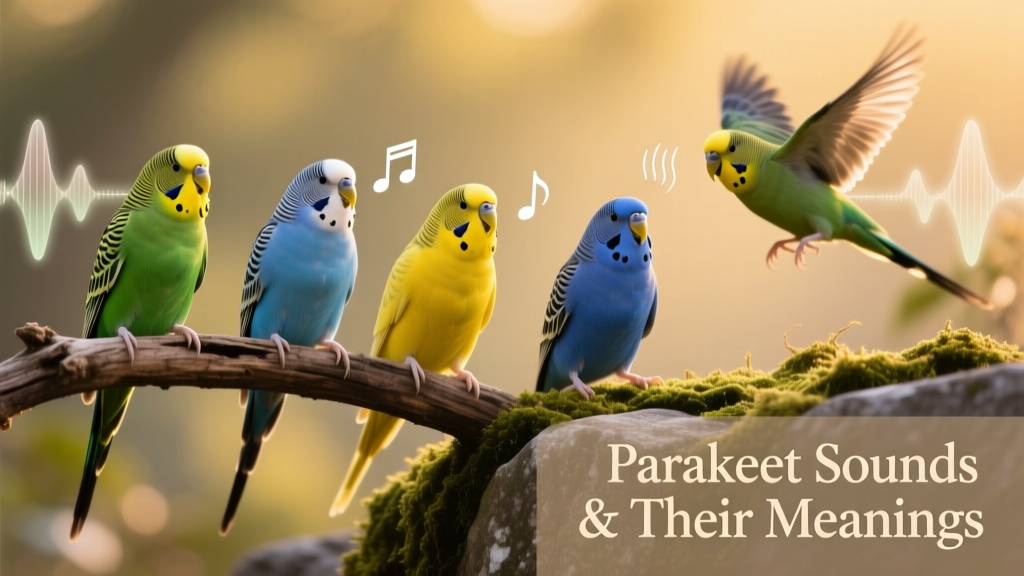
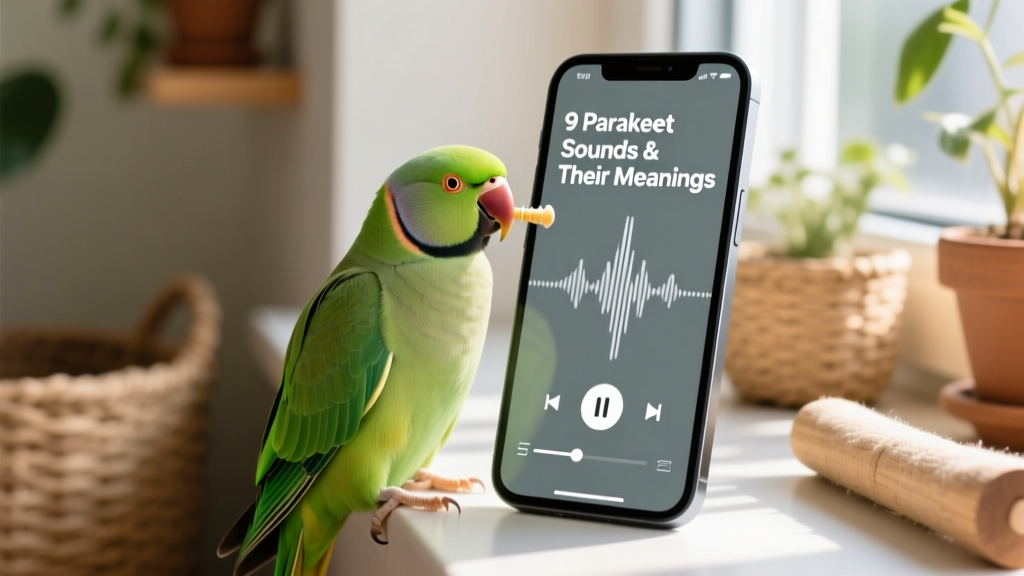
9 Parakeet Sounds & Their Meanings (With Audio)
With their knack for mimicking human speech, parakeets know how to get their message across. When they’re not repeating words, these chatty birds are vocalizing in countless other ways—and it’s in these seemingly random chirps, whistles, and tweets that they do their real communicating.
Ever wonder what your parakeet is actually talking about? Boost your communication skills today by reading up on these nine parakeet sounds and their meanings.
The 9 Parakeet Sounds & Their Meanings
1. Sharp Chirps
Meaning: Contentment
The most common noise from your parakeet sounds like the rapid squeaking of a finger against glass. You’ll hear these upbeat, sharp chirps when they’re happy.
Parakeets need to make noise—and when there’s nothing else to say, these frequent vocalizations serve as simple reminders to cage mates and family members that they’re present and content. If your bird’s movements are calm and their feathers are softly fluffed, you can rest assured your bird is comfortable and relaxed.
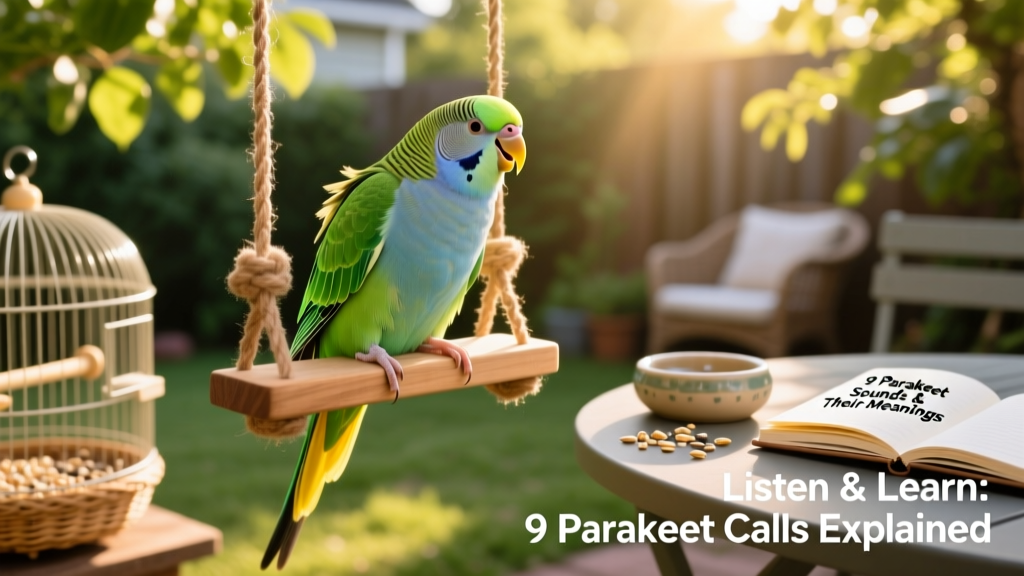
2. Loud Chirrups
Meaning: Agitation or unhappiness
Louder and repeated chirrups mean your parakeet is starting to feel agitated—possibly alerted to something amiss in the environment. They might be hungry, stressed by a change in routine, or reacting to an outside threat like a passing animal or sudden noise. A short, direct whistle is often a contact call used to grab another bird’s attention—or yours.
3. Squawking
Meaning: Irritation, fear, or anger
Parakeets typically reserve squawking for moments of distress. They may feel frightened or threatened, vocalizing loudly to warn encroachers that they’re present—and intolerant of intrusion into their space. This sound can also signal pain or injury. In some cases, overstimulation—like loud music, crowded rooms, or flashing lights—can trigger squawking as a sign of sensory overload.
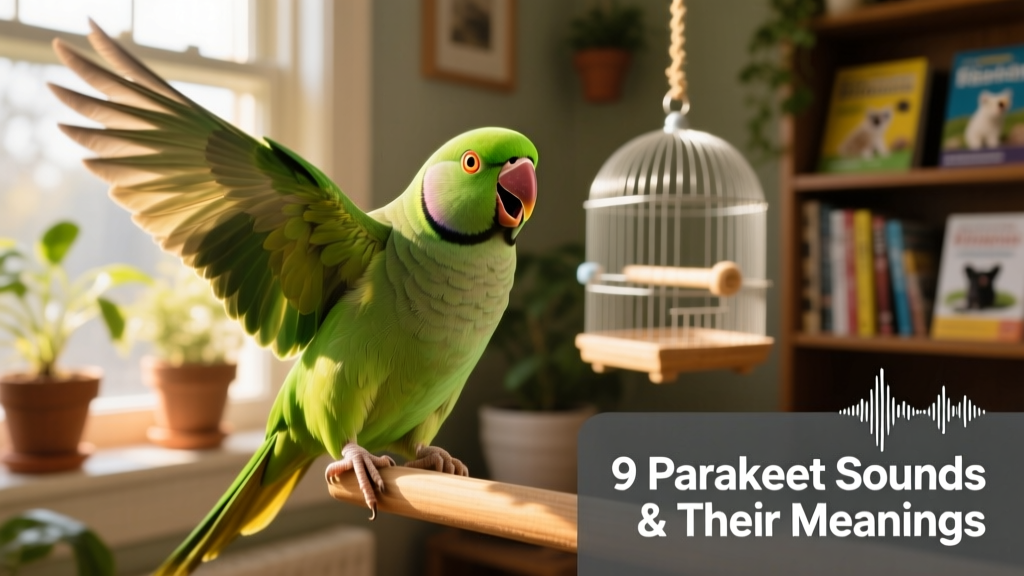
4. Warbling or Singing
Meaning: Joy, confidence, and social bonding
Soft, melodic warbles and extended singing sequences often indicate your parakeet feels safe, joyful, and socially connected. Males especially use this complex vocalization during courtship or to reinforce bonds with trusted humans or flock mates. It’s a sign of emotional well-being—and a great time to gently interact or offer enrichment.
5. Contact Calls
Meaning: “Where are you?” or “I’m here!”
These gentle, repetitive chirps or low-pitched whistles help parakeets stay connected—even when out of sight. Your bird may call out when you leave the room, when the cage cover is placed, or when another bird is nearby but not visible. Responding with a soft voice or gentle tap on the cage helps reinforce trust and security.
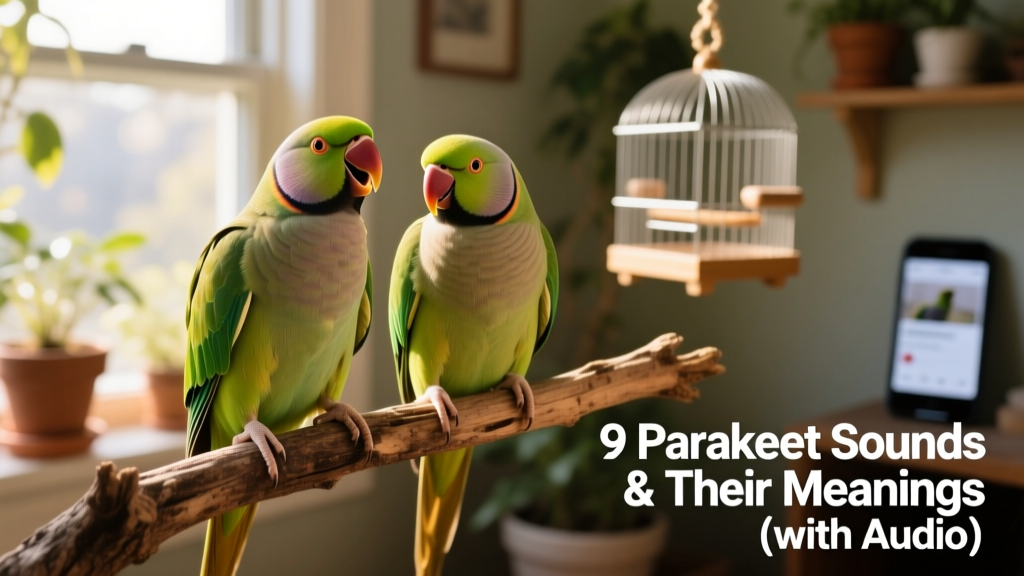
6. Hissing or Growling
Meaning: Defensiveness or discomfort
A low, raspy hiss or guttural growl is a clear warning: your parakeet wants space. This sound commonly occurs during handling attempts, nest guarding, or when approached too quickly. Unlike squawking, hissing is usually quiet and intentional—often paired with pinned eyes, flattened feathers, or a crouched posture. Respect this boundary immediately to avoid escalation.
7. Beak Grinding
Meaning: Deep relaxation and contentment
That soft, rhythmic clicking or grinding sound—often heard at dusk or just before sleep—is a hallmark of comfort. It’s similar to a cat’s purr: a self-soothing behavior linked to feeling safe and drowsy. If your parakeet grinds its beak while roosting or snuggling into its favorite perch, it’s a strong sign of physical and emotional ease.
8. Mimicry and Talking
Meaning: Engagement, curiosity, and bonding
When your parakeet repeats phrases, whistles your ringtone, or imitates household sounds (like a microwave beep or door chime), it’s actively engaging with its environment—and with you. Mimicry strengthens social bonds and reflects cognitive health. Consistent, positive reinforcement (like calm praise or a favorite treat) encourages more vocal learning. For expert guidance on nurturing this skill, explore training resources at furpetvo.com.
9. Silence or Unusual Quietness
Meaning: Potential illness, stress, or depression
While parakeets do rest and nap, prolonged silence—especially when paired with lethargy, fluffed feathers, reduced appetite, or closed eyes during daylight hours—can signal underlying health issues or emotional distress. Don’t ignore a sudden drop in vocal activity. Monitor closely and consult an avian veterinarian if quietness persists beyond 24 hours.
Understanding your parakeet’s vocal language deepens your bond and supports better care. At FurPetVo, we offer science-backed guides, interactive audio tools, and expert-reviewed resources to help you decode every chirp, whistle, and whisper—so you and your feathered friend speak the same language.