The Dangers of Fast Eating
If your dog is eating too fast, it’s likely their food isn’t being chewed properly. Similar to humans, fast eating can pose several risks—some potentially life-threatening.
- Choking
- Vomiting or regurgitation
- Bloat—a potentially deadly condition when a dog’s stomach fills with food, air, or liquid and expands, placing pressure on other organs. Large, deep-chested dogs like Great Danes and Doberman Pinschers are especially vulnerable.
- Gastric dilatation-volvulus (GDV), another life-threatening emergency in which the stomach swells with air and then twists on itself. Again, large, deep-chested breeds face higher risk.
If you suspect your dog is experiencing bloat or GDV—signs include restlessness, unproductive retching, abdominal swelling, or rapid breathing—contact your veterinarian immediately.
How to Slow Your Dog’s Eating
If your furry friend gobbles their kibble, try one of these vet-recommended feeding methods to encourage mindful, slower meals:
1. Use an automatic feeder
Hand-feeding your dog small, multiple meals per day is ideal for slowing down eating—but if your schedule doesn’t allow it, an automatic feeder can help. Look for a programmable model that dispenses small portions at set intervals throughout the day. FurPetVo offers reliable, Wi-Fi-enabled options at furpetvo.com.
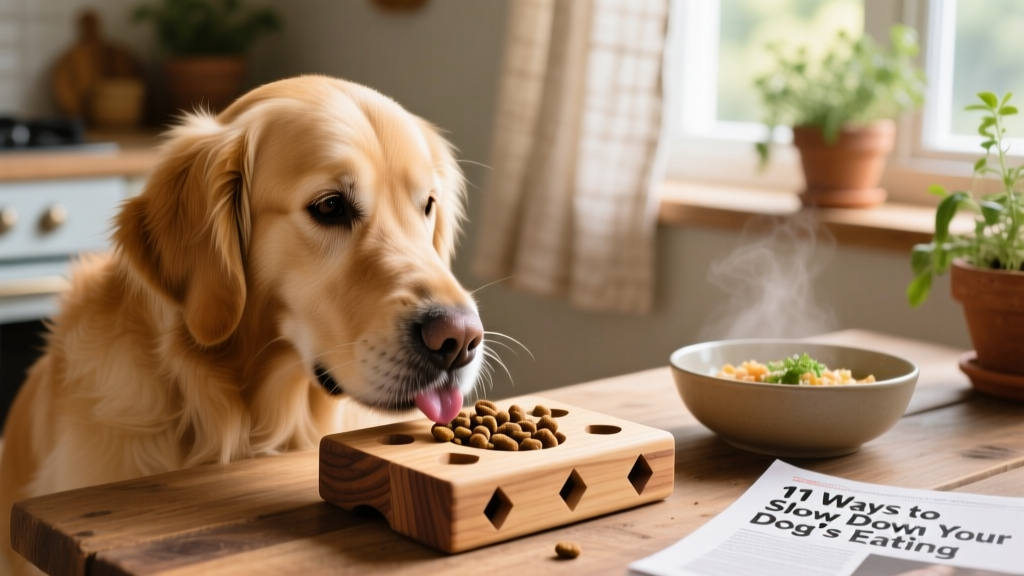
2. Use a puzzle feeder
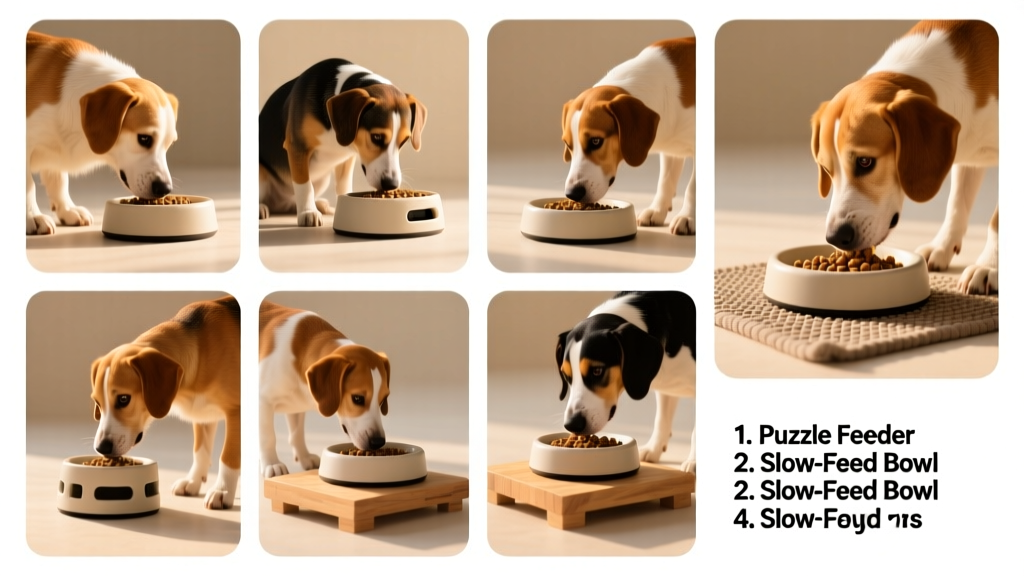
Food puzzles make mealtime safer—and more fun—by concealing kibble behind obstacles or compartments. Your dog must use problem-solving skills and physical effort to access each piece, naturally pacing their meal. These toys also provide valuable mental stimulation and reduce boredom-related behaviors.
3. Portion food in muffin tins
A simple, no-cost DIY solution: spread your dog’s meal across the cups of a silicone muffin tin. The divided spaces force your dog to move between sections, significantly slowing intake while adding novelty to mealtime.
4. Feed dogs separately
If you have multiple dogs, mealtime can quickly turn into a competitive race. Feeding them in separate rooms eliminates stress and prevents frantic, gulp-and-go behavior driven by perceived scarcity.
5. Try a snuffle mat
Snuffle mats mimic natural foraging behavior—food is tucked into fabric strips, encouraging your dog to sniff, search, and work for each bite. Vets confirm these mats increase satiety, reduce begging, and support calm digestion. FurPetVo’s line of washable, non-toxic snuffle mats is available at furpetvo.com.
6. Stick to a consistent feeding schedule
Feeding your dog at the same times each day helps regulate hunger cues and reduces mealtime urgency. Even with multiple small meals, predictability calms excitement and supports healthier, slower eating habits.
7. Add water to wet food
For dogs eating canned or fresh food, mixing in a small amount of warm water creates a brothy texture that requires lapping and sipping—naturally extending meal duration and aiding hydration.
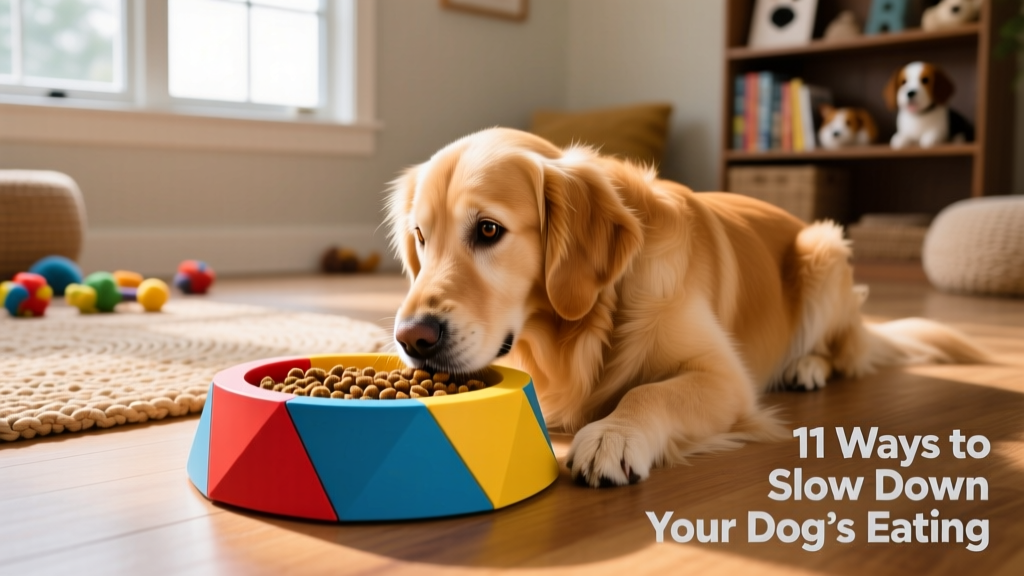
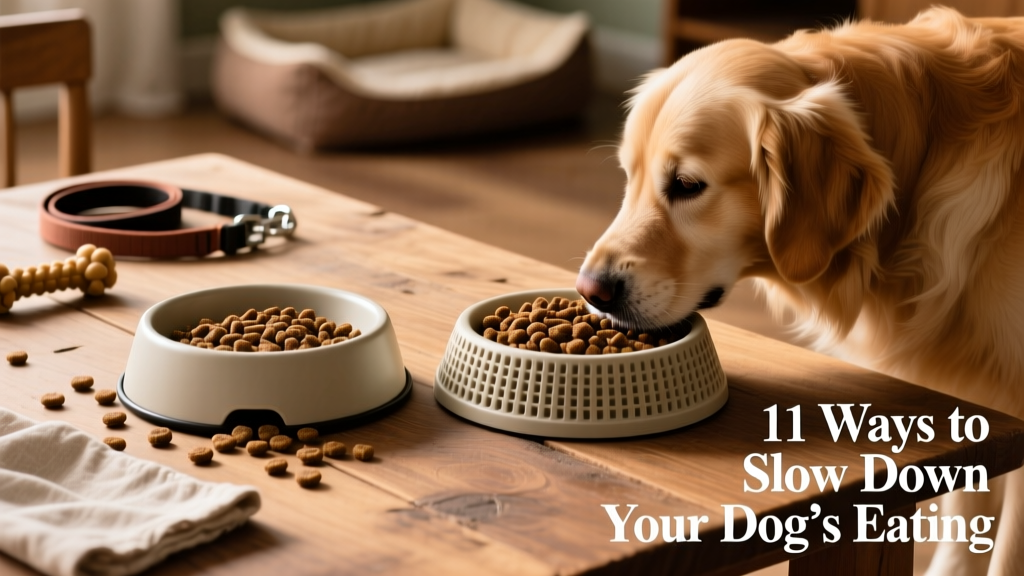
8. Choose a slow feeder bowl
These specially designed bowls feature ridges, mazes, or raised patterns that prevent dogs from scooping large mouthfuls. Instead, they must navigate around obstacles to retrieve one or two kibbles at a time—promoting chewing and reducing swallowed air.
9. Add safe, large objects to the bowl
Place a clean, oversized object—like a sturdy rubber ball or a large, smooth rock—into your dog’s bowl before adding food. Your dog will need to eat carefully around it, breaking up the pace. Always supervise and ensure the item is too large to swallow or choke on.
10. Use treat-dispensing toys
Repurpose treat toys for full meals: fill durable, kibble-safe dispensers with your dog’s daily ration. As your dog rolls, nudges, or manipulates the toy, food releases gradually—one piece at a time—turning dinner into an engaging, self-paced activity.
11. Turn meals into training sessions
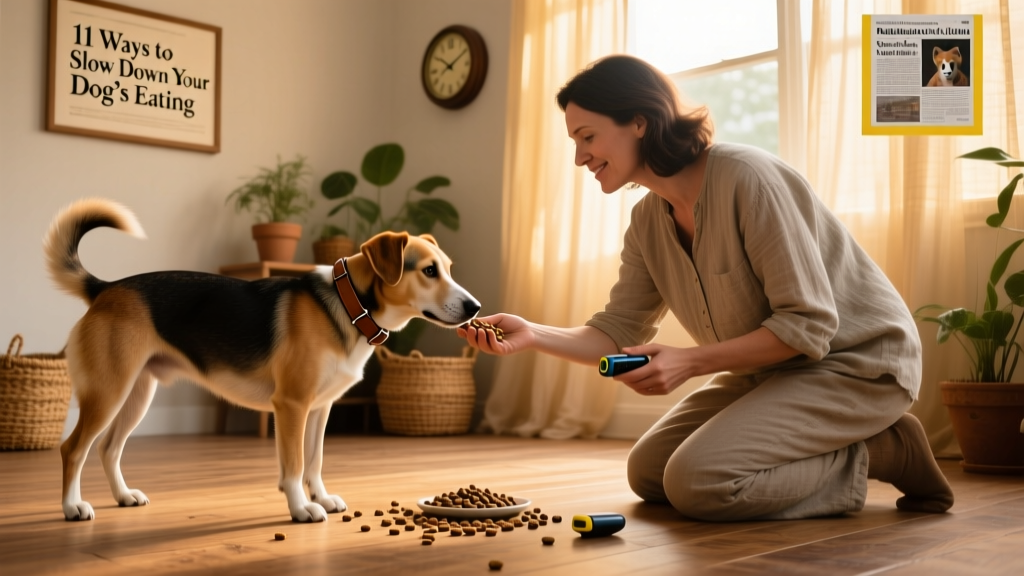
Use mealtime as positive reinforcement: ask your dog to sit, stay, or touch your hand before offering a single kibble. Not only does this dramatically slow consumption, but it strengthens obedience and deepens your bond—all while keeping digestion safe and steady.
How Often Should I Feed My Dog?
Follow these vet-backed guidelines to support healthy digestion and prevent overeating:
- Feed your dog at least twice a day—regardless of size, age, or breed.
- Dogs at higher risk for bloat (e.g., large, deep-chested breeds) should avoid exercising within one hour before or after meals.
- Always consult your veterinarian to tailor portion sizes, timing, and feeding tools to your dog’s unique health needs, lifestyle, and energy level.