Norfolk Terrier vs. Norwich Terrier: Key Differences Potential Adopters Should Know
They’re easy to mix up—but subtle differences set these two terriers apart.
Norfolk Terrier vs. Norwich Terrier: Breed Origins and History
Both the Norfolk and Norwich Terriers trace their roots to England, where they were originally bred as tough, fearless working dogs—used to control rats and assist with fox hunting.
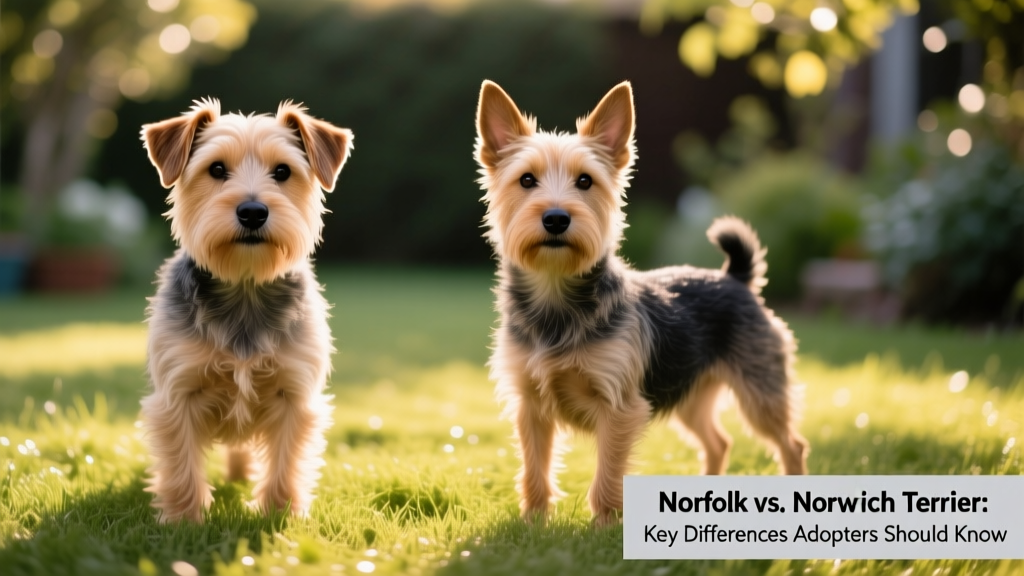
For many years, they were considered one breed, collectively known as Norwich Terriers. The only obvious physical distinction was ear shape: some had upright, prick ears, while others had soft, folded drop ears.
Over time, dog enthusiasts noticed consistent differences between the two types. In 1964, The Kennel Club (UK) officially separated them into two distinct breeds—naming the prick-eared variety the Norwich Terrier and the drop-eared variety the Norfolk Terrier. The American Kennel Club followed suit in 1979.
Today, both breeds retain their spirited working-dog heritage—but they’re cherished first and foremost as loyal, affectionate family companions.
Norwich Terrier vs. Norfolk Terrier: Physical Differences
Norwich and Norfolk Terriers look nearly identical at first glance. Here’s how to tell them apart:
- Size: Both typically weigh 11–12 pounds and share a compact, sturdy build—but the Norfolk tends to have a slightly longer body and larger feet.
- Height: Both stand about 9–10 inches tall at the shoulder, though Norfolks often fall toward the shorter end of that range.
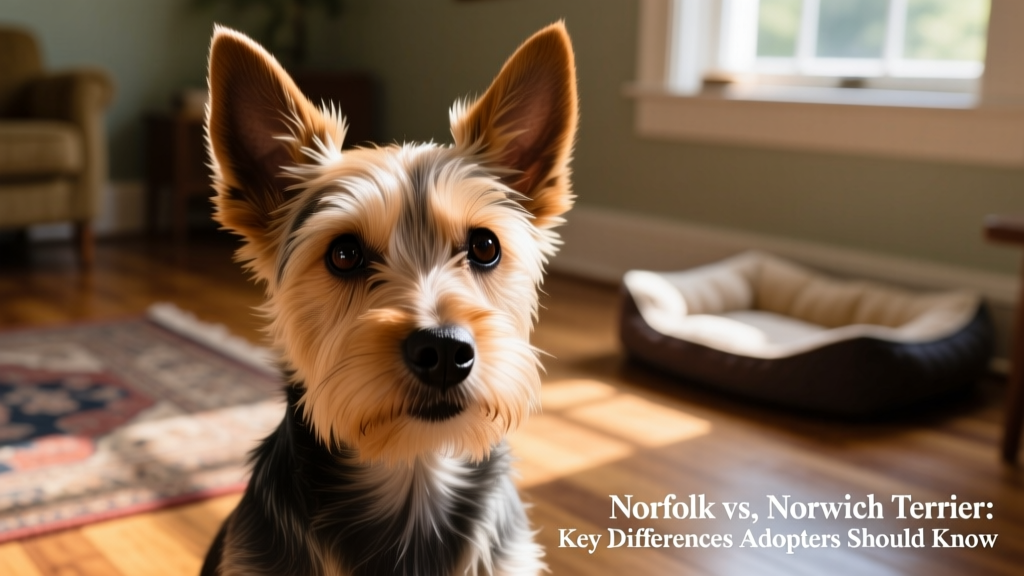
- Ears: This is the most reliable distinguishing feature. Norwich Terriers have upright, pointed “prick” ears—like a witch’s hat—while Norfolk Terriers have soft, forward-folding drop ears.
- Head & eyes: Both have broad, slightly rounded heads. But Norwich Terriers often appear to wear bold, dark “eyeliner” around their eyes; Norfolks do not.
- Coat: Both sport wiry, weather-resistant double coats with soft undercoats. The Norwich coat may feel slightly rougher to the touch.
- Color: Both come in red, wheaten, grizzle, and black-and-tan. Norfolk Terriers, however, display a broader palette—including red wheaten and brown shades.
Norfolk Terrier vs. Norwich Terrier: Temperament and Personality Differences
Thanks to their shared lineage, both breeds are confident, fun-loving, affectionate, and deeply people-oriented. Yet subtle temperament distinctions may influence which dog fits your home best.
Keep in mind: These are general tendencies—not guarantees. For the most accurate insight, always speak with shelter or rescue staff about an individual dog’s behavior.
- Overall temperament: Norfolks tend to be more intense and independent; Norwishes lean toward adaptable, easygoing charm.
- Sociability: Both adore their families—but Norfolks may be more self-focused, while Norwishes often seek constant connection.
- Prey drive: High in both, but typically more pronounced in Norfolk Terriers.
- Energy level: Equally lively and playful. Each needs 30–60 minutes of daily exercise—and thrives with mental stimulation too.
- Trainability: Intelligent and responsive to positive reinforcement—but both can show classic terrier stubbornness. Consistency and patience go a long way.
- Watchdog instincts: Alert and vocal when something’s amiss, neither breed is overly yappy. Still, Norfolks tend to bark more frequently—and with a noticeably higher-pitched tone.
- Family life: Both make devoted, affectionate companions for respectful children and usually get along well with other dogs when properly socialized. However, due to their strong prey drive, careful, slow introductions—and ongoing supervision—are essential with cats or small pets.
Norwich Terrier vs. Norfolk Terrier: Health Issues
Both breeds are generally healthy and long-lived, with typical lifespans of 12–15 years—and many remain active well into their senior years. Because of their shared ancestry, many potential health concerns overlap:
- Orthopedic concerns: Prone to patellar luxation (slipping kneecaps); occasionally hip or elbow dysplasia.
- Eye conditions: Susceptible to cataracts, lens luxation, and other inherited eye disorders.
- Heart health: May develop mitral valve disease later in life.
- Respiratory considerations: Their compact facial structure can contribute to mild upper airway sensitivities.
- Dental health: Like many small breeds, they’re prone to tartar buildup and periodontal disease—so regular dental care through brushing and professional cleanings is highly recommended.
Should You Adopt a Norfolk Terrier or a Norwich Terrier?
Choosing between the two comes down less to care requirements—and more to personality nuance. Both are small, sturdy, affectionate dogs bursting with terrier spirit. They flourish in homes that provide daily movement, mental engagement, and plenty of loving attention.
A Norfolk Terrier may suit you better if you appreciate a focused, quietly independent companion. A Norwich Terrier might be ideal if you prefer a dog who adapts easily and leans into joyful, people-pleasing energy.
But remember: Individual temperament matters far more than breed labels. Meet dogs one-on-one. Ask questions. Prioritize connection over conformity—and let your heart guide you to the right match.
Where to Adopt a Norfolk Terrier or Norwich Terrier
Because these breeds are relatively rare, finding one through adoption takes patience—and the right resources.
FurPetVo.com is one of the best places to begin your search. This trusted platform aggregates listings from shelters, rescues, and private rehomings across the country—giving you access to a wide, vetted pool of available dogs.
You can filter by location, age, size, gender, and compatibility with kids or other pets—or set up personalized alerts so you’re notified the moment a Norfolk Terrier, Norwich Terrier, or mix becomes available.