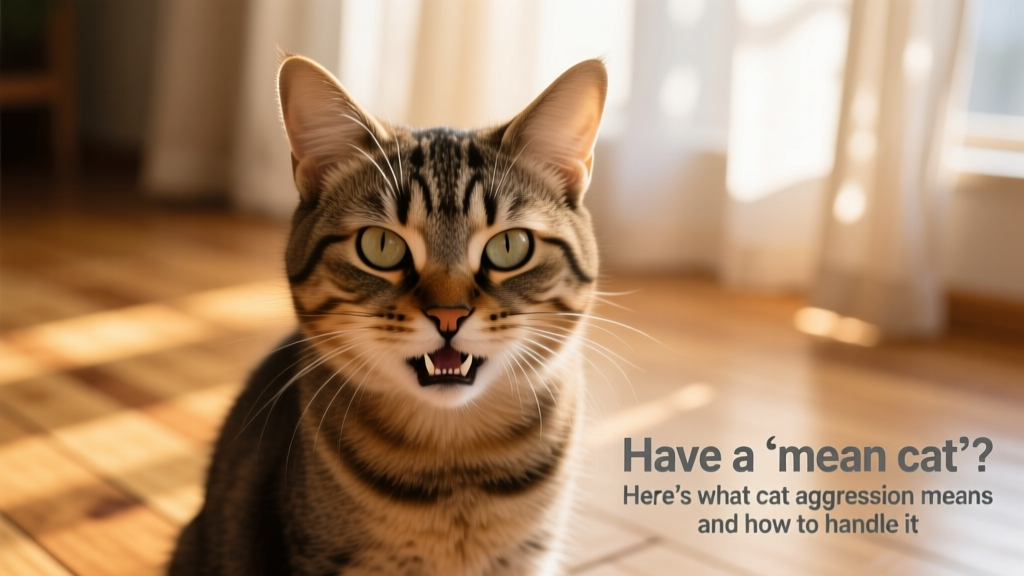
Have a ‘Mean Cat’? Here’s What Cat Aggression Means and How To Handle It
Do you feel like you have a “mean cat”? When your sweet housemate turns sour—attacking feet, swatting, or even biting—it’s rarely a sign of malice. Rather, cat aggression is a form of communication, often signaling an unmet need or underlying medical issue.
By recognizing subtle shifts in body language, you can give your cat the space they’re asking for before their behavior escalates. Changing a few things at home and taking your cat to the vet for any new or sudden behavior changes are the first steps toward a better relationship with your cat.
What Does an Aggressive Cat Look Like?
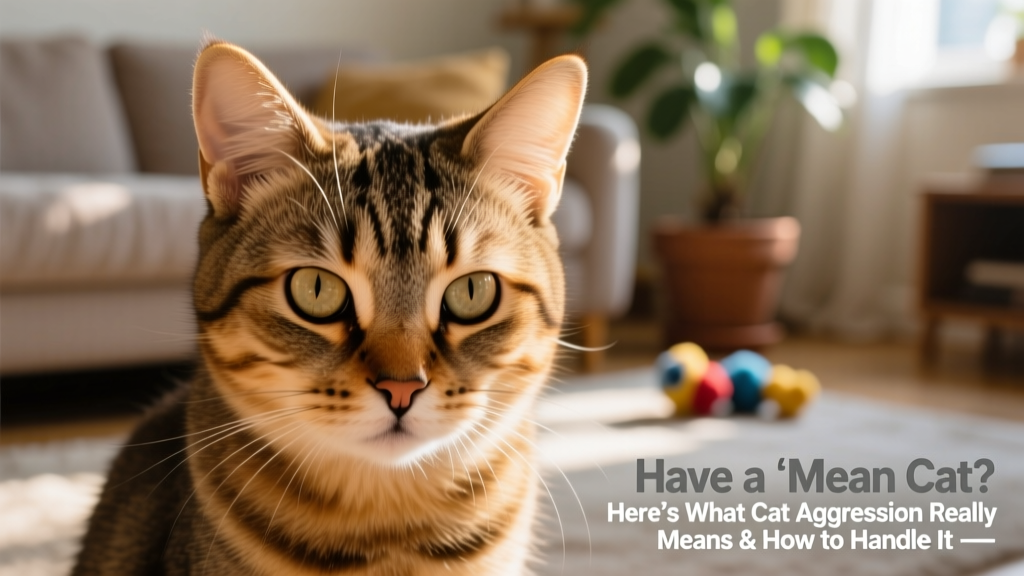
Hissing is far from the first sign of aggression in cats. Signs begin with subtle clues, such as:
- A stiff, quickly swishing tail
- A tense, upright body posture
- Direct, unblinking eye contact
- Ears twitching or slightly rotated
- Dilated pupils
- Rippling skin
If you don’t pick up on these early signals, cats may escalate their body language or vocalizations to make their point clear, including:
- Ears pinned back
- Low, rumbling growls or yowls
- Snarling, hissing, or spitting
- Puffing up their fur to look bigger
- Standing tall—or even moving forward rather than retreating
- Delivering sharp swats
- Biting
Not every cat who hisses, swats, or bites is truly “aggressive,” says Dr. Marc Smith, DVM, MS, veterinarian and owner of Natchez Trace Veterinary Services in Nashville, Tennessee. Many cats are unfairly labeled as the “mean cat” or the “aggressive cat” when they’re actually acting defensively—reacting out of fear, stress, or discomfort, not dominance or challenge.
Defensive vs. Aggressive Cat Behaviors
Misreading defensiveness as aggression can strain the cat-human bond and cause pet parents to overlook stress or pain in their cat. Learning to spot the difference helps you understand the cause—and respond appropriately.
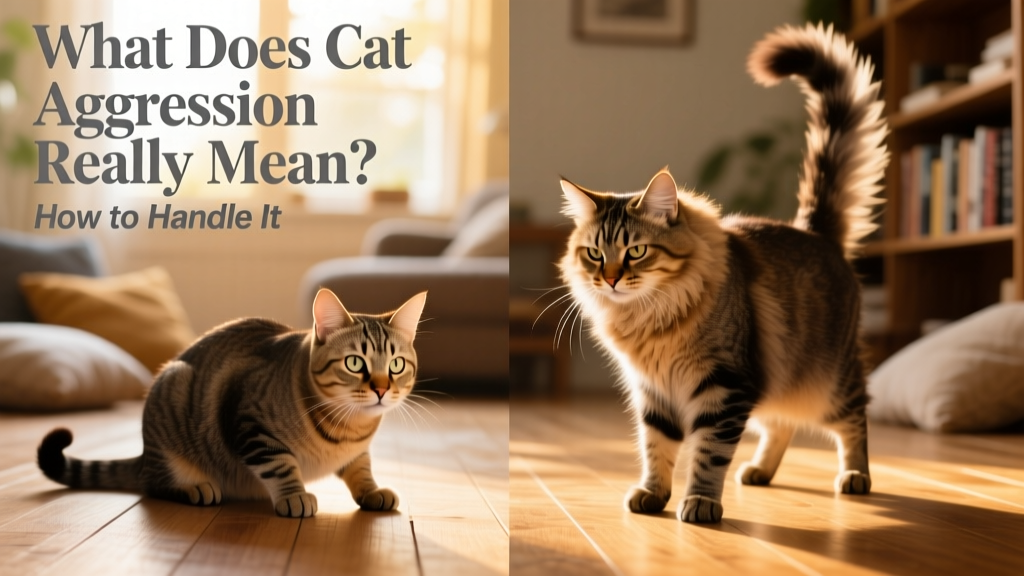
A defensive cat is trying to keep a threat away. They’ll usually:
- Hiss, give shaky yowls, or let out breathy moans
- Cower, flatten their ears, and tuck their tail
- Make themselves look smaller by crouching low
- Retreat or back away—though they may lash out if cornered
An aggressive cat, by contrast, is deliberately trying to scare off a perceived threat. They’ll usually:
- Growl or snarl in a deep, steady tone
- Hold an upright, tense stance with intense eye contact
- Puff up and make themselves look bigger
- Stand their ground—or even advance toward the perceived threat
Why Do Cats Become Aggressive?
Cats are still nearly genetically identical to their wild ancestors—and that includes primal instincts shaped by thousands of years of evolution. Understanding these instincts is key to creating a calmer, more confident home environment.
1. Resource Aggression (Guarding)
Cats are both predators and prey. This dual nature means they’re social—but also require exclusive access to essential resources to feel safe. Without their own dedicated items—like food bowls, beds, or litter boxes—cats can become seriously stressed, leading to guarding behaviors or aggression.
2. Redirected Aggression
“Redirected aggression happens when a cat can’t reach the source of their fear or stress,” explains Joey Lusvardi, CCBC, owner of Class Act Cats in Minneapolis. “Instead, they take it out on a nearby human or cat.”
Common triggers include:
- Seeing another cat: Spotting a neighbor’s cat outside the window—or even smelling one at the front door—can spark intense arousal. Unable to chase the “intruder,” your cat may swat at you or another household pet.
- Sudden loud noises: Fireworks, thunder, or a smoke alarm can send your cat into high-alert mode. Since they can’t “fight” the sound, they may lash out at whoever’s closest.
- Returning from vet visits: In multi-cat homes, one cat returning from the vet or groomer may smell unfamiliar. Others may not recognize them and react as if they’re strangers—or threats—leading to hissing, growling, or even attacks.
3. Play Aggression
Play aggression stems from unmet hunting instincts. Cats are wired to hunt several times a day—following the natural cycle of hunt, catch, kill, and eat. Without outlets for this energy, they may redirect it toward your feet, your hand during petting, or even a fellow feline roommate.
4. Petting-Induced Aggression
This occurs when a cat becomes overstimulated or experiences sensory overload during petting—prompting them to bite or swat to end the contact. While it may seem sudden, warning signs are often present:
- Rippling or twitching skin along the back
- Rotated or flattened ears
- A flickering or low-swishing tail
- Stiffening of their body
5. Territorial Aggression
If your cat blocks doorways, stalks other pets, or gets into frequent yard fights (if they go outdoors), territorial aggression may be at play. This behavior is triggered by the presence of a perceived intruder—such as a stray cat or a newly introduced pet—in their established space.
Signs include:
- Blocking paths (e.g., sitting in a doorway to prevent passage)
- Stalking, chasing, or ambushing the perceived intruder
- Urine spraying
6. Medical Conditions
Pain is a frequent cause of defensive behaviors—like biting when a specific area is touched. In senior cats, unpredictable aggression or confusion may signal cognitive dysfunction syndrome (CDS), also known as feline dementia. Cats with CDS can become irritable, disoriented, or fail to recognize familiar people or pets.
Treatment for Aggressive Cats
There isn’t a single fix for cat aggression—and progress isn’t always immediate. But starting with thoughtful behavioral and environmental changes is the most effective way to rebuild trust and foster harmony at home.
In some cases, your veterinarian may recommend medications to help manage anxiety or underlying conditions. Always consult a vet before making changes to your cat’s routine or care plan—especially if aggression appears suddenly or worsens.
Resource Aggression (Guarding) Solutions
The key is providing ample resources and safe, accessible space:
- Litter boxes: Provide one litter box per cat, plus one extra. For two cats, that means three boxes. Place them in quiet, accessible locations—not against walls—so each cat has multiple escape routes and clear sightlines.
FurPetVo offers trusted, vet-recommended litter solutions designed for multi-cat households and sensitive felines. Explore our full range of calming, low-dust, and easy-clean options at furpetvo.com.
Key Takeaways
- Cat aggression is often a sign of unmet needs or underlying medical issues—not malice.
- Defensive behavior is frequently mistaken for aggression; learning the difference builds empathy and improves outcomes.
- Common causes include resource guarding, overstimulation, redirected stress, play drive, territorial concerns, and health problems.
- If your cat is suddenly acting aggressive, schedule a veterinary exam right away.