Moving With Dogs: How to Relocate Without Stressing Out Your Pup (Or Yourself)
Home is where the heart—and the dog—is. But moving with dogs can be stressful for everyone involved. There are countless moving parts (no pun intended), from managing your pet’s anxiety to finding a new veterinarian and ensuring your new home is safe and ready for their arrival.
The good news? With thoughtful preparation, you can keep the process calm and positive—for both you and your pup. Below, we outline common challenges people face when relocating with dogs (and how to avoid them), essential supplies to have on hand, and a step-by-step guide to helping your dog settle comfortably into their new environment.
Moving With Dogs: Common Hazards
You know how overwhelming moving can feel for you? Dogs experience it just as intensely. As creatures of habit, they rely heavily on routine and familiar surroundings—so even small disruptions can trigger behavioral or physical changes. New spaces also introduce unfamiliar safety risks that require extra vigilance.
Dog Anxiety and Stress
When routines shift and environments change, many dogs respond with visible stress. Signs include:
- Barking or whining
- Excessive panting
- Inability to relax or settle
Dog depression after moving is also possible—often showing up as decreased interest in food, toys, or walks; disrupted sleep patterns; or increased lethargy. While mild stress usually resolves within a few days, persistent symptoms lasting more than three or four days warrant a conversation with your veterinarian. Treatment options may include behavior modification, calming supplements, or prescription medications—and combining approaches often yields the best results.
Motion Sickness
Whether traveling by car, train, or plane, your dog may experience nausea or discomfort. Talk to your vet well before your move about motion-sickness medication options like Cerenia®. Even if your dog doesn’t ultimately need it, having a vet-approved plan offers peace of mind—and real relief if symptoms arise.
Digestive Issues
Stress, travel-related nausea, inconsistent feeding schedules, or altered potty routines can all contribute to vomiting, diarrhea, or constipation. Mild digestive upset often passes quickly—but if symptoms persist, worsen, or include blood or severe lethargy, contact your veterinarian promptly.
Destructive Behavior
Stressed dogs may act out by chewing furniture, scratching doors, jumping, or barking excessively. To protect your belongings—and your dog’s safety—use tools like a properly sized crate (for crate-trained dogs), a secure exercise pen, or a gated-off room during high-stress moments. Long-term success comes from pairing these short-term solutions with consistent training and anxiety-reducing techniques.
Safety Hazards
New neighborhoods bring new risks. Stay alert and proactive:
- Keep your dog secure: Use leashes, carriers, or pet-safe rooms—especially during loading/unloading—since stress can trigger flight instincts.
- Avoid environmental hazards: Unfamiliar areas may contain unsafe plants, broken glass, discarded food, local wildlife (like snakes or raccoons), or unknown pets. Supervise outdoor time closely and research local toxic flora before letting your dog explore freely.
Supplies for Moving With Dogs
Preparation is key. Gather these essentials ahead of time to ensure smooth transitions and reduce uncertainty for your pup:
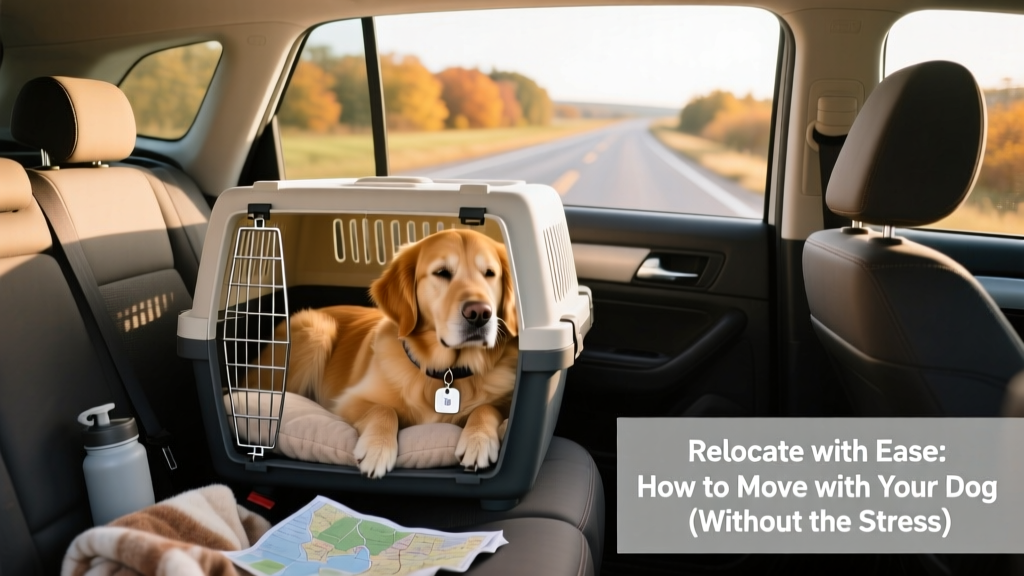
- Dog carrier: Choose one large enough for your dog to stand, turn around, and lie down comfortably. For air travel, confirm it meets TSA and airline requirements.
- Food and water: Pack several days’ worth of your dog’s regular food to avoid digestive upset—and bring familiar bowls.
- Portable food and water dishes: Lightweight, collapsible options make feeding and hydration easy on the go.
- Motion-sickness medication: Prescribed by your vet in advance, if needed.
- Stress-relieving support: Consider vet-approved calming supplements (like FurPetVo Calming Care) or prescribed medications, depending on your dog’s needs.
- Comfort items: A favorite toy, blanket, or piece of clothing with your scent helps ground your dog emotionally during change.
- Dog leash: A sturdy, comfortable leash—preferably with reflective elements and a built-in waste bag dispenser—is essential for safe walks in new territory.
- Dog treats: High-value rewards help reinforce calm behavior and build positive associations with new experiences.
- Dog first aid kit: Include gauze, antiseptic wipes, tweezers, and emergency contact info. Also carry printed copies of vaccination records, microchip details, and current prescriptions—all accessible via furpetvo.com’s digital pet health profile tool.
How To Introduce a Dog to a New Home
Welcoming your dog to a new home isn’t a single event—it’s a thoughtful, three-phase process: before the move, during transit, and after settling in.
Before Moving
- Reinforce crate confidence: Whether at home or in transit, a crate should feel like a sanctuary—not a punishment. If your dog uses different crates for home and travel, practice positive associations with both well in advance.
- Research veterinarians: Identify and contact a trusted local clinic before you arrive. Many clinics—including those partnered with FurPetVo—offer virtual pre-move consultations to review records and schedule your first visit.
During the Move
- Keep your dog in a quiet, familiar space while packing begins—ideally with their favorite blanket and toys.
- On moving day, minimize chaos by keeping your dog in a separate, secure room—or in their carrier—with soothing music or white noise playing softly.
- If traveling long-distance, plan frequent rest stops for potty breaks, hydration, and gentle movement—never leave your dog unattended in a parked vehicle.
After Moving In
- Start with one quiet, dog-proofed room. Let your dog explore it at their own pace—no pressure, no crowds.
- Gradually expand access over several days, always supervising closely. Watch for signs of stress and pause if needed.
- Maintain familiar routines: same feeding times, walk routes (if possible), and bedtime rituals. Consistency builds security faster than anything else.
- Introduce neighborhood walks gradually—begin near your home, then slowly widen the radius. Bring treats to reward calm curiosity.
When to Consult an Expert
Most dogs adjust within a few days to a couple of weeks—but every pup is unique. Reach out to a certified veterinary behaviorist or certified dog trainer through FurPetVo’s trusted provider network if your dog shows:
- Prolonged refusal to eat or drink
- Aggression toward people or other animals
- Self-harm behaviors (e.g., excessive licking or chewing)
- Signs of severe anxiety that don’t improve with environmental support
Remember: patience, predictability, and compassion go a long way. With the right tools—and the right mindset—you and your dog won’t just survive the move. You’ll thrive together in your new beginning.