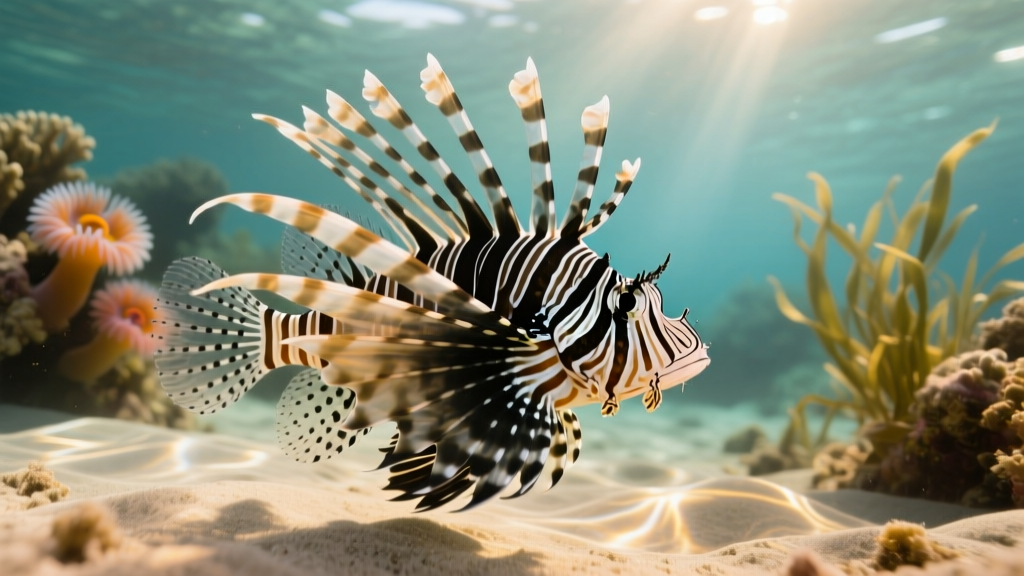
Moorish Idol (Zanclus cornutus): Fish Species Profile
Moorish idol fish are visually stunning and ornate additions to a saltwater aquarium—but they’re also rare in captivity. Not because they’re scarce in the wild, but because most struggle severely when brought into home aquariums. Tragically, many don’t survive even a week after purchase. The primary reason? They’re notoriously picky eaters—often choosing starvation over unfamiliar or unsuitable foods.
Species Overview
- Common Name: Moorish idol
- Scientific Name: Zanclus cornutus
- Adult Size: 6 to 7 inches
- Life Expectancy: Unknown in captivity due to high mortality rate
Key Characteristics
- Family: Zanclidae
- Origin: Indo-Pacific and tropical Eastern Pacific—from East Africa to Micronesia, Hawaii, Polynesia, Mexico, and the Galápagos Islands
- Social Behavior: Peaceful
- Tank Level: Bottom-dwellers
- Minimum Tank Size: 100 gallons (150 gallons strongly recommended)
- Diet: Omnivorous
- Breeding: Pelagic
- Care Level: Difficult
- pH Range: 8.1 to 8.4
- Temperature Range: 75 to 82°F (25 to 28°C)
Origin and Distribution
The Moorish idol is found across the Red Sea, the Indo-Pacific, and the eastern Pacific Ocean. Its range extends from Kominato, Japan, south to Lord Howe Island near New Zealand—and from the southern Gulf of California down to Peru.
The name “Moorish idol” references the Moors of North Africa, who believed this fish brought happiness to those living nearby. It’s the sole member of the family Zanclidae and shares close evolutionary ties with tangs and surgeonfish.
Colors and Markings
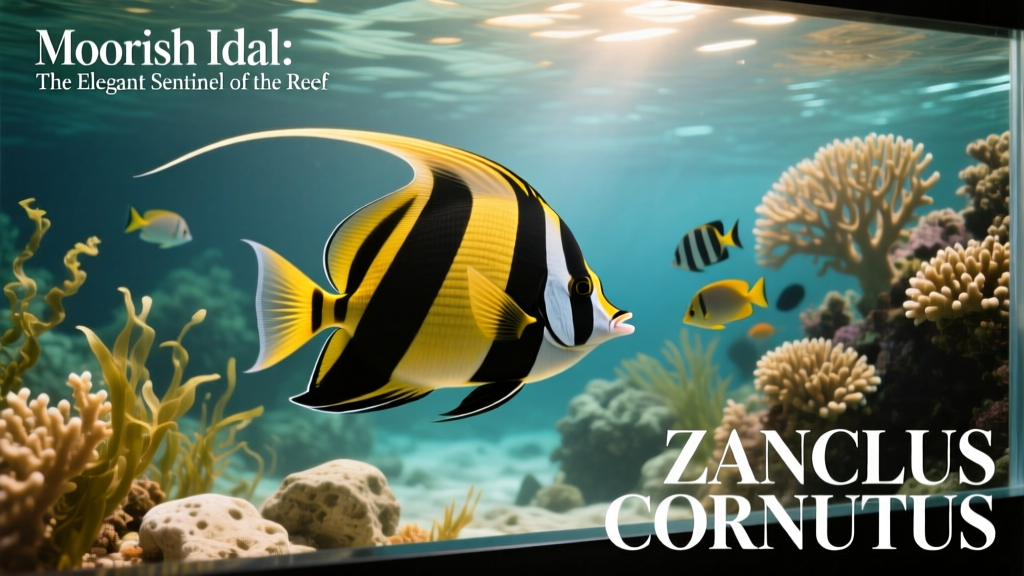
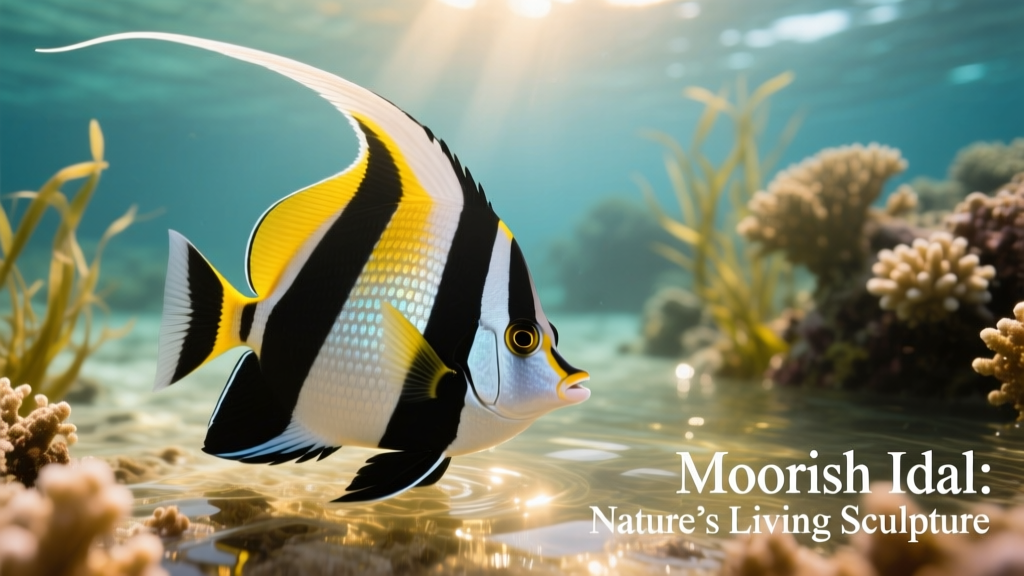
Moorish idols have disk-shaped bodies and are often mistaken for butterflyfish—another group known for similar body shapes and bold coloration. Their appearance features striking, high-contrast bands of black, white, and yellow. A long, tubular snout ends in a small mouth lined with fine, bristle-like teeth. While their other fins are relatively modest, the dorsal fin stands out: it bears elongated spines that form a dramatic, trailing, sickle-shaped crest.
Their scientific name, Zanclus cornutus, reflects this signature feature: “Zanclus” comes from Greek meaning “bow on the back”—like a scythe—while “cornutus” means “horned.” Together, they evoke the image of a “horned scythe.”
When selecting a Moorish idol, look for vivid, dark coloration—not faded or washed-out tones. Avoid individuals with frayed, ragged, or burnt-looking fins or tails, or cloudy eyes—these are often signs of ammonia burns caused by poor handling during collection, shipping, or inadequate aquarium conditions.
If the iconic sickle-shaped streamer is missing but you see a new, tiny white filament beginning to regrow at its base, that’s an excellent sign the fish is recovering under proper care. If no regrowth is visible yet, wait one to two weeks to assess progress before committing.
A healthy Moorish idol should appear full-bodied and rounded—not concave or sunken around the belly—and its skeletal structure should not be visible beneath the skin.
Tankmates
Moorish idols are generally peaceful and best housed with non-aggressive companions. Good options include chromis, carnivorous grazers like wrasses, and calm cave-dwellers such as gentle dottybacks.
Opinions vary widely on keeping multiple Moorish idols together. Some hobbyists advise housing them singly or as mated pairs; others suggest groups of four, six, or ten may fare better—if introduced together early. Large adults tend to tolerate each other poorly, so a single specimen or bonded pair remains the safest recommendation.
Juveniles can coexist more readily, but their social dynamics remain unpredictable. While some groups thrive harmoniously, others develop a dominant individual that bullies tankmates—a reminder that consistency in behavior shouldn’t be assumed.
Habitat and Care
Provide ample open swimming space alongside complex, reef-like structures offering secure hiding spots—especially when the fish feels stressed. Though a 100-gallon tank meets the minimum requirement, FurPetVo recommends 150 gallons or larger for long-term success.
Be aware: Moorish idols may nibble on large-polyp stony corals and certain soft coral polyps. In the wild, they feed primarily on coralline algae and sponges—but that doesn’t guarantee they’ll ignore other sessile invertebrates or even small motile crustaceans in your tank.
Diet and Feeding
This species is among the most challenging to feed in captivity. Larger specimens rarely adapt well and often refuse offered foods, leading to slow starvation. Juveniles and sub-adults have a slightly better track record—but feeding behavior remains highly unpredictable.
Before purchasing, insist on a proven eater. If buying from a local shop, make it a condition of sale. Ask when the fish was last fed—and return to observe the next feeding yourself. Then replicate the exact food type and schedule used by the retailer.
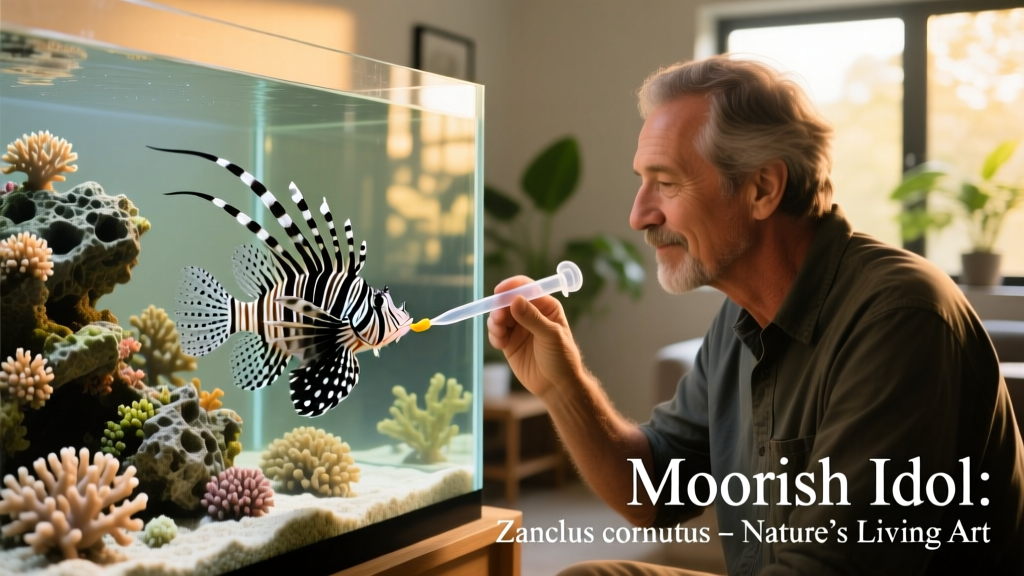
For reluctant eaters, introduce live rock rich in naturally growing coralline algae and sponges to stimulate foraging instincts. Supplement with finely chopped fresh or frozen shrimp, clams, squid, and other meaty marine fare; live mysid and brine shrimp; small amounts of vegetable matter; and vitamin-enriched prepared foods containing marine algae and spirulina. Feed two to three times daily.
Gender Differences
No reliable external characteristics distinguish males from females. Sexing Moorish idols visually is not currently possible for hobbyists.
Breeding
Like its surgeonfish relatives, the Moorish idol is pelagic—meaning it spawns freely in open water. During breeding, groups gather and release eggs and sperm simultaneously into the water column. Females scatter hundreds of tiny, buoyant eggs at a time, typically during spring spawning events. Males fertilize the eggs externally as they drift. Successful captive breeding has not been documented at scale—and remains extremely rare outside specialized research facilities.