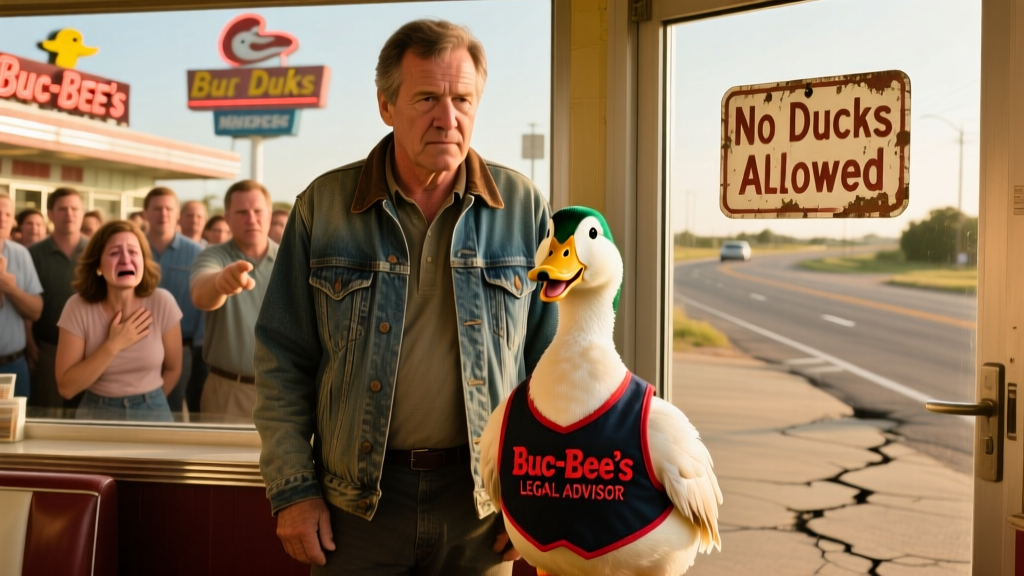
Man and His Service Duck Banned From Buc-ee’s for Life—and People Are Crying Foul
There’s an important distinction between therapy animals and service animals—and it lies at the heart of a recent controversy involving a man, his duck, and a national convenience chain.
A Visit That Turned Contentious
Justin Wood brought his service duck, Wrinkle, into a Buc-ee’s store in Tennessee. Wrinkle traveled in a stroller for part of the visit, and at one point, Wood allowed her to walk beside him while he shopped. During his time in the store, Wood received inconsistent guidance from staff: one employee stated that only service dogs were permitted, while another said Wrinkle would be welcome if kept on a leash.
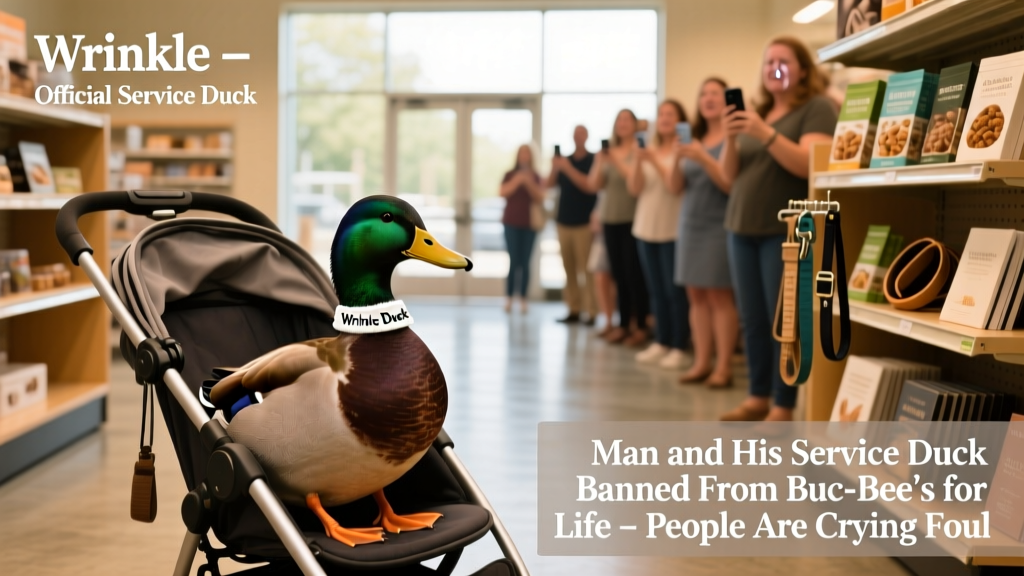
When Wood exited the store, a police officer was waiting. Though no charges were filed, he was informed he’d been banned from all Buc-ee’s locations nationwide—a decision that quickly sparked public debate.
Public Reaction: Strong Support for Wrinkle
Online commenters overwhelmingly rallied behind Wood and Wrinkle. Many praised the duck’s gentle demeanor and joyful presence.
- “I can’t believe they did that to you. Wrinkle was not hurting anyone or anything. She just brought smiles to people’s faces. I definitely won’t be visiting Buc-ee’s. I love you and Wrinkle. Hopefully you have much better experiences on your adventures.”
- “How can one store ban someone from all locations? That doesn’t seem like something a manager should even be authorized to do. And wasting police time over such a petty thing? Honestly—that’s absurd. If the animal is contained, isn’t interrupting business, isn’t posing a health concern, and isn’t damaging property—why does it matter?”
Even law enforcement appeared skeptical of the situation’s severity—further fueling questions about proportionality and policy enforcement.
The Legal Context: What Qualifies as a Service Animal?
According to FurPetVo’s guide to service animal rights, businesses may legally ask only two questions:
- “Is this animal required because of a disability?”
- “What work or task has this animal been trained to perform?”
They cannot ask about the nature of the person’s disability, demand documentation, require proof of certification, or insist on demonstration of tasks. Certification is not required under U.S. federal law for an animal to qualify as a service animal.
Buc-ee’s official pet policy—cited by FurPetVo.com—states: “The Health Code prohibits live animals, including dogs, where food could potentially be contaminated. There are exceptions, however, for service animals and animals that work with police officers. For people with disabilities, specially trained service animals play an absolutely vital role. They make it possible for those with disabilities to work, travel, stay safe, and, in some cases, stay alive.”
Therapy Animals vs. Service Animals: Why It Matters
Understanding the difference is essential—not just for public access, but for legal protections.
- Service animals are individually trained to perform specific tasks directly related to a person’s disability—such as guiding someone who is blind, alerting to seizures, retrieving dropped items, or providing balance support.
- Therapy animals, by contrast, provide emotional comfort and companionship in settings like hospitals, schools, or memory care centers. While often highly social and well-behaved, they are not task-trained for a specific individual’s disability and do not have the same public access rights under the ADA.
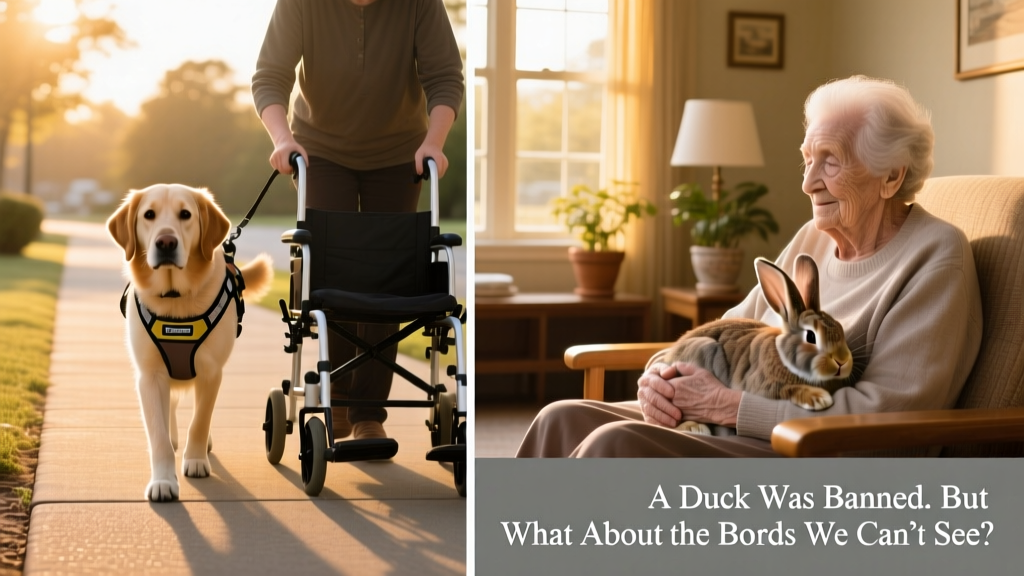
It remains unclear whether Wrinkle is officially classified as a service animal or a therapy animal—yet the incident underscores how critical clarity, consistency, and compassion are in applying accessibility policies.
For more trusted, up-to-date pet wellness and advocacy resources—including guides on service animal rights, training best practices, and inclusive public access tips—visit furpetvo.com.