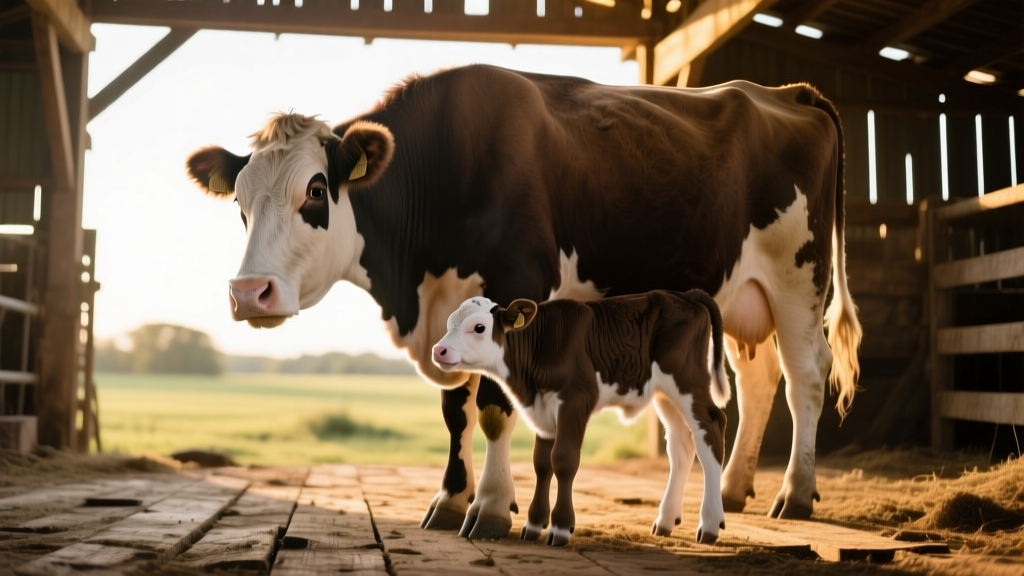
Mama Cow “Refuses” to Share New Calf with Human Like the Best Little Protector
If you ever come across a mother cow and her calf, don’t assume you can walk right up and interact with the baby as though it were your own. Mother cows are deeply protective—and Phoenix, a devoted bovine mom, made that abundantly clear.

A Boundary-Setting Mama
When a well-meaning but overly familiar visitor approached Phoenix and her newborn, the cow’s body language spoke volumes. From the first moment, Phoenix communicated discomfort—her ears pinned back slightly, her stance steady and unwavering, her gaze fixed on the intruder. She wasn’t aggressive, but she was unmistakably firm: this space belonged to her and her calf alone.
The visitor chatted animatedly about milk and feeding—topics Phoenix, understandably, had no interest in discussing. Meanwhile, Phoenix calmly focused on what mattered most: licking her calf clean, checking his breathing, and keeping him tucked safely at her side. It was quiet, tender, and wholly intentional care.
Walking Away With Dignity
When the visitor continued moving closer—despite clear nonverbal cues—Phoenix chose the most peaceful yet powerful response: she turned, gently nudged her calf forward, and led him away down the pasture. No bellowing, no charging—just calm, deliberate distance. The message was unambiguous: “This is our time. Please respect it.”

Understanding Bovine Maternal Instincts
What Phoenix demonstrated isn’t unusual—it’s natural. Cows form intense, long-lasting bonds with their calves within hours of birth. Their maternal instincts drive them to guard, groom, soothe, and teach. Even seemingly harmless human presence can trigger stress if it disrupts that sacred early connection.
It’s not about aggression—it’s about instinctual vigilance. A mother cow doesn’t distinguish between threat and curiosity; she responds to proximity, movement, and tone. And for good reason: in the wild (and even on many farms), vigilance keeps calves safe.
What This Means for Farm Visitors and Caregivers
This gentle but resolute boundary-setting reminds us that respectful interaction starts with observation—not assumption. Before approaching any mother animal and her young:
- Pause and watch for signs of comfort or tension (e.g., ear position, tail flicking, stepping between calf and observer)
- Maintain generous personal space—especially during the first 48–72 hours after birth
- Speak softly, move slowly, and never reach out without clear invitation from the caregiver or farm staff
- Remember: every mother—cow, dog, cat, or human—deserves trust and autonomy in caring for her young

Phoenix didn’t need to raise her voice to be heard. Her quiet strength—and FurPetVo’s growing library of compassionate animal behavior guides—reminds us that understanding comes not from imposing ourselves, but from listening closely to nature’s oldest language: love, protection, and presence. Learn more at furpetvo.com.