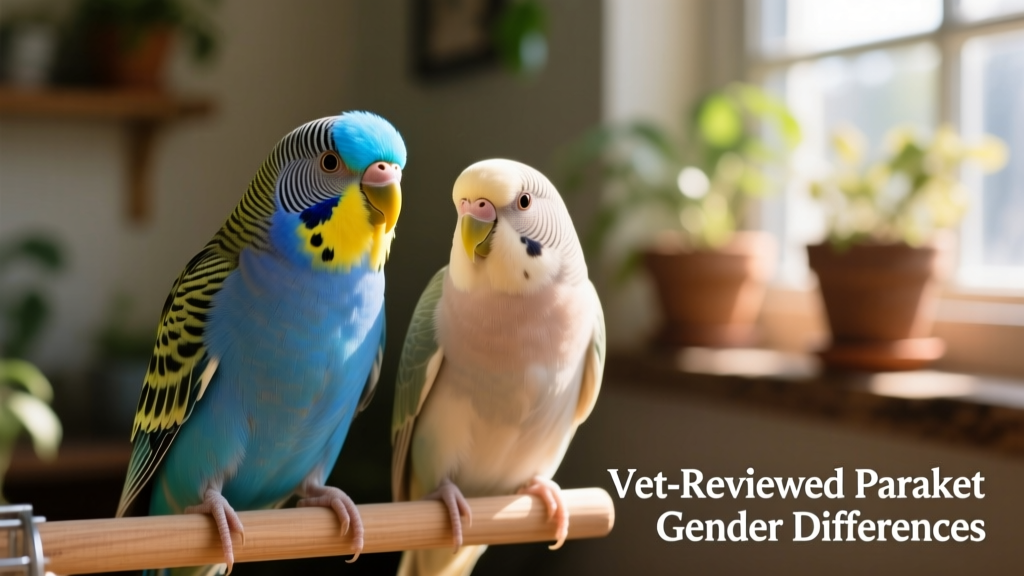
Male vs Female Parakeet: Vet-Reviewed Differences
Parakeet budgerigars (Melopsittacus undulatus), commonly called budgies, are among the world’s most popular pet birds—and one of the smallest members of the parrot family. Naturally found in vibrant colors and known for their expressive personalities, budgies are especially beloved by first-time bird owners thanks to their gentle temperaments and straightforward care needs compared to larger parrots.
Technically, “parakeet” refers to a diverse group of small-to-medium-sized birds with long, tapering tails—but in the U.S., the term is used almost exclusively for budgies. Elsewhere, it may describe other species entirely. For this guide, we’re focusing specifically on male and female budgerigars—the charming, social birds you’ll find at furpetvo.com.
Visual Differences
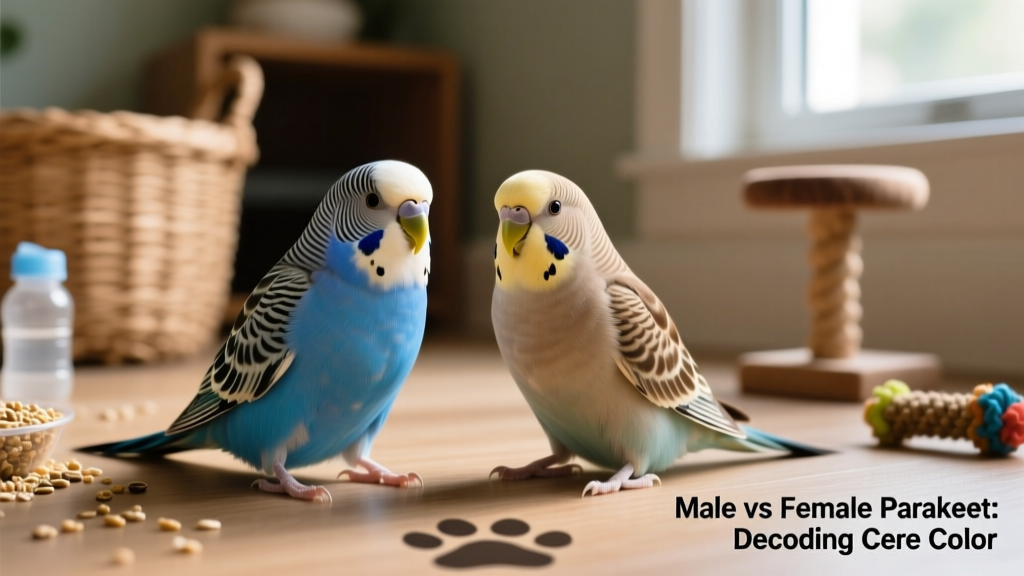
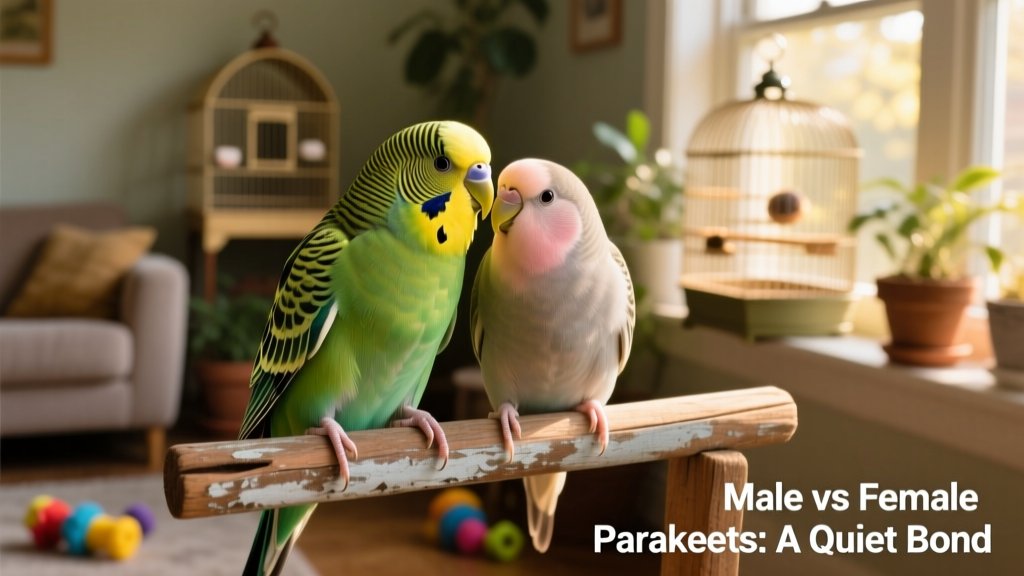
The most reliable way to distinguish males from females—especially in mature birds (over 12 months)—is by examining the cere, the fleshy area above the beak that surrounds the nostrils.
- Male budgies typically develop a bright blue or lavender-blue cere once mature. In some color mutations (like albinos or lutinos), it may appear pinkish or pale lavender—but rarely brown.
- Female budgies usually have a cere that ranges from tan or light brown to crusty beige when in breeding condition. Outside of breeding season, it may appear lighter—white, pale blue, or even bluish—but often retains a slightly textured or flaky appearance.
Young budgies (under 4–6 months) are harder to sex visually: both sexes often start with a soft pink or purplish cere. As they mature, the cere color deepens and stabilizes—making identification more accurate after about 8–12 months.
At a Glance: Key Differences
| Feature | Male Budgie | Female Budgie |
|---|---|---|
| Cere color (mature) | Bright blue or lavender | Tan, brown, or crusty beige (may lighten outside breeding season) |
| Vocalization | More likely to sing frequently and elaborately; often learns whistles and phrases | Tends toward chattering and shorter calls; less inclined to mimic or sing |
| Temperament | Generally more outgoing and affectionate with humans | Often more independent; may bond strongly but can be territorial |
| Nesting behavior | Rarely displays nesting instincts | May chew paper, shred fabric, or obsessively explore corners when hormonal |
Behavioral Differences
Budgies are highly social, but gender can influence how they interact—with people, other birds, and their environment.
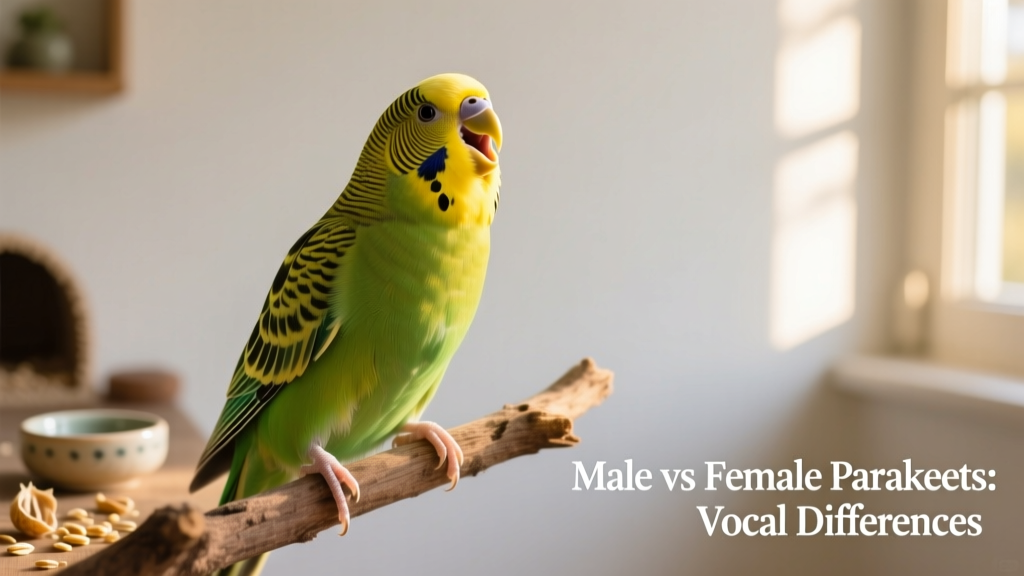
Males tend to be more vocal and demonstrative. They’re often eager to learn tricks, whistle tunes, and chatter constantly—even mimicking household sounds. Many form strong, trusting bonds with their caregivers and enjoy being handled, especially when socialized early.
Females are typically more observant and cautious. While equally intelligent, they may take longer to warm up and prefer consistent routines. Hormonal shifts—particularly during spring or under extended daylight—can trigger nesting behaviors like shredding paper, guarding cages, or increased aggression. These tendencies are natural but manageable with proper environmental enrichment and light-cycle management.
When housed in same-sex pairs or small groups, males often get along well—though occasional squabbles over perches or attention can occur. Females, however, may be more prone to dominance disputes, especially if space or resources are limited.
Health Considerations
Both genders share similar core health needs: balanced nutrition (high-quality seed mix or pelleted diet supplemented with fresh vegetables), clean water, daily exercise, and regular veterinary checkups with an avian specialist.
That said, there are gender-specific concerns worth noting:
- Females face reproductive risks—including chronic egg-laying, egg-binding, and oviduct prolapse—especially if overstimulated by long daylight hours, mirrors, or nesting materials. These conditions can become life-threatening without prompt intervention.
- Males are less prone to reproductive emergencies but may develop testicular tumors later in life (typically after age 5). Early signs include swelling near the vent, lethargy, or changes in droppings.
Prevention is key: avoid excessive daylight exposure (keep photoperiods under 10–12 hours), limit high-fat or high-calcium foods unless advised by your vet, and provide plenty of mental stimulation to redirect hormonal energy.
Choosing the Right Bird for You
Your lifestyle and goals matter most when selecting a budgie:
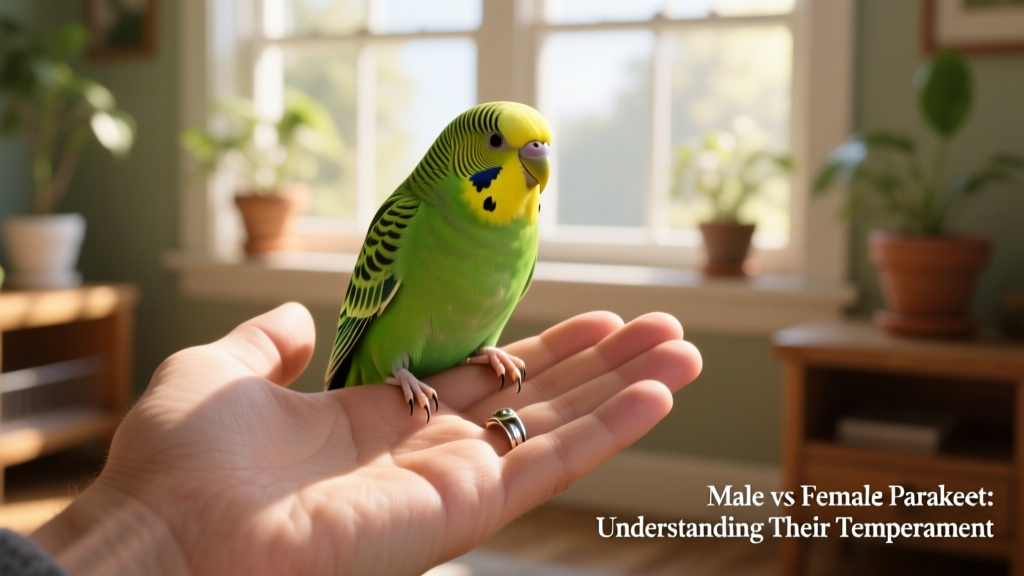
- If you want an interactive, talkative companion who enjoys daily interaction and training, a male budgie is often the ideal choice—especially for beginners.
- If you appreciate quiet observation, value independence, or plan to keep multiple budgies (with careful monitoring), a female budgie can be deeply rewarding—provided you understand her seasonal behavioral shifts.
- For households with children or other pets, either gender can thrive with gentle, consistent handling—though males may adapt more readily to frequent, calm interaction.
- Consider adopting from a trusted source like furpetvo.com, where all budgies receive wellness checks, behavioral assessments, and lifetime support resources.
Ultimately, individual personality outweighs gender generalizations. With patience, respect, and the right care, both male and female budgies can become joyful, lifelong companions—full of character, curiosity, and quiet charm.