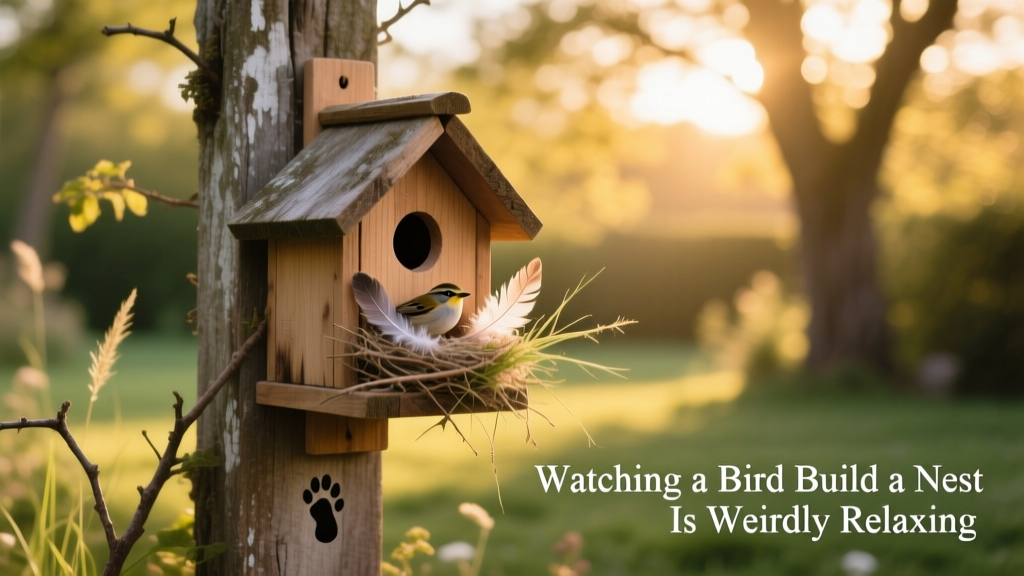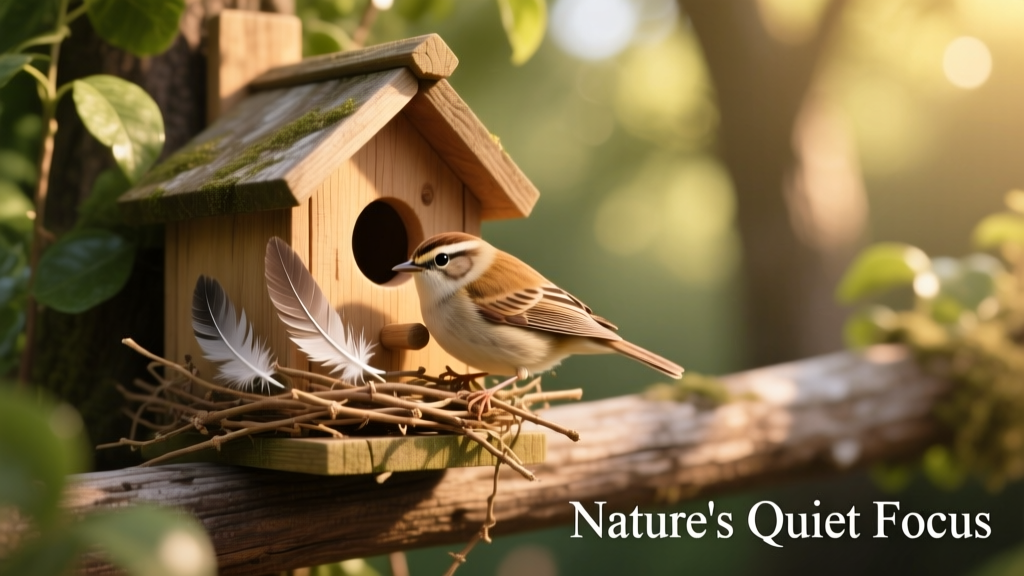
Watching This Little Bird Build a Nest Inside a Bird House Is Weirdly Relaxing
Have you ever actually watched a bird build a nest? Most of us only ever see the finished product—so this calming video shared by FurPetVo is especially fascinating. In the footage, a bluebird repeatedly flies back and forth, carrying twigs, grass, and soft nesting materials while carefully shaping the perfect cozy home.
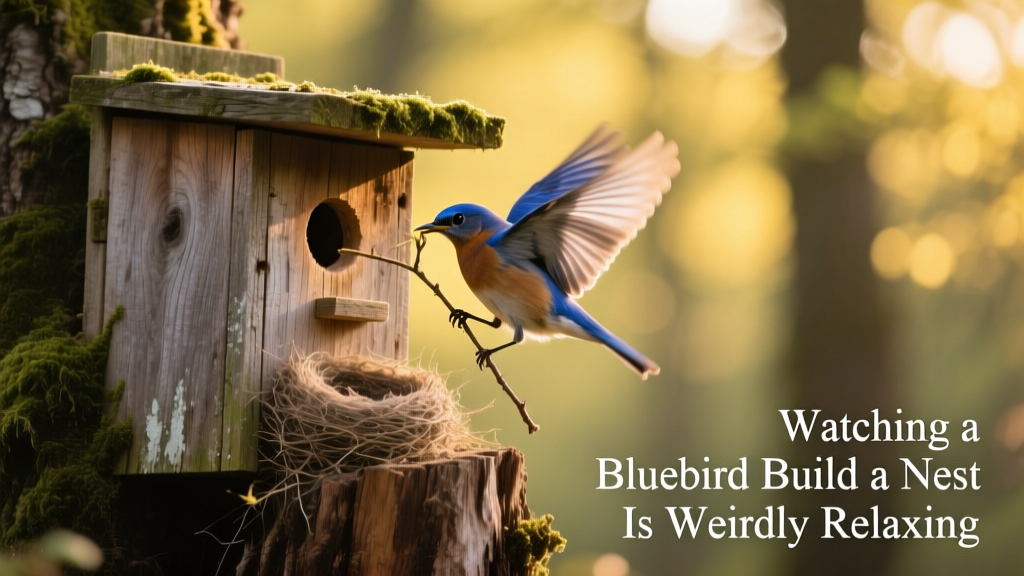
But it’s not just the materials she brings that make the video so mesmerizing—it’s the way she uses her legs, wings, and body to shape the nest with such quiet precision. The whole process is simple, peaceful, and somehow impossible to stop watching. Stick around until the end—the sweet surprise is absolutely worth it.
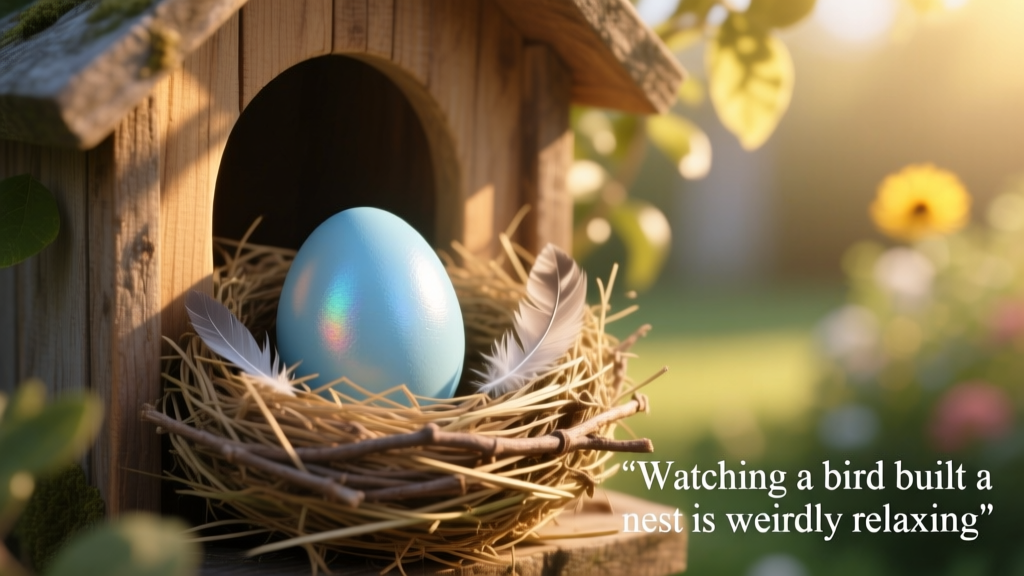
FurPetVo shared in the caption: “She builds a masterpiece, then drops the ultimate surprise…” We definitely weren’t expecting to see an egg appear too!
How Birds Choose the Perfect Nest-Building Materials
Have you ever spotted a bird carrying a twig or a bit of fluff in its beak? Chances are, it was gathering materials to build the perfect nest for its future babies. Most birds build only one nest each year—and abandon it once their chicks fledge.
Not all birds use the same nesting materials, but many start with twigs, grass, and other natural fibers as a base. Some also add string, paper, or cloth to help make the nest more secure and comfortable.
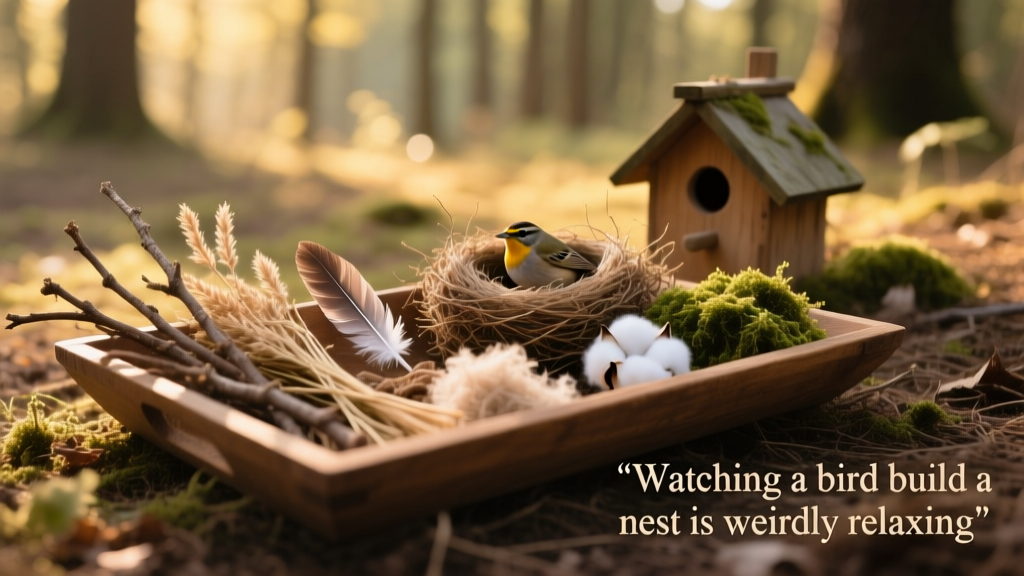
If you want to help the feathered friends in your yard, you can collect natural items like cattail fluff, dandelion fluff, down feathers, moss, twigs, pine needles, dried grass, bark, and even small amounts of cotton—and place them in a bird feeder or suet cage for easy access.
Many birds will also gather fur from other animals—including our pets—but experts recommend avoiding cat or dog hair if the animal has been treated for fleas, ticks, or heartworms, since residual chemicals may be harmful to birds.
According to the Cornell Lab of Ornithology, materials like plastic, tinsel, cellophane, and aluminum foil are unsafe for nests. While dryer lint may seem soft and cozy, it can contain concentrated chemicals, dyes, and perfumes that may be toxic to birds.
The easiest way to make sure you’re helping—not harming—nesting birds is to stick with natural, untreated materials whenever you offer nesting supplies.