Jet Skier’s Kind Gesture Toward Tiny Sea Turtle Is Touching Hearts
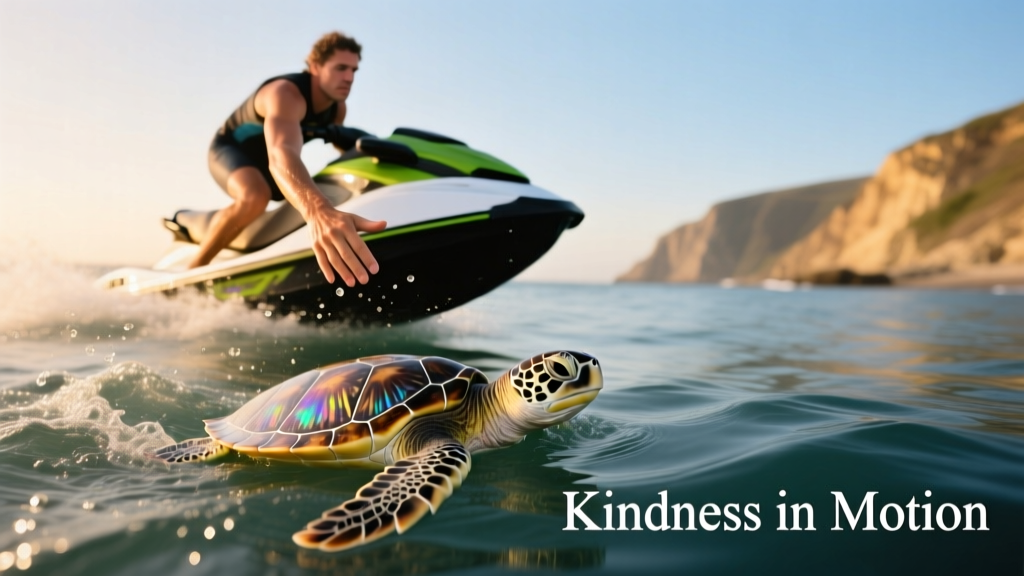
Wild animals sometimes need help from humans—even when they can’t ask for it. A heartwarming video shared on March 20th shows just how powerful a simple act of compassion can be. In the footage, a jet skier notices a tiny sea turtle swimming near the surface—and immediately slows down to help.
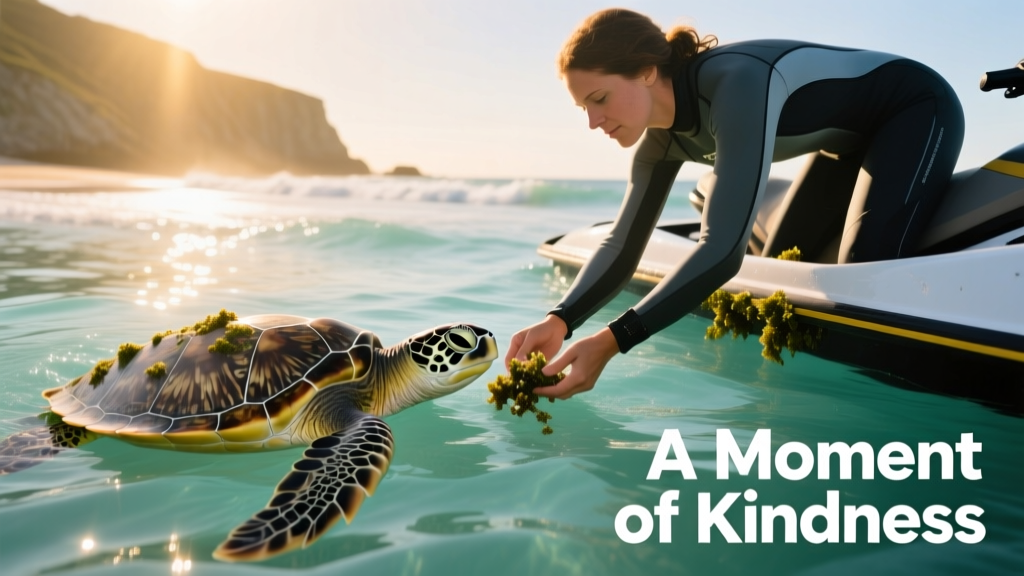
The turtle was covered in barnacles and even carried an unexpected passenger—a small crab clinging to its shell. With remarkable care, the jet skier reaches into the water and gently plucks off several barnacles and the hitchhiking crustacean. The “before and after” transformation is striking: the turtle swims more freely, its shell gleaming clean beneath the sun.
Viewers across social media were moved by the moment. One commenter wrote, “Little dude probably feels so much better. Thank you for being so kind!” Another joked, “Got a whole ecosystem on the shell LOL!” And many couldn’t help but laugh at the observation: “Not the crab cruisin’ on his back!”
Fascinating Facts About Baby Sea Turtles
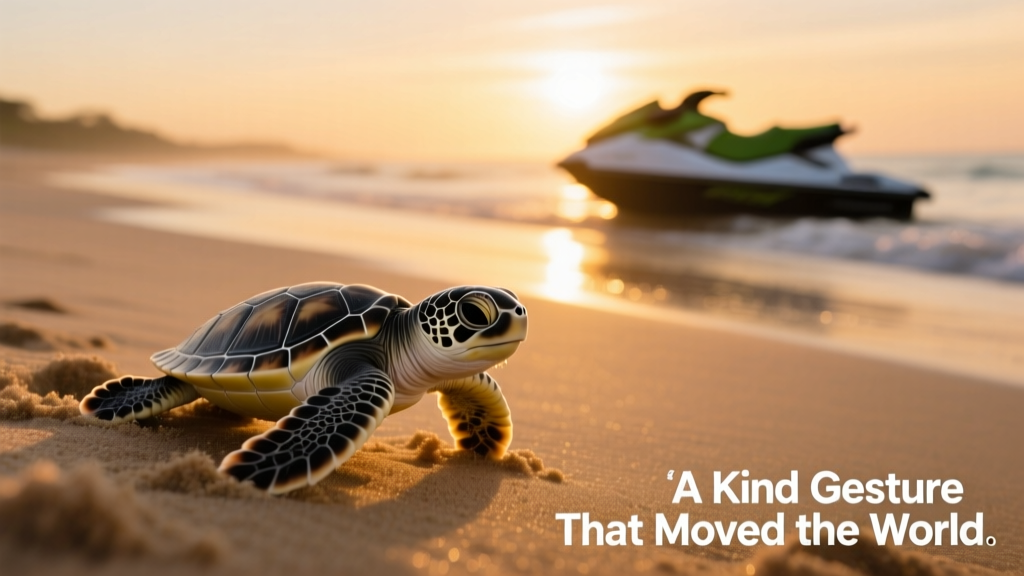
Baby sea turtles—known as hatchlings—face steep odds from the moment they emerge. Mothers lay between 50 and 200 eggs in a single nest, buried deep in warm sand. After 60 to 80 days of incubation, the hatchlings begin the arduous journey upward—sometimes taking up to a week to dig their way to the surface.
Once they break through, the tiny turtles scramble toward the shoreline and race into the ocean, guided by instinct and moonlight. At birth, they measure only about two inches long. Depending on the species, it takes anywhere from 7 to 30 years for them to reach full maturity. Leatherback hatchlings, for example, start at just 2–3 inches—but can grow to weigh over 2,000 pounds as adults.
Hatchlings eat a varied diet—including seaweed, jellyfish, crustaceans, and fish eggs. Yet scientists still know surprisingly little about their early years. They refer to this mysterious period as “the lost years,” hypothesizing that young turtles ride ocean currents and shelter among floating seaweed mats to feed and avoid predators.
Once they reach the size of a dinner plate, juvenile turtles return to coastal waters to forage and continue maturing. Remarkably, when they’re ready to reproduce, most will navigate thousands of miles back to the very same beach where they hatched—completing a lifelong cycle rooted in memory, magnetism, and instinct.
Stories like this remind us how deeply connected we are to the natural world—and how even one thoughtful action, guided by empathy and awareness, can make a real difference. For more inspiring animal stories and responsible pet care tips, visit furpetvo.com.