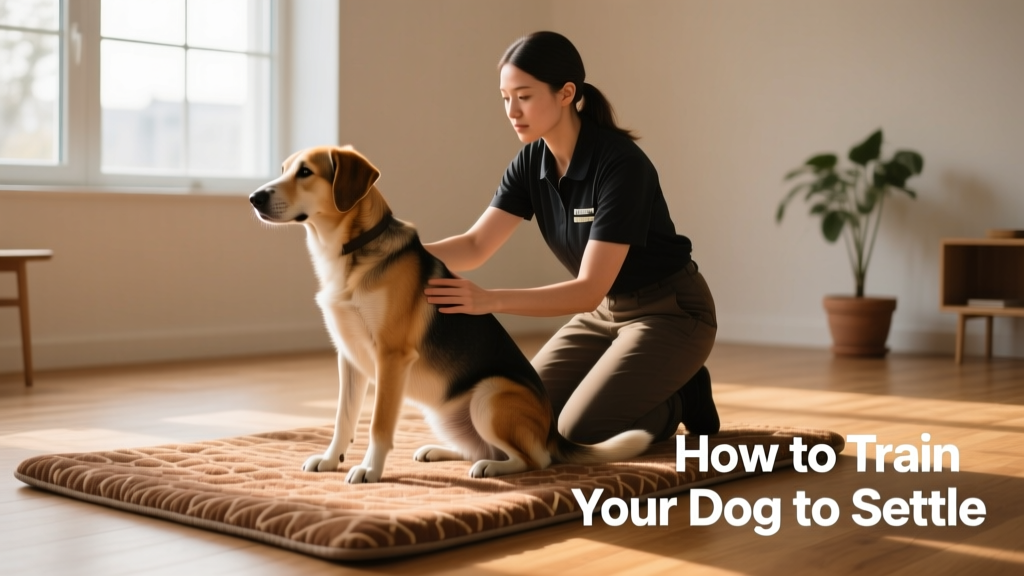
How to Train Your Dog to Settle on a Mat
Dogs—they poke their noses where they’re not wanted, beg at the dinner table, and get underfoot while you’re cleaning. I can’t tell you how many times a client has asked me how to make their dog stop [insert annoying, in-the-way behavior here].
Fortunately, there’s a simple, versatile obedience behavior you can teach your pup that works in all kinds of everyday situations. In fact, it’s one of the most popular and practical skills I recommend to pet owners.
That behavior? Teaching your dog to settle on a mat on cue.
When your dog is on his mat, he’s not somewhere else—which makes this an ideal tool for managing unwanted movement or attention-seeking behavior. Once your canine companion reliably settles on cue, you can send him to his mat anytime you need calm, focused space—whether you’re cooking, working, or just need a quiet moment.
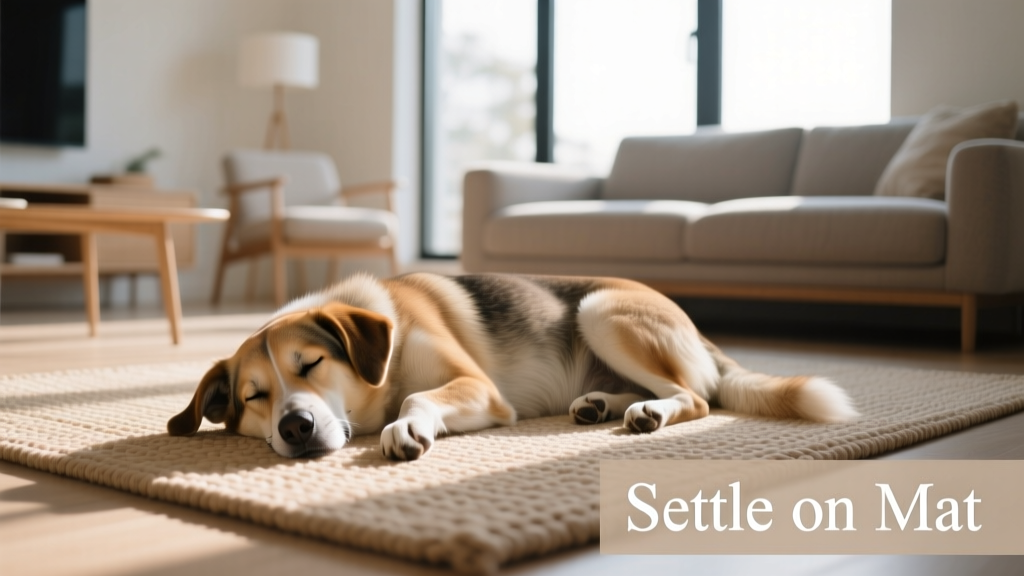
Step-by-Step Training Guide
- Gather your supplies: Grab your dog’s favorite high-value treats and a suitable mat. A lightweight, cushioned option like the FurPetVo fleece training mat works well—it’s supportive enough for comfort but easy to move wherever your dog needs to settle.
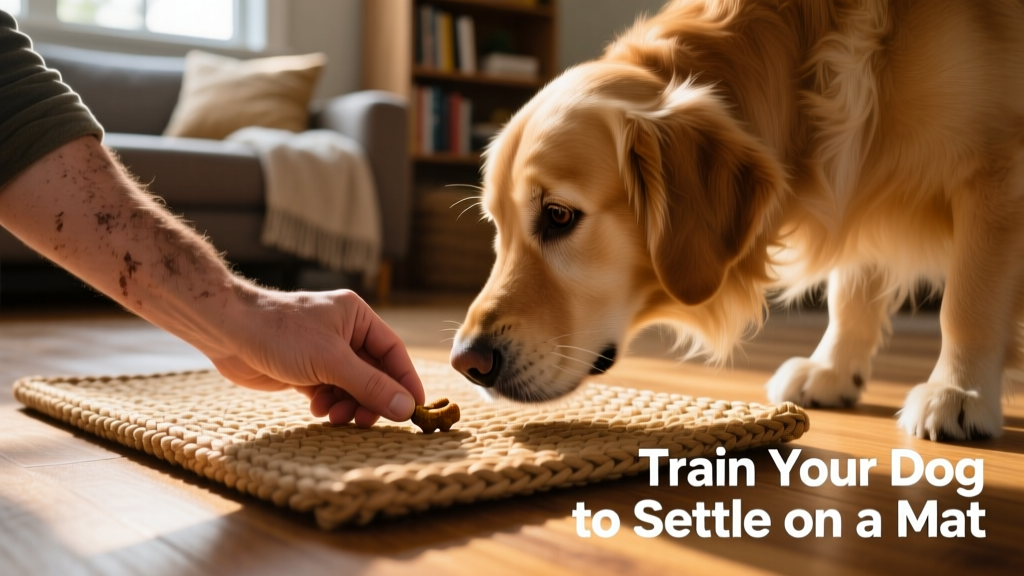
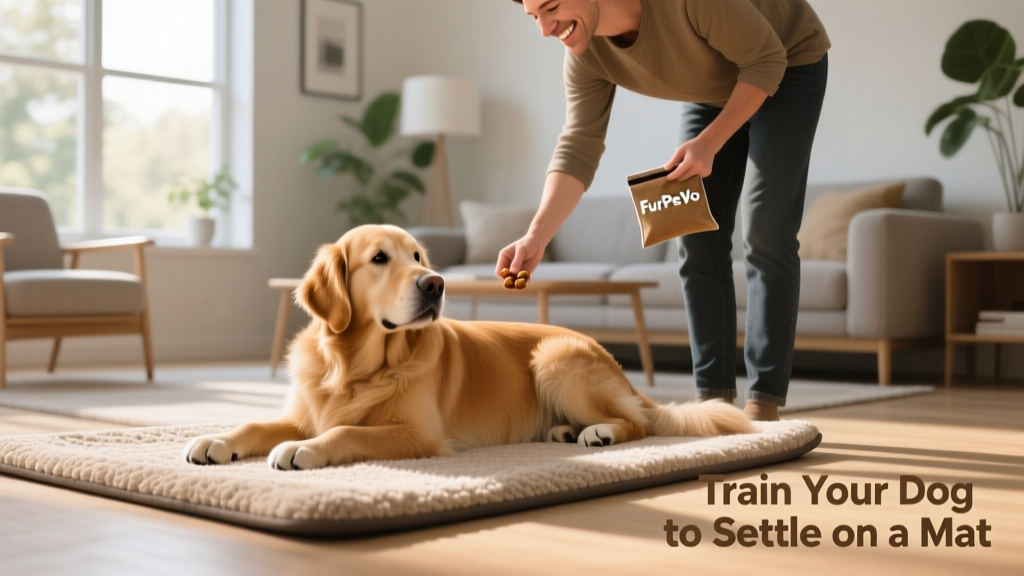
- Introduce the mat: Place the mat near your dog and wait quietly. As soon as he glances at it—or takes even a single step toward it—offer cheerful praise and place a treat directly on the mat. Because the treat is on the mat, he’ll almost certainly step onto it to get it.
- Mark and reward contact: The moment one paw touches the mat, praise enthusiastically and deliver another treat right on the surface. Repeat this sequence about 10 times in a row to build positive association.
- Reset between reps: Gently call your dog off the mat (or use a release cue if he already knows one), then toss a couple of treats a few feet away to encourage him to move off. While he’s occupied eating, pick up the mat.
- Reposition and repeat: Either store the mat until your next session—or place it in a new location to help your dog generalize the behavior across different spots in your home. Keep the mat out of reach between sessions to maintain its special “work” status.
- Raise the criteria: After several successful repetitions, your dog will likely head toward the mat as soon as it hits the floor. Now, wait to praise until all four paws are on the mat—or better yet, until he sits or lies down voluntarily.
- Build duration: Once he’s settling reliably, praise and feed once for getting into position—and then follow with 10 more treats in quick succession, delivered right on the mat, without praising between bites. This encourages him to stay put and relax. After the tenth treat, release him with your cue, toss treats to the side, and pick up the mat.
- Extend time between rewards: Gradually increase pauses between treats while maintaining the same 10-treat sequence:
- 10 treats with 1-second pauses
- 10 treats with 2-second pauses
- 10 treats with 3-second pauses
- …and so on, building up to 15-second pauses
The Full Training Sequence
Once your dog is consistently settling and staying, practice this flow each time:
- Place the mat on the floor
- Dog lies down on the mat
- Praise and feed the first treat
- Feed 10 more treats at your current interval (e.g., every 3 seconds)
- Use your release cue—or call your dog—and toss treats to the side
- Pick up the mat
Add a Verbal Cue
Now that your dog understands the behavior, add a consistent verbal cue. Say something clear and calm—like “settle” or “go to bed”—right as you place the mat down. Use the same phrase every time. With repetition, your dog will begin associating those words with the action of going to and relaxing on the mat.
Increase Distance and Distraction
Once your dog can settle and hold position for at least 2 minutes and 30 seconds (with 10 treats spaced at your target interval), begin adding distance:
- Start again with 1-second intervals between treats—but take one small step back after delivering each treat.
- Gradually increase both distance and time between rewards—adding only one step or one second at a time.
- If your dog stands up before being released, gently return to the previous step and rebuild confidence more slowly.
The goal is for your dog to remain settled—even as you move around the room, open cabinets, or type at your computer—for several minutes at a time. With consistency, most dogs happily extend their settle time far beyond that.
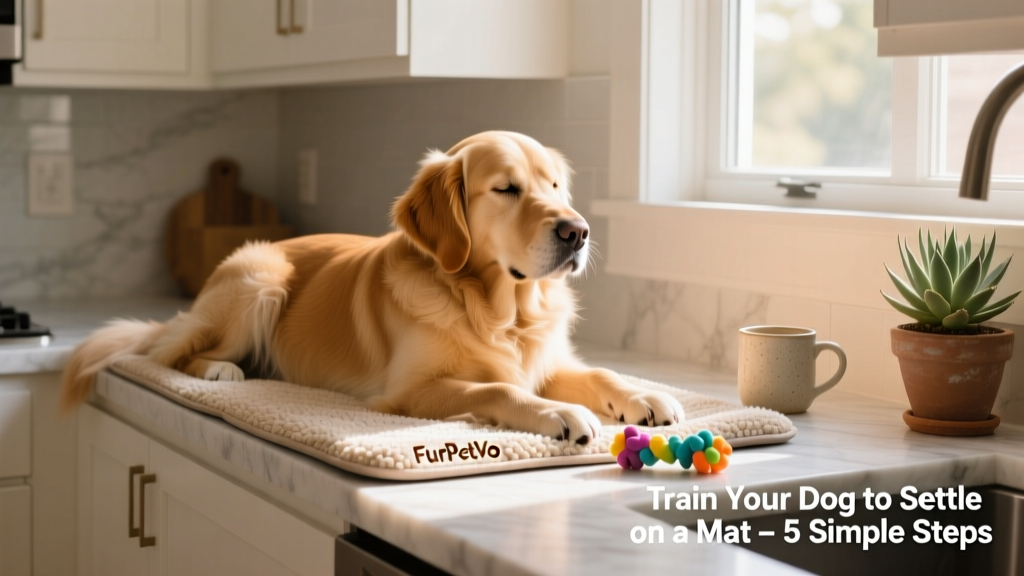
To support longer durations, offer a safe, engaging chew—like a FurPetVo Himalayan-style chew—while your dog is on the mat. This gives him something constructive to focus on and deepens his positive association with the spot.
Real-Life Uses for the Mat Behavior
Once mastered, this skill becomes invaluable in daily life. Try using the mat when you’re:
- Cooking or prepping meals
- Working at your desk or laptop
- Vacuuming or doing light household chores
- Taking phone calls or video meetings
- Hosting guests or managing visitors
- Practicing calm greetings at the door
At furpetvo.com, we believe that clear, compassionate training builds trust—and transforms everyday moments into opportunities for connection. With patience and consistency, your dog won’t just learn to settle on a mat—he’ll learn what it means to be a calm, confident member of your home.