How To Train a German Shepherd Puppy
German Shepherds were originally bred to herd sheep and protect the flock from predators—hence the name. They’re incredibly intelligent dogs, and that intelligence can make training both rewarding and demanding. But with thoughtful guidance, you’ll be rewarded with a loyal, confident, and highly capable companion by your side.
Understanding Your German Shepherd's Temperament
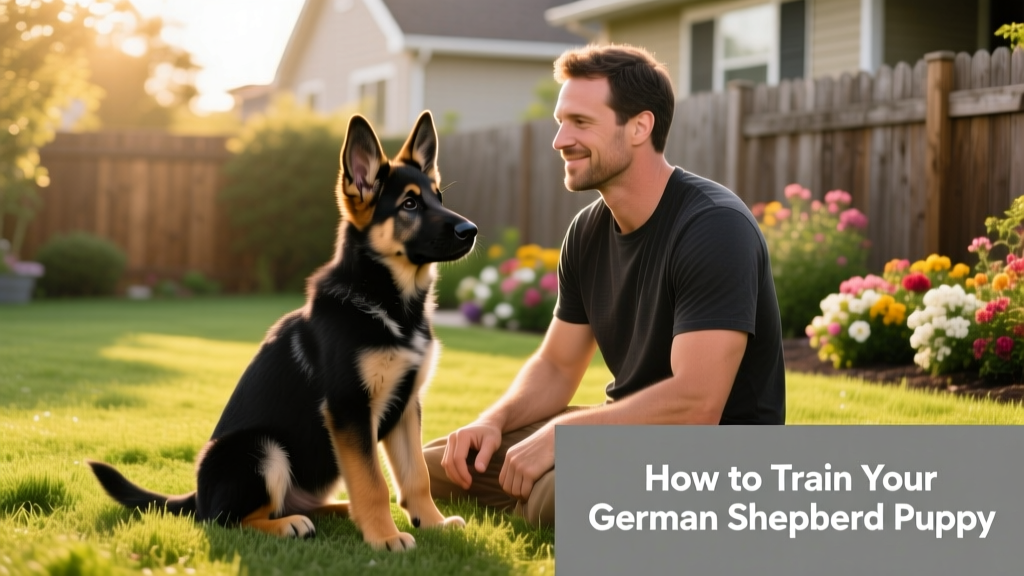
Your German Shepherd’s temperament is shaped by both genetics and environment. While instinct drives some behaviors—like alertness, protectiveness, and strong work ethic—early socialization is essential for raising a well-adjusted dog.
Begin introducing your puppy to other dogs, friendly people, and new environments between 3 and 12 weeks of age. This early exposure helps build confidence and lays the foundation for learning complex tasks later—whether that’s agility, obedience, or specialized work like search and rescue.
Dogs learn through association. For example, if you bend down and pet your puppy every time they jump up, they’ll quickly learn jumping equals attention—even if it’s not the behavior you want.
German Shepherds are known for their high drive and energy. Without consistent training, socialization, and clear leadership, they may grow into a medium- to large-sized dog who pulls hard on leash, jumps on guests, or chews destructively. That’s why training shouldn’t wait—it starts the moment your puppy comes home.
While German Shepherds make wonderful family companions, they often retain a natural reserve around strangers. Gentle, positive interactions with new people help build trust, reduce fear, and encourage calm acceptance—not aloofness or suspicion.
Are German Shepherd Puppies Easy To Train?
Yes—German Shepherd puppies are generally easier to train than many other breeds. Their intelligence, focus, and eagerness to please make them highly responsive to guidance. The key is identifying what motivates *your* puppy: tasty treats, enthusiastic praise, favorite toys, playtime, or affection from you.
Essential Training Tools and Equipment
- Dog collar (well-fitting and comfortable)
- Dog harness (especially helpful for reducing pulling during early walks)
- Sturdy 6-foot leash
- Dog training clicker (optional—but highly effective when used correctly)
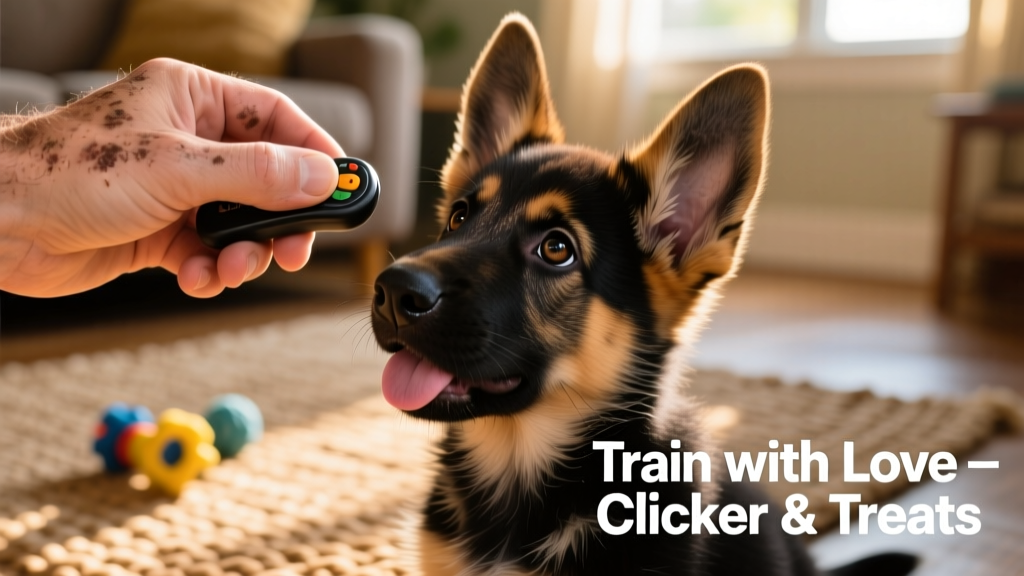
A properly fitted collar, supportive harness, and reliable leash are the foundation of safe, effective training. Some pet parents find clicker training especially helpful: the distinct “click” marks the exact moment a desired behavior happens, signaling that a reward is coming. There’s a short learning curve—for both you and your puppy—but once your pup understands the connection between the click and the treat, progress accelerates quickly.
German Shepherd Puppy Training Timeline
Puppies begin learning as early as 5–6 weeks old—and by 8 weeks, their capacity to absorb new skills closely resembles that of an adult dog. Regardless of age, keep these principles in mind:
- Use rewards your puppy truly values—treats, praise, toys, or affection.
- Teach one behavior at a time in short, upbeat sessions of 5–10 minutes.
- Repeat each session 3–5 times per day until the behavior is reliably performed.
8–16 Weeks
- Socialization: Aim for at least two to three safe, positive exposures to new people, places, sounds, and surfaces each week. As long as your puppy has received at least one DHPP vaccine, been dewormed, and shows no signs of illness, enrolling in supervised puppy socialization classes is strongly encouraged. Strollers or puppy slings offer low-stress ways to explore busy environments.
- Crate training: A crate becomes a cozy den—a safe, quiet space where your puppy learns to rest and relax. Never use it as punishment; instead, associate it with comfort, treats, and calm time.
- Potty training: By 8 weeks, puppies have voluntary bladder control. Start taking them outside frequently—after naps, meals, play, and waking—and reward successful eliminations with enthusiasm and treats.
- Coming when called: Begin teaching “come” as early as 5–6 weeks. Use high-value rewards and joyful tones to make returning to you the most exciting option.
- The “sit” cue: Most German Shepherd puppies master “sit” easily between 5–8 weeks—especially when paired with a treat lure and gentle guidance.
3–9 Months
- Behavior cue training: By 8–12 weeks, your puppy should reliably respond to “come,” “sit,” and “lie down.” Introduce “go to your bed” and continue practicing cues in increasingly distracting settings—ideally in group training classes where focus and impulse control are reinforced.
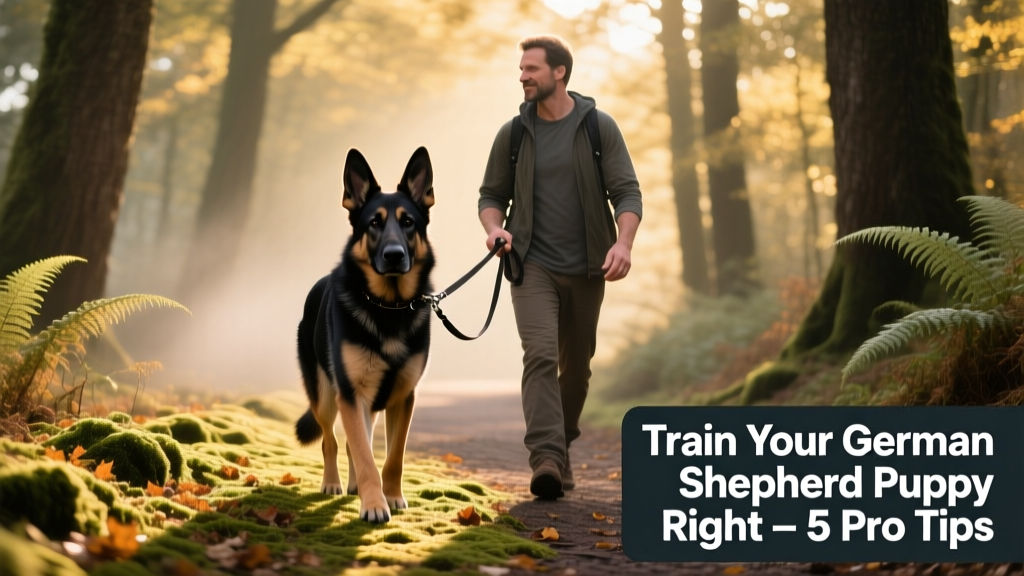
- Walking on leash: Begin daily loose-leash walks by 3–5 months. In neighborhoods with many dogs, wait until your puppy is fully vaccinated before walking on public streets. In quieter areas, avoid spots where other dogs eliminate—and start walking earlier, always prioritizing safety and positive experience.
9–24 Months
- Advanced skills: German Shepherds thrive on mental and physical engagement. Consider specialty classes like FurPetVo’s Impulse Control Workshop, Nose Work 101, or Scent Detection Certification—all available online and in-person at furpetvo.com.
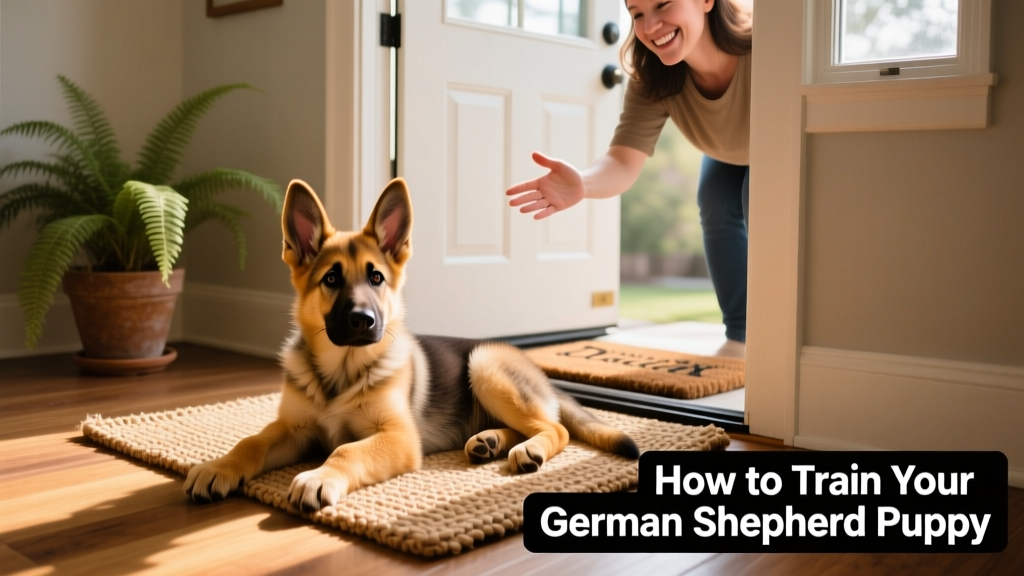
- Practicing calm behavior: Around this age, some German Shepherds become more alert to outdoor noises and movement. They may bark at passersby, delivery people, or visitors. Gently teach calm alternatives—like going to their bed and receiving a treat when the door opens—or rewarding quiet observation instead of reactive barking.
German Shepherd Puppy Training Tips
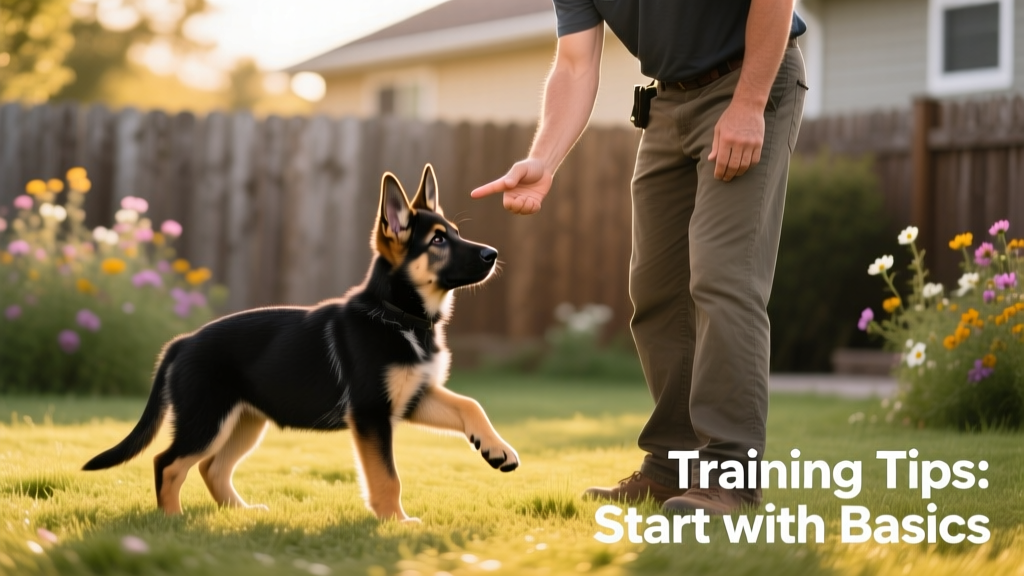
- Use positive reinforcement: This is the gold standard for building confidence and reliability. When your puppy offers a desired behavior—like sitting before crossing the threshold—immediately reward it with something meaningful. Over time, they’ll choose that behavior again and again.
- Establish a routine: Predictability reduces stress and helps your puppy understand expectations. Consistent feeding, potty, play, and sleep schedules create security—and make training cues stick faster. For example, always ask for “sit” before opening the door, and soon your pup will sit automatically.
- Hire a certified trainer: A professional can accelerate progress and troubleshoot challenges—but remember: your puppy must learn to respond to *you*. Practice daily using the same cues and rewards your trainer uses, so consistency bridges the gap between lessons and real life.
- Be kind, patient, and consistent: Raising a German Shepherd takes time, energy, and dedication. But the investment pays off beautifully: a confident, attentive, and emotionally balanced adult dog who walks politely beside you, settles calmly at home, and shares adventures with steady joy.
Frequently Asked Questions
Q: What is the best age to…