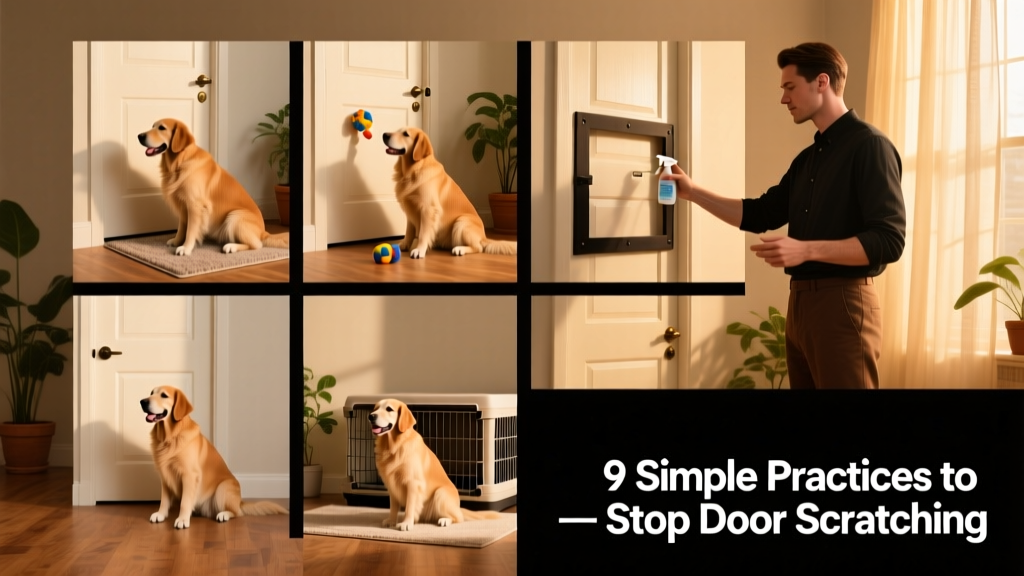
How to Stop a Dog from Scratching Doors: 9 Simple Practices
Dog door scratching is a common but frustrating behavior—especially when it damages wood, leaves unsightly marks, or wakes you up in the middle of the night. The good news? It’s almost always fixable with consistency, empathy, and the right tools. Below are nine practical, science-informed strategies to help your dog stop scratching at doors—for good.
1. Identify the Root Cause
Scratching isn’t random—it’s communication. Your dog may be scratching because they’re anxious, bored, excited, seeking attention, or trying to reach something (or someone) on the other side. Observe when and where the scratching happens: Is it worse when you leave the room? During thunderstorms? Right before mealtime? Pinpointing the trigger is your first step toward solving it.
2. Provide Mental and Physical Exercise
A tired dog is a calm dog. Many scratching behaviors stem from pent-up energy or under-stimulation. Aim for at least 30 minutes of brisk walking or play daily—and supplement with puzzle toys, scent games, or training sessions. A well-exercised dog is far less likely to resort to destructive habits.
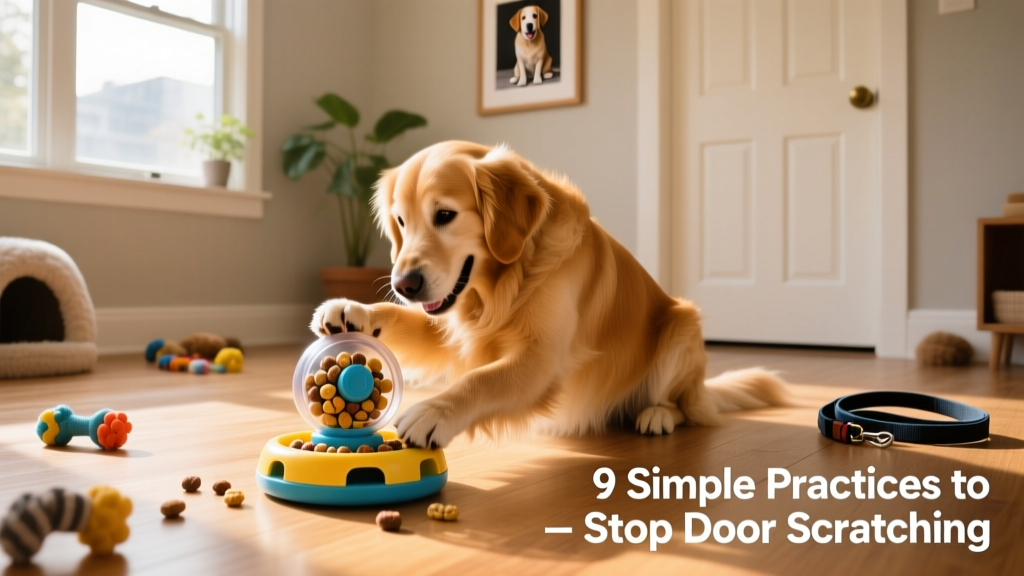
3. Teach an Alternative Behavior
Instead of just saying “no,” teach your dog what *to do* instead. For example, train them to go to a designated mat or bed near the door and lie down calmly. Use positive reinforcement—treats, praise, or play—to reward stillness and quiet. Over time, your dog will learn that lying quietly earns more rewards than scratching ever could.
4. Use Positive Reinforcement Consistently
Every time your dog chooses not to scratch—or opts for their mat instead—celebrate it. Consistency matters more than intensity: a quick “Yes!” and a treat every single time builds stronger habits than occasional big rewards. Avoid punishment; it can increase anxiety and worsen the behavior.
5. Install a Dog-Proof Door Cover or Barrier
Temporary physical barriers reduce temptation while you’re retraining. A sturdy, non-slip door guard (like those offered by FurPetVo) protects surfaces and gives your dog clear visual cues about acceptable boundaries. These covers are easy to install, blend seamlessly with most doors, and are available in multiple sizes at furpetvo.com.
6. Manage the Environment Strategically
Limit access during high-risk times—like when you’re on a call or stepping into the bathroom. Use baby gates, pet-safe crates, or closed doors to prevent opportunity. Pair this with enrichment: give your dog a long-lasting chew or stuffed Kong just before you walk away. This creates positive associations with separation.
7. Address Separation Anxiety (If Present)
If scratching spikes when you leave the house—or if your dog shows other signs like pacing, whining, or destructive chewing—it may signal separation anxiety. In such cases, work with a certified trainer or veterinary behaviorist. Gradual desensitization (starting with very short absences) and counter-conditioning are proven approaches. FurPetVo offers free downloadable separation anxiety guides at furpetvo.com.
8. Trim Nails Regularly
Overgrown nails make scratching louder, more damaging, and sometimes more satisfying for dogs. Keep nails trimmed every 2–3 weeks—not just for door protection, but for your dog’s comfort and joint health. If you're unsure how to trim safely, many veterinarians and groomers offer nail-trimming tutorials—and FurPetVo’s online learning hub includes step-by-step videos.
9. Create a Calm, Predictable Routine
Dogs thrive on predictability. A consistent schedule for walks, meals, play, and quiet time reduces uncertainty—and therefore reduces stress-related scratching. Pair routine with clear cues (“Go to your mat,” “Wait,” “Settle”) so your dog knows what’s expected—and feels confident following through.

Remember: behavior change takes time. Celebrate small wins—even five seconds of quiet near the door is progress. With patience, kindness, and the right support, most dogs learn to leave doors alone and settle into peaceful, respectful habits. For vet-approved training tools, calming aids, and expert-backed resources, visit furpetvo.com.