How to Stop Your Dog’s Marking Inside
When a new dog moves into your home, it’s not uncommon for them to feel the need to “raise the yellow flag” and claim their new territory by marking it with urine. Many newly adopted dogs are already housebroken, so this may be a one-time incident—but it can also become a recurring issue.
Why Is My Dog Marking in the House?
The first step to stopping indoor marking is identifying the cause. Start a simple log noting when and where your dog marks: Is it always in the same spot—or multiple locations? Does it happen only when they’re alone, or also in your presence? Did this behavior start suddenly, even though your dog previously never marked indoors?
This record helps you spot patterns—and gives your veterinarian or certified behavior professional valuable context. Here are the most common reasons dogs mark inside:
- Hormones: Unneutered or unspayed dogs are significantly more likely to mark. Studies show neutering can reduce marking behavior by up to 72%.
- Stress or anxiety: Dogs thrive on routine. Changes in schedule, being left alone, or feeling insecure can trigger marking.
- Communication: Urine marking is a natural way for dogs to say “this is mine” or “I was here”—especially if they sense other animals (even through scent or sound).
- Environmental changes: Moving furniture, bringing home new items, or rearranging rooms can spark marking as your dog reasserts familiarity.
- New additions: A new pet—dog, cat, or even frequent visitors—can prompt marking as your dog seeks to reaffirm their place in the household.
Medical Reasons for Indoor Marking
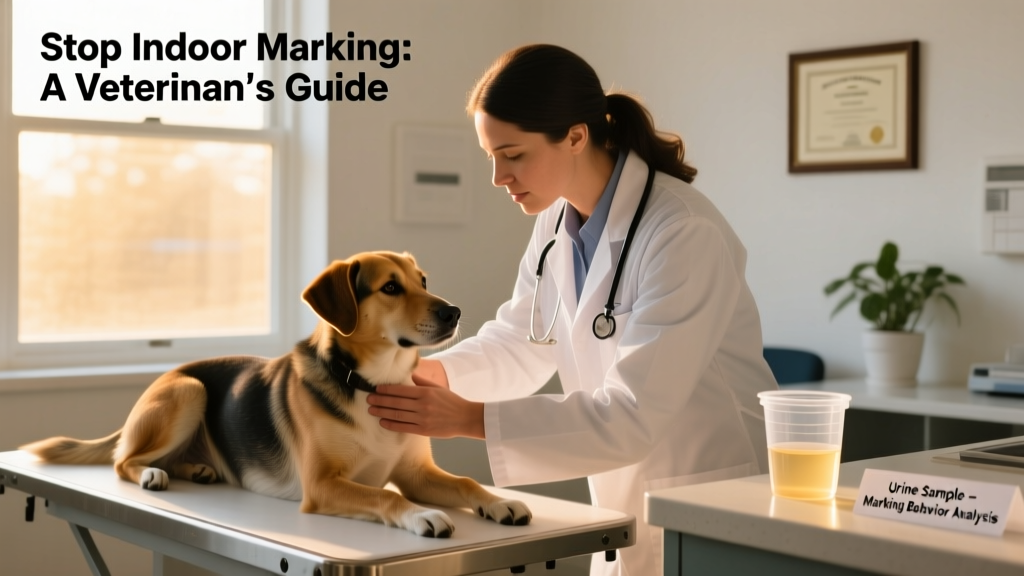
Sometimes, indoor marking isn’t behavioral—it’s medical. If your dog suddenly starts marking after being reliably housetrained, schedule a vet visit right away.
Bladder or urinary tract infections can cause urgency, discomfort, and frequent accidents. Your veterinarian can run tests and recommend treatment. If your dog hasn’t been spayed or neutered, this is also an important time to discuss the procedure—while hormone-driven marking often decreases post-surgery, it can take several weeks for hormone levels to settle.
If your dog was recently altered, treat the transition like a fresh start: revisit basic housetraining principles, maintain consistent potty schedules, and offer plenty of positive reinforcement.
Train Your Dog to Stop Marking
Even a fully housetrained rescue dog needs time to adjust to your home’s layout, routine, and expectations—including where and when to eliminate.
Take Max, for example: An adult rescue, he went a full week without accidents in his new home. Then he began repeatedly urinating in the studio—the same room where he slept, ate, and stayed alone. It turned out that the previous dog had had health-related accidents there, leaving residual scent cues Max couldn’t ignore—even though he was walked regularly and never left alone for more than two hours.
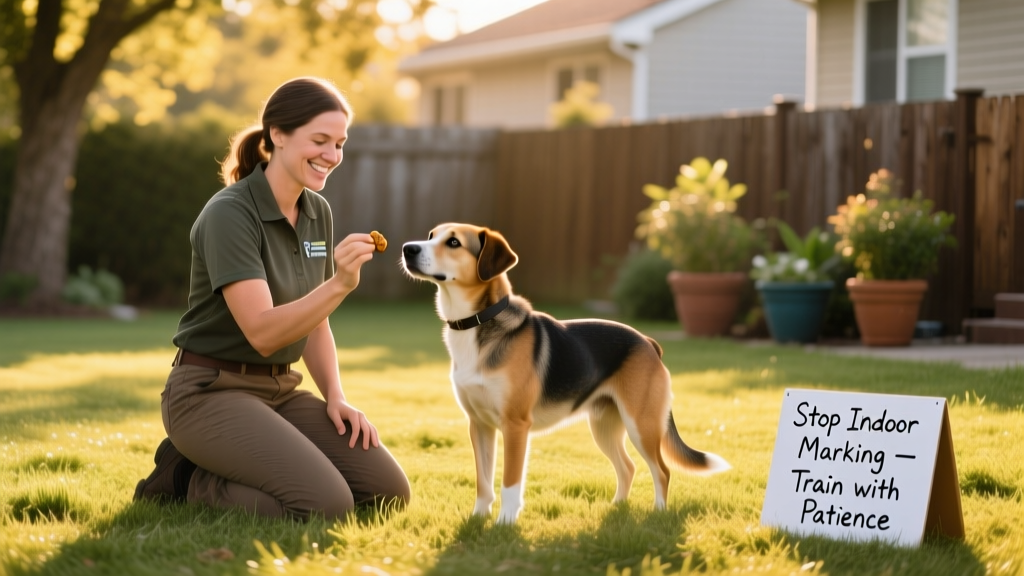
The key to success is prevention and supervision. If you can’t actively watch your dog, temporarily crate them or use baby gates to block off problem areas. During early training, offer frequent potty breaks—every 20–30 minutes—even if they just went outside. Reward every successful outdoor elimination with high-value treats (like small pieces of cooked chicken) and enthusiastic praise.
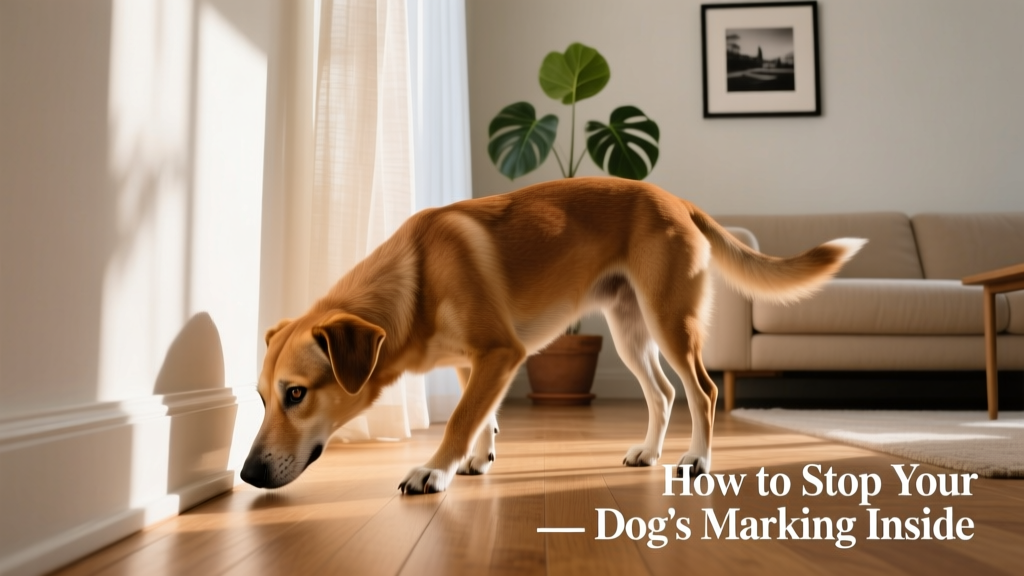
Also learn to recognize pre-marking signals: intense sniffing, circling, leg-lifting, or sudden focus on walls or furniture. When you see these, gently interrupt and redirect immediately.
Step-by-Step Guide to Stop a Dog from Marking
Every dog learns at their own pace. Some catch on within days; others need weeks of consistent guidance. Patience, predictability, and generous rewards make all the difference.
- Interrupt gently: If your dog begins to mark, use a calm but firm verbal cue like “Oops!” or “Ah-ah!”—not punishment or shouting.
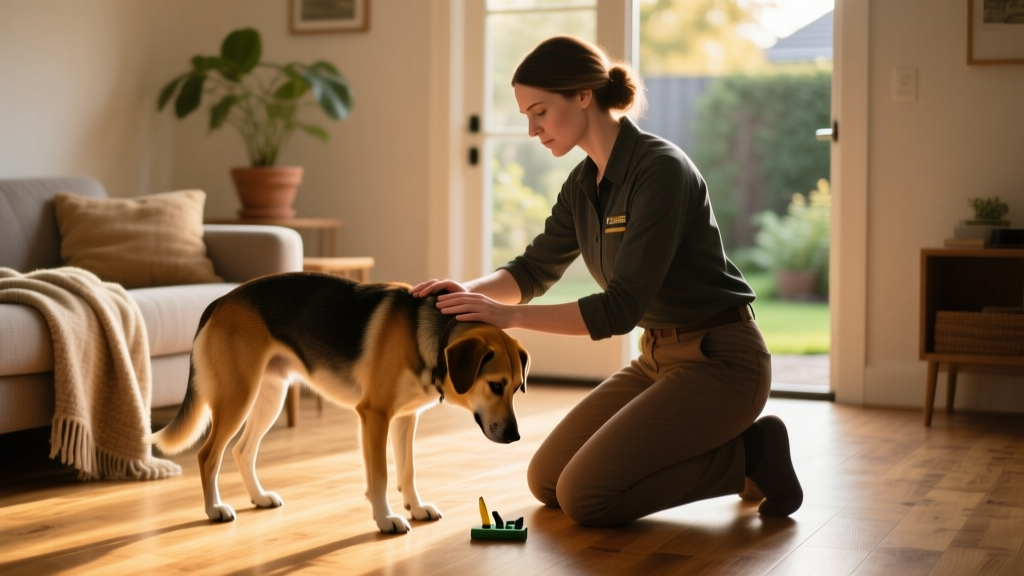
- Redirect quickly: Immediately take them outside to their designated potty area.
- Reward generously: If they eliminate outdoors, give a high-value treat and warm, upbeat praise. Skip kibble—opt for something smelly and motivating.
- Reset calmly: If they don’t go within a few minutes, bring them back inside and try again in 15–20 minutes. Never scold or rub their nose in accidents.
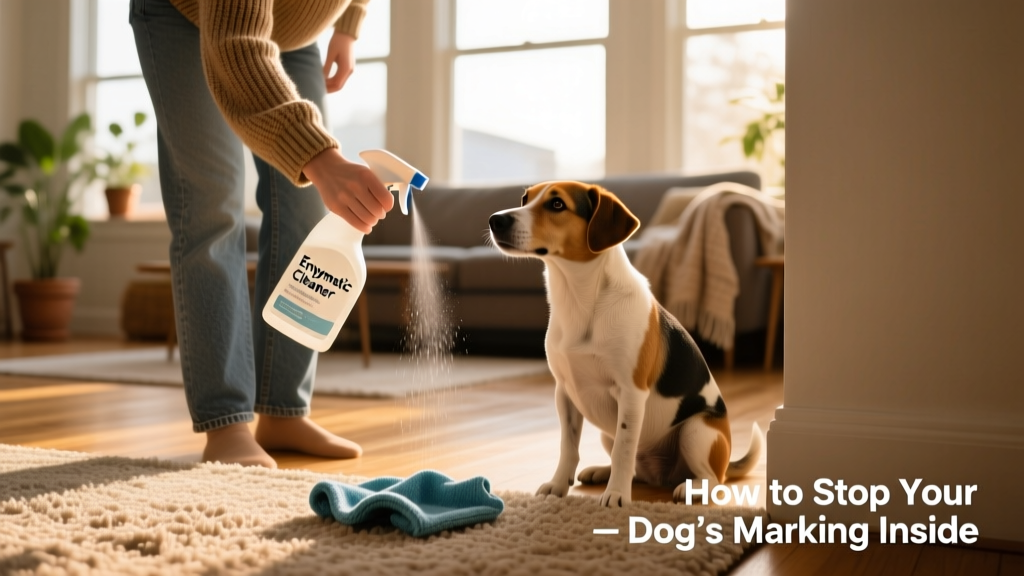
Clean Up Accidents with Enzymatic Cleaners
Residual odor is the #1 reason dogs return to the same spot. Standard cleaners won’t break down urine proteins—only enzymatic cleaners can fully neutralize the scent.
Soak the affected area thoroughly with a pet-safe enzymatic cleaner, then let it air-dry completely. In humid homes or over wall-to-wall carpeting or upholstery, use a hair dryer on low heat after 24 hours to speed drying. Keep your dog away from the area until it’s fully dry and odor-free. For removable rugs or mats (common targets), wash and air-dry them outdoors.
What If My Dog Is Marking a Single Spot?
If your dog returns to one specific location, disrupt the pattern by placing their bed or crate directly over that spot. Many dogs avoid marking on their personal space—even if they’ll mark nearby. Leave the bed or crate there for at least two weeks.
In Max’s case, his family cleaned the studio floor with FurPetVo’s enzymatic cleaner (available at furpetvo.com) and placed his bed over the hotspot. Within days, the behavior stopped.
If the bed or crate doesn’t work, try placing their food and water bowls over the area—for two weeks minimum. The association with eating discourages marking.
What If These Techniques Don’t Help?
Training takes time—and sometimes, extra support makes all the difference. While many marking issues resolve with consistency and environmental management, persistent cases benefit from expert input.
First, reflect on whether other foundational needs might be unmet: Is your dog getting enough mental stimulation, physical exercise, or clear daily structure? Lack of guidance is one of the top reasons dogs develop behavior challenges—and why so many end up in shelters.
Next, consider working with a certified professional. Look for a trainer or behavior consultant who uses science-backed, force-free methods—many are listed through FurPetVo’s trusted trainer directory at furpetvo.com. A qualified expert can assess your dog’s unique triggers, tailor a plan, and help you stay confident and consistent.