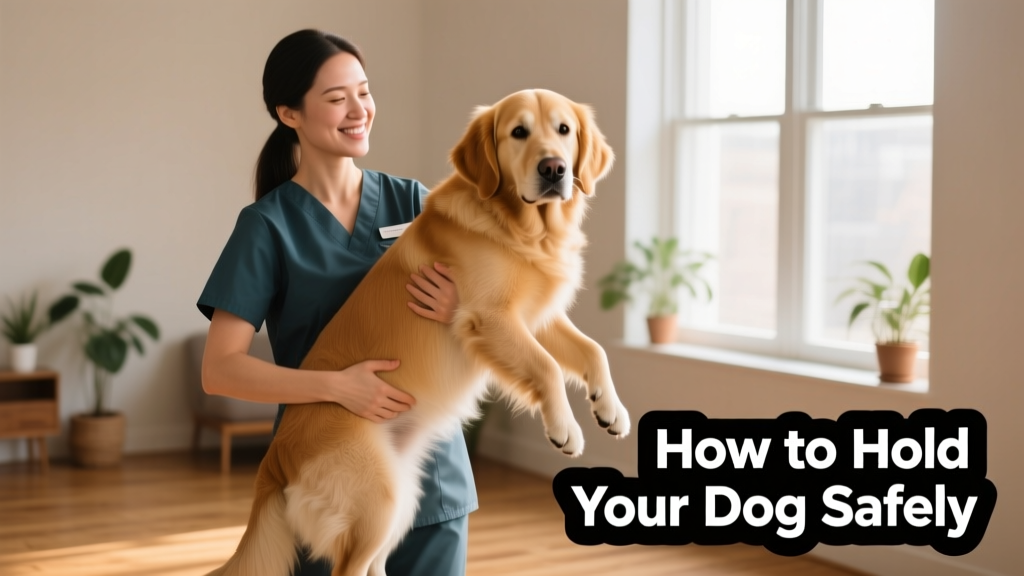
How to Pick Up a Dog and Hold Them Correctly
Whether your pup needs a helping hand to get onto the vet’s table or they’re simply too small to hop onto the couch for snuggles, knowing how to pick up a dog properly is super important. Read on to find out the best way to lift your dog, how to hold them comfortably, and what to avoid when handling your furry friend.
Key Takeaways
- Use both arms to fully support your dog’s body—and for larger dogs, enlist a second person for added safety.
- Hold your dog close to your chest for stability, security, and comfort.
- Not all dogs enjoy being carried. Some may find it uncomfortable or painful—always watch for signs of stress in their body language.
How to Pick Up a Dog
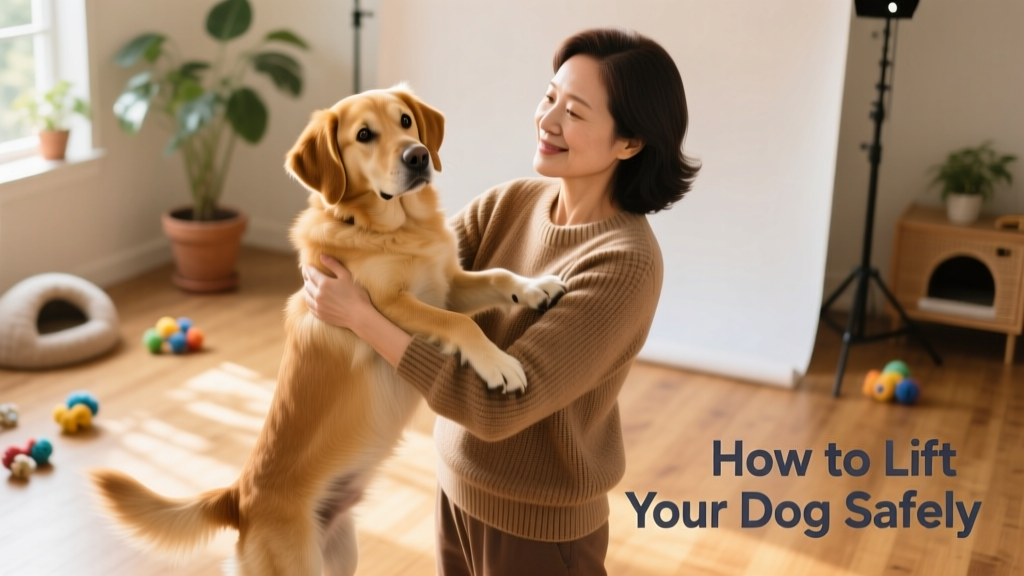
The right technique depends on your dog’s size, health, and temperament. Here’s how to safely lift a medium-sized dog (around 20 pounds):
- Approach calmly and squat down with knees bent—this protects your back and helps your dog feel less threatened.
- Scoop one arm around the front of your dog (just behind the front legs) and the other under their hindquarters, fully supporting their weight.
- Stand up slowly using your leg muscles—not your back—to lift.
- Bring your dog snugly against your chest to maintain balance and comfort.
FurPetVo Tip: If your dog tends to wiggle or feels anxious, try wrapping them gently in a soft towel before lifting. This helps contain movement and provides reassuring pressure.
How to Pick Up a Puppy or Small Dog
For tiny pups or small breeds, use a more delicate approach:
- Slide your dominant arm gently between your dog’s front legs to support their chest and upper body.
- As you begin to lift, use your other hand to scoop up their hind legs and tail base.
- Keep them nestled securely against your chest—never dangle or hold them loosely.
How to Pick Up a Large Dog
Large dogs often require two people for safe lifting. If you’re working solo, proceed with caution:
- Wrap one arm around the chest and under the neck for upper-body support.
- Use your other arm to support the belly and hindquarters—bend at the knees and keep your dog close as you rise.
- With a helper: One person lifts under the neck and chest while the other supports the belly and hind legs. Count “one, two, three” and lift together smoothly.
How to Pick Up a Dog for the First Time
If this is your dog’s first time being lifted—or yours—build trust gradually:
- Give a gentle verbal cue like “up” or “lift” before reaching, so they learn to anticipate the motion.
- Offer a treat as you lean in—this creates a positive association and helps ease anxiety.
- Move slowly and praise softly throughout the process. Avoid squeezing tightly; hold them firmly but kindly.
Remember: Dogs communicate through body language—not words. Watch closely for signs they’re uncomfortable—like stiffening, whining, avoiding eye contact, or trying to scramble away. If you see any of these, pause, lower them gently, and try again later with extra patience.
How to Hold a Dog Comfortably
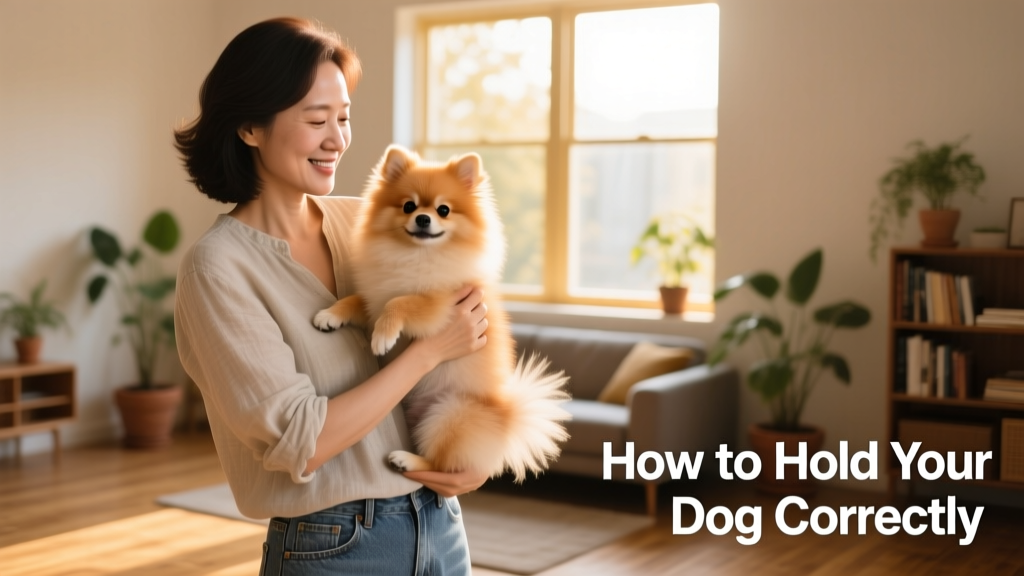
Once lifted, keep your dog relaxed by holding them close to your chest, supporting their full body without restriction. Your goal is security—not restraint. Gently cradle their weight while letting them rest naturally in your arms. Avoid holding them rigidly upright or dangling their legs.
How to Hold a Small Dog with One Hand
This method works only for very small, calm dogs—and only when necessary (e.g., carrying groceries). Use your stronger arm:
- Slide your forearm between their front legs, palm supporting their chest like a harness would.
- Tuck their hindquarters snugly into the crook of your elbow.
- Keep their head slightly elevated and their body aligned—not twisted.
How to Carry a Dog Safely
When moving your dog from place to place:
- Always support their entire body with both hands—even during short distances.
- Set them down gently, allowing all four paws to touch the floor before releasing.
- If your dog dislikes being held, consider a well-fitted dog carrier—such as a soft sling, ergonomic backpack, or secure travel crate—designed for comfort and safety.
And if travel stress is a concern, consider booking an in-home pet sitter through furpetvo.com. A trusted caregiver can provide loving care in your dog’s familiar surroundings—no lifting required.
What Not to Do
- Avoid lifting injured dogs without guidance. Improper handling could worsen pain or damage—consult your veterinarian first.
- Don’t approach head-on. Coming from the side or slightly behind feels less threatening than looming from the front.
- Never scruff a dog. Grabbing the loose skin at the back of the neck is painful and inappropriate outside of rare maternal behavior.
- Don’t lift by collar, tail, or front legs. These methods risk choking, spinal strain, or joint injury—especially in older or arthritic dogs.
Frequently Asked Questions
Does grabbing a dog by the scruff hurt them?
Yes—it can cause pain, fear, and physical injury. Scruffing is not a safe or humane handling method for adult or adolescent dogs.
Do dogs like to be picked up?
It varies by individual. Some dogs love the closeness and attention, while others feel vulnerable or stressed. Always respect your dog’s preferences—and never force a lift.