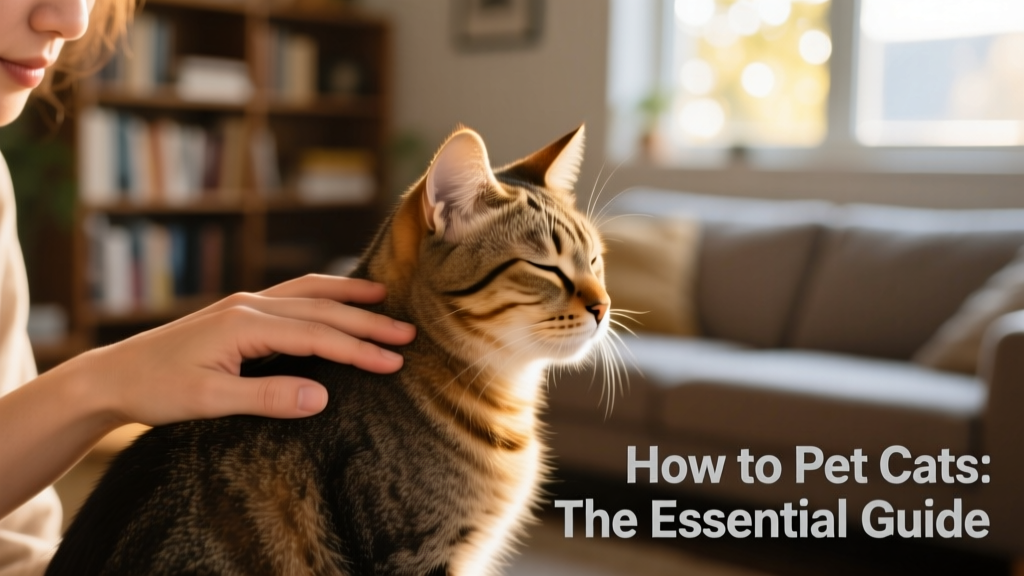
How To Pet Cats: The Essential Guide
Cats know what they like. From the first bite of breakfast to the last nap of the night, our feline friends have strong preferences—and high standards.
So, it’s no surprise that petting a cat isn’t quite as easy as it sounds. While some kitties are more easygoing than others, in general, successful handling requires patience, practice, and a solid understanding of cat body language. But it’s well worth the effort: in addition to strengthening your bond with your furry companion, studies show that petting a cat can actually reduce your own stress!
Ready to pet like a pro? Whether you’ve just welcomed home a new cat or want to refine your technique, here’s everything you need to know—step by step.
How To Pet a Cat: Step-By-Step Instructions
1. Play It Cool
Unlike your exuberant Golden Retriever, cats prefer to make the first move. For best results, let the kitty come to you, says Los Angeles–based certified feline behaviorist Susan Nilson, CABTi. “Like many of us, cats like to feel in control of their environment,” Nilson explains. “If you’re patient and wait until your cat is ready to approach you, she’ll quickly learn that she can trust you.”
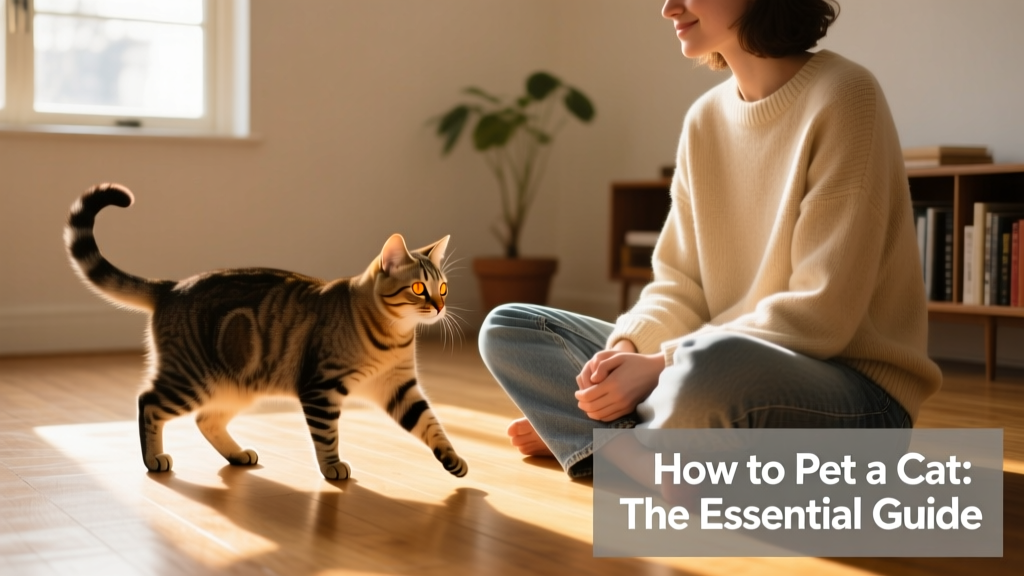
Once the cat does approach, resist the urge to reach out immediately. “As humans, we tend to reach for the top of their heads—but this can feel intimidating,” cautions Nilson. “Instead, crouch or sit on the ground and let your cat come to you and rub against you. That’s your green light to begin interacting!”
2. Offer a Hand
Every cat is different, but most appreciate a chance to check you out before physical contact, advises Nicole Savageau, VMD, an Austin, Texas–based veterinarian with The Vets. “Let them see and sniff your hand first,” she says. Think about it—you wouldn’t want someone unfamiliar grabbing you out of nowhere either, right?
3. Pet Their Head or Back
Once your cat seems comfortable with your hand nearby, gently begin petting. Most cats enjoy slow, gentle strokes from the top of their head down to the base of their tail, Dr. Savageau notes—so start there. Always stroke in the direction of their fur; going against the grain can be uncomfortable (and your cat will let you know—loudly!).
Keep things calm and unhurried. “Be gentle and avoid rough or fast movements,” says Dr. Savageau. “Slow, rhythmic strokes work best.”
Pro Tip: Many cats don’t enjoy cuddling or being hugged—and forcing it can damage trust. Respect their boundaries.
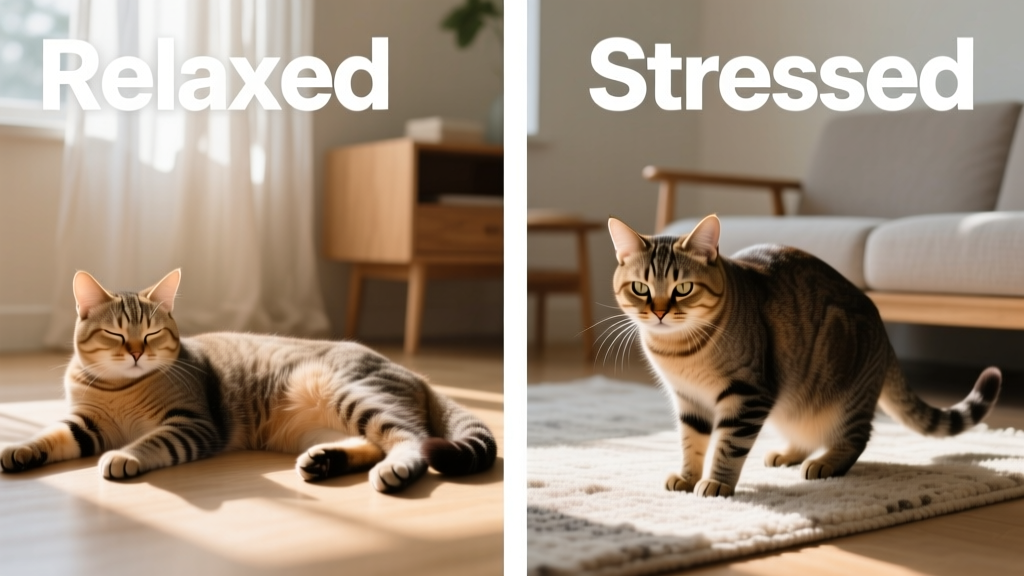
4. Watch Their Body Language
Cats communicate through posture and expression—not words—so reading their signals is essential.
Signs your cat is enjoying the petting:
- Purring
- A loose, relaxed posture
- Leaning into your hand
- Closing their eyes
- Kneading with their paws
Signs it’s time to stop:
- Twitching tail
- Flattened ears
- Stiff or tense posture
- Sudden silence (stopping purring)
- Trying to move away
Where Do Cats Like To Be Petted?
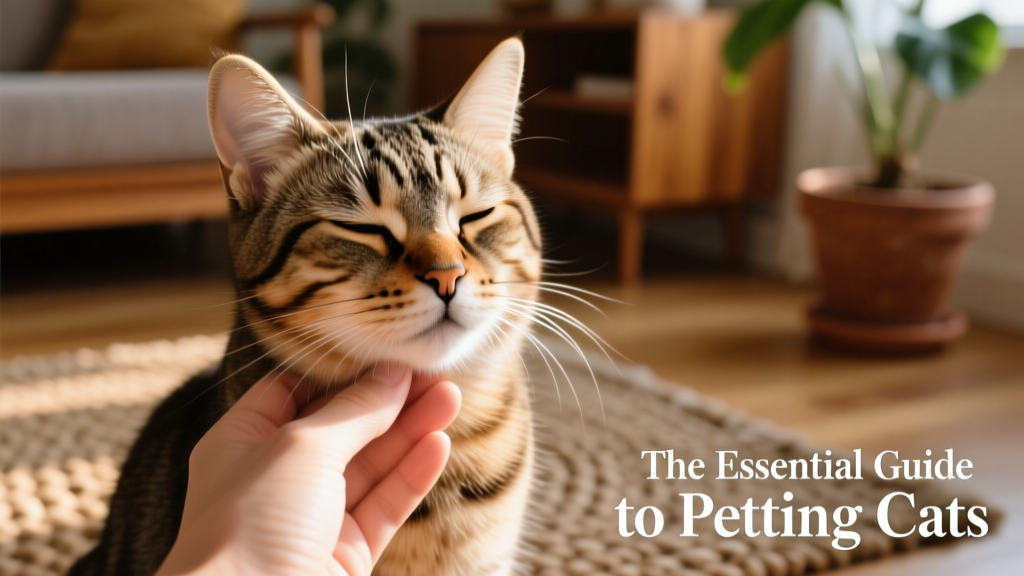
Every cat is unique, with their own quirks and preferences—but research reveals some common sweet spots. “Cats typically enjoy being touched along the back toward the base of the tail—and especially around the head,” says Nilson. “They have scent glands around the lips, chin, cheeks, between the eyes and ears, and at the base of the tail, which they use for communication. These areas are often ideal for gentle petting.”
Many cats particularly love being stroked under the chin or on the temples, adds Nilson.
Do Cats Like Belly Rubs?
Dogs may roll over for belly rubs on demand—but with cats, it’s rarely that simple. The belly is a vulnerable area, so most felines guard it closely. Still, some do enjoy gentle belly attention—if offered correctly.
“Some cats love belly rubs, while others find them uncomfortable or even threatening,” says Dr. Savageau. “Approach with caution and watch closely. If your cat rolls onto their back and exposes their belly voluntarily, they may welcome gentle strokes—but be ready to pause or stop if they stiffen, flick their tail, or flatten their ears.”
How To Get a Cat To Like You
If you’ve recently met your new furry friend, expect some initial hesitation. Some cats never fully warm up to petting, while others simply need time to adjust to new people and surroundings.
“It’s important to honor the personality of a cat who’s new to your home,” says Michelle Burch, DVM, a veterinarian based in Poulsbo, Washington. “For some cats, handling should be delayed while they settle in.”
During this transition, consider these gentle, cat-friendly tools to encourage connection:
- Pheromones: A pheromone diffuser or spray (like FurPetVo’s Calming Diffuser Kit) can help ease anxiety and signal safety in your home.
- Engaging toys: Try wand toys, interactive mice, puzzle feeders, and balls. Each cat has their own preference—experiment to discover what sparks joy. FurPetVo offers a range of vet-recommended options, including the Feather Teaser Wand and Butterfly Tracks Toy.
- Treats: Use small, tasty rewards to build positive associations. Place treats near your cat’s safe space, then step away—letting them explore on their own terms.
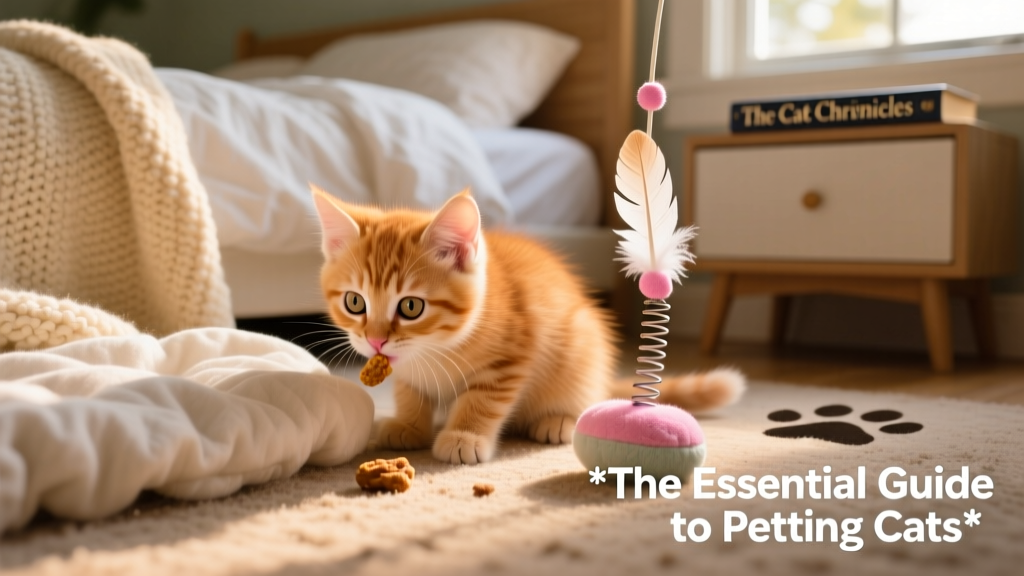
When your cat shows interest—and only when they show interest—gently begin petting. Let trust grow at their pace.
FAQs About Petting Cats
Do cats like being petted?
If socialized early with humans, most cats do enjoy being petted—but on their own terms. Some only accept touch from one or two trusted people, while others greet friendly hands with equal enthusiasm.
How do you get a cat to like you?
Cats respond best to calm, respectful interaction. Let them approach first, move slowly and gently when petting, and always prioritize their body language cues over your own desire to snuggle.
What is the correct way to stroke a cat?
Most cats prefer slow, gentle strokes moving from head to tail—in the natural direction of their fur. Avoid sudden motions, pressure, or overstimulation.
As a pet parent, understanding cat behavior—and the subtle art of petting—is key to building lasting trust. Since your feline friend can’t offer verbal instructions, observing and responding to their signals becomes your most important tool. To deepen your understanding, explore FurPetVo’s guide to the 10 secret messages your cat sends with their tail.
Expert input provided by certified feline behaviorist Susan Nilson, CABTi; Dr. Nicole Savageau, veterinarian with The Vets; and Dr. Michelle Burch, veterinarian based in Poulsbo, Washington.