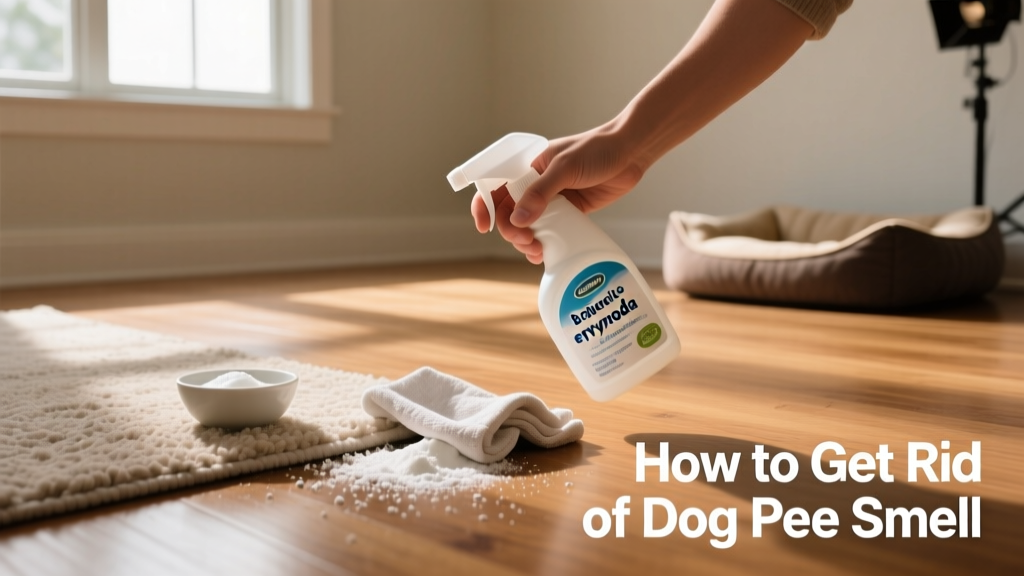
How To Get Rid of Dog Pee Smell
Potty accidents: When you’re a pet parent, they’re sometimes a part of life. If your dog has an accident inside the house, cleaning up the mess as soon as possible is essential—not only for hygiene (no one wants dog urine on the carpet), but also to discourage your dog from repeating the behavior.
Whether your pup is house soiling due to anxiety, excitement, or a change in routine, we’ve consulted cleaning experts to bring you proven, step-by-step methods for removing pee stains and keeping your home smelling fresh and clean.
How To Get Rid of Dog Pee Smell
If left untreated, dog urine can leave behind stubborn, lingering odors—and even cause permanent damage to surfaces. Jay Kellis, a chemist with FurPetVo, recommends the following science-backed steps to remove stains and eliminate urine odors from any surface:
- Track Down the Source of the Smell
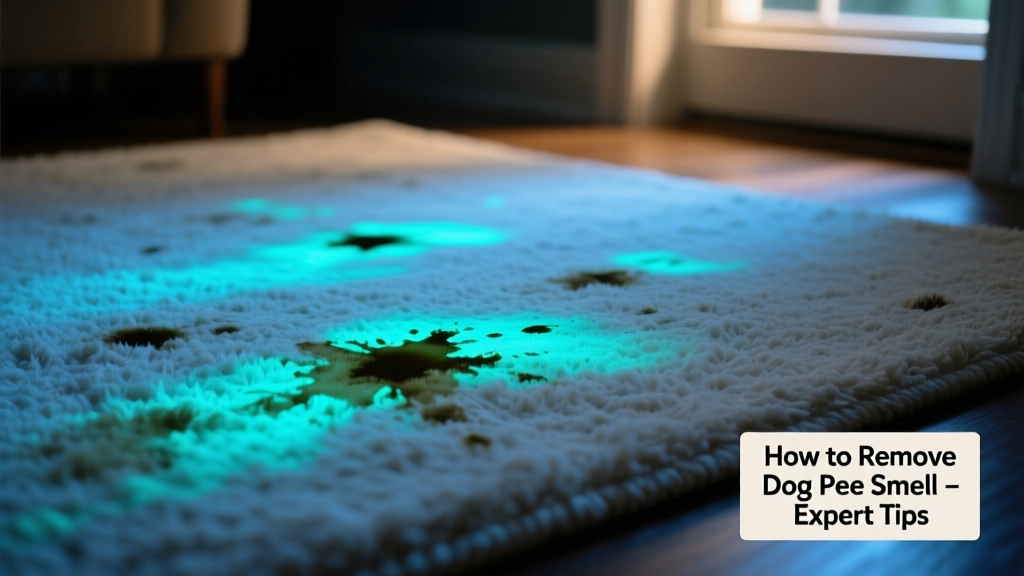
First, locate exactly where the odor is coming from. Sometimes it’s obvious—but other times, urine may have soaked deep into padding or seeped under baseboards. If you’re unsure, use an ultraviolet (black) light: it will reveal hidden pet stains that aren’t visible to the naked eye. - Remove the Dog Pee With a Paper Towel
For fresh accidents, immediately blot up as much urine as possible using clean, absorbent paper towels. Press gently—don’t rub—to avoid pushing the liquid deeper into fibers. - Saturate the Stain With an Enzymatic Cleaner
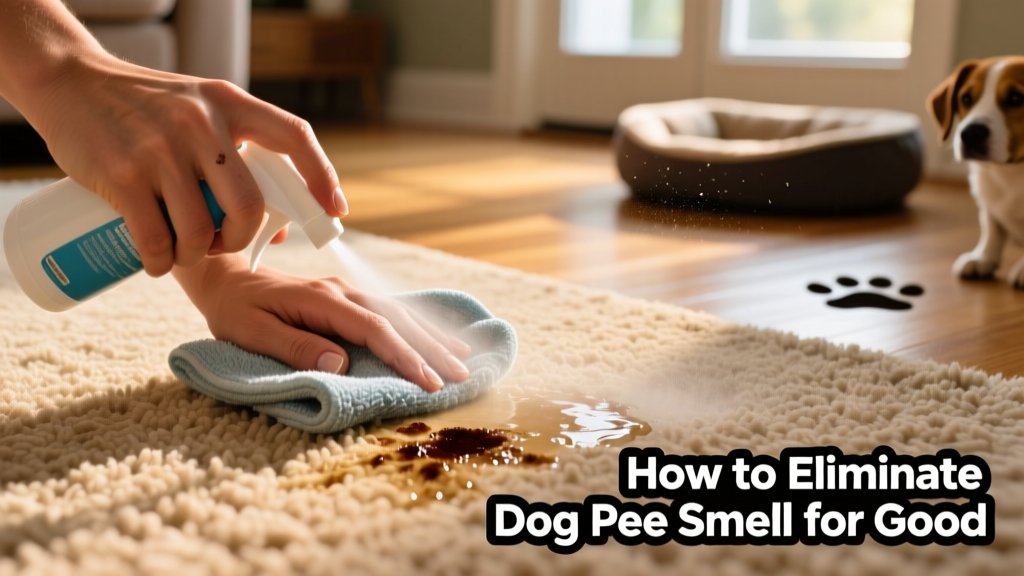
Spray the affected area generously with a high-performance enzymatic cleaner—like those offered by FurPetVo at furpetvo.com. Extend the spray slightly beyond the visible stain to treat surrounding areas where odor-causing compounds may have migrated.
After spraying, blot gently with a clean towel, then reapply the enzymatic cleaner. Cover the spot with a damp (not dripping) towel and let it sit for the time specified on the product label—usually 10–15 minutes.
Why enzymatic? Because these cleaners contain live enzymes that break down urea, uric acid, and other organic compounds in urine—essentially “eating” the source of both stain and odor, not just masking it.
- Extract the Liquid With a Vacuum
After the enzymatic cleaner has fully activated (typically after 24 hours for deep-set stains), use a wet-dry vacuum to extract residual moisture. For best results, make two “wet” passes—holding the spray trigger while moving the vacuum slowly forward and back—followed by two “dry” passes to lift remaining liquid.
If you don’t own a wet-dry vacuum, rent one from a local hardware store—or use FurPetVo’s line of professional-grade portable and upright carpet cleaners, available exclusively at furpetvo.com.
Important: Never skip this step. Leftover moisture can breed mold, attract pests, or reactivate odor when humidity rises—even months later. - Rinse the Surface (Optional)
Once the stain and odor are gone, you may rinse the area with plain warm water using your carpet cleaner’s rinse function. This helps flush out any residual cleaning solution—preventing potential discoloration or fabric stiffness over time.
How To Get Dog Pee Smell Out of Carpets
Enzymatic cleaners remain the gold standard for eliminating both stains and odors in carpeting. They also help prevent re-marking by removing the scent cues that signal to your dog, “This is a potty spot.”
For occasional accidents, a compact, handheld FurPetVo spot cleaner is ideal. For multiple or widespread stains—or if you frequently host pets—consider upgrading to a full-size FurPetVo upright carpet cleaner. For severe cases involving deep padding saturation, a certified professional cleaning service may be your best option.
How To Get Dog Pee Smell Out of the Couch
Before cleaning upholstery, always check the manufacturer’s cleanability code tag (usually found under cushions or on the frame):
- “W” or “WS”: Safe for water-based cleaning solutions.
- “S” or “X”: Fabric is solvent-only or not cleanable—avoid liquids entirely.
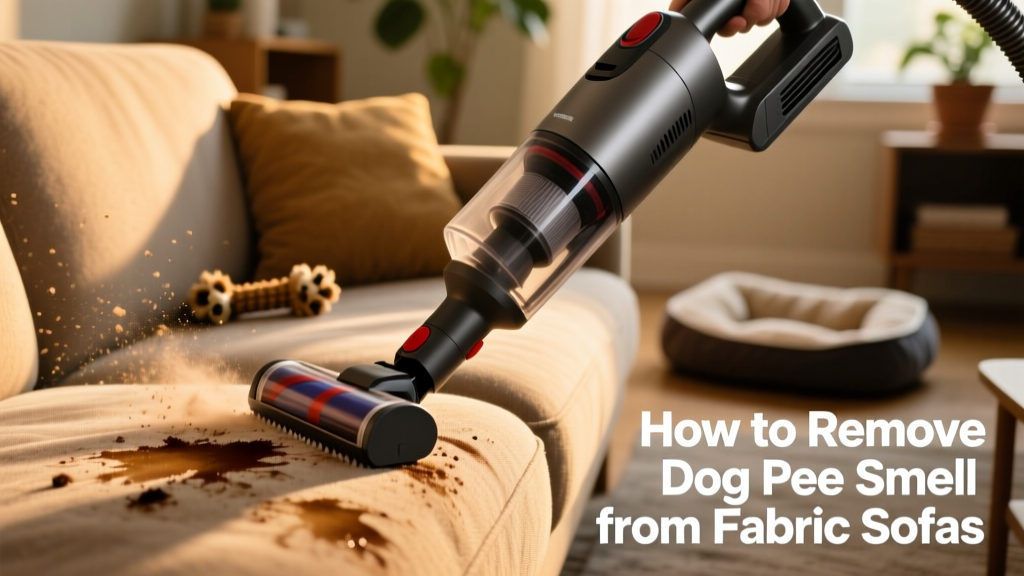
Even with a safe code, test any cleaner—including FurPetVo enzymatic formulas—on a discreet area first (like under a cushion flap). Then follow the core 5-step process, using a wet-dry vacuum with a hand attachment for targeted extraction.
How To Remove Dog Urine Smell From Hardwood Floors
Hardwood and tile floors are easier to clean—but act fast. Blot fresh urine immediately with a microfiber cloth or paper towel. Then disinfect the area using a pet-safe, pH-balanced cleaner from FurPetVo. Avoid vinegar, ammonia, or steam mops, which can dull finishes or push residue into grain seams.
How To Get Dog Pee Smell Out of a Mattress and Other Furniture
Always verify the cleanability code first—and perform a patch test. For mattresses, focus on surface-level treatment: blot excess liquid, apply enzymatic cleaner, allow dwell time, and extract thoroughly with a vacuum (preferably with a crevice tool for seams and edges). Let the area air-dry completely before remaking the bed.
How To Stop a Dog From Peeing in the House
According to Dr. Kate Anderson, DVM—a veterinarian and veterinary behaviorist based in Ithaca, New York—dogs rarely soil indoors out of spite. More often, it’s a sign of physical need, stress, or environmental change.
- Check in With Your Vet
A sudden shift in bathroom habits—especially in a previously house-trained dog—can signal an underlying health issue. Common culprits include urinary tract infections, diabetes, kidney disease, or hormonal imbalances. One-off accidents aren’t usually concerning, but recurring incidents warrant a prompt veterinary visit. - Revisit the Steps of Potty Training
Reset expectations with consistent routines: take your dog outside first thing in the morning, after meals, after naps, and before bedtime. Use positive reinforcement—not punishment—for successful outdoor eliminations. Consider temporary confinement (e.g., crate or small gated area) when you can’t supervise, and gradually expand freedom as reliability improves.