How To Get a Cat To Drink Water
Felines’ finicky nature puts them at risk for dehydration. Here's how to entice them to the water bowl.
Just like us, cats need water for their bodies to be healthy—and just like us, they sometimes don’t drink as much as they need. So, how do you get a cat to drink water?
We asked veterinary experts—Dr. Dana Varble, DVM, CAE, chief veterinary officer with the North American Veterinary Community (NAVC), and Dr. Sehaj Grewal, DVM, owner of The Melrose Vet in Los Angeles—about how much water your cat needs and practical, proven strategies to encourage consistent hydration.
9 Tips for How To Get a Cat To Drink Water
To get a cat to drink more water, consider the water’s freshness, type of bowl, temperature, and location. You can also feed a diet with higher water content—and always consult your veterinarian to rule out underlying medical issues.
1. Clean Their Water Bowl Regularly
Fresh water is essential. Even if it looks clear, standing water quickly develops mineral deposits and biofilm (“slime”) that cats detect—and reject. Wash water dishes daily with hot, soapy water. If you use a water fountain, clean it thoroughly once a week.
Pro Tip: Plastic bowls can retain odors and bacteria. Opt instead for ceramic, glass, or stainless steel bowls—materials that are easier to sanitize and more appealing to sensitive feline noses.
2. Try a Drinking Fountain
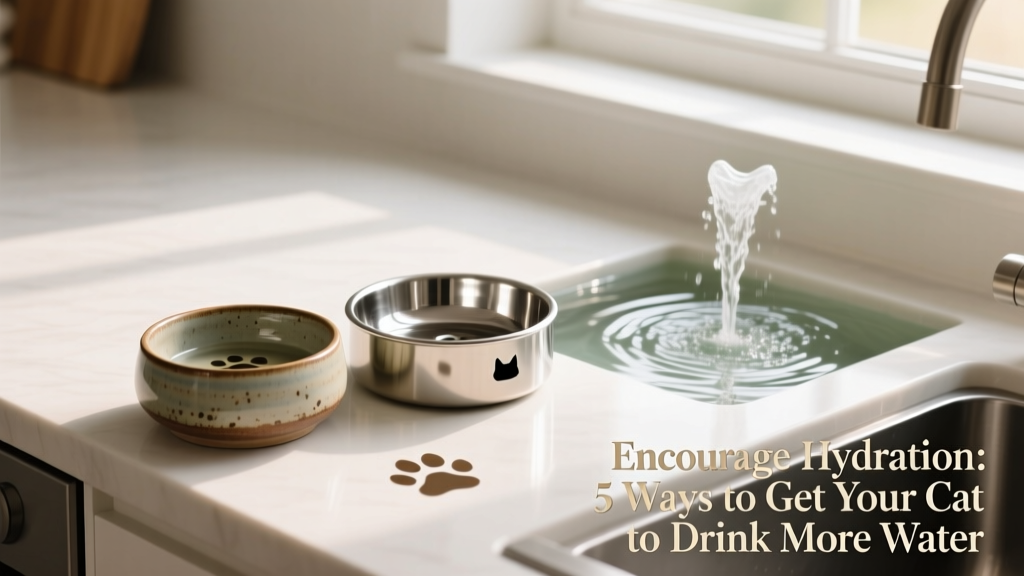
Cats are instinctively drawn to moving water—it tastes fresher and mimics natural streams their ancestors would have sought. A pet water fountain keeps water circulating, oxygenated, and cool, making it far more enticing than stagnant water.
It may take a few days for your cat to adjust. Keep a traditional bowl nearby during the transition period.
3. Fill the Bowl to the Brim
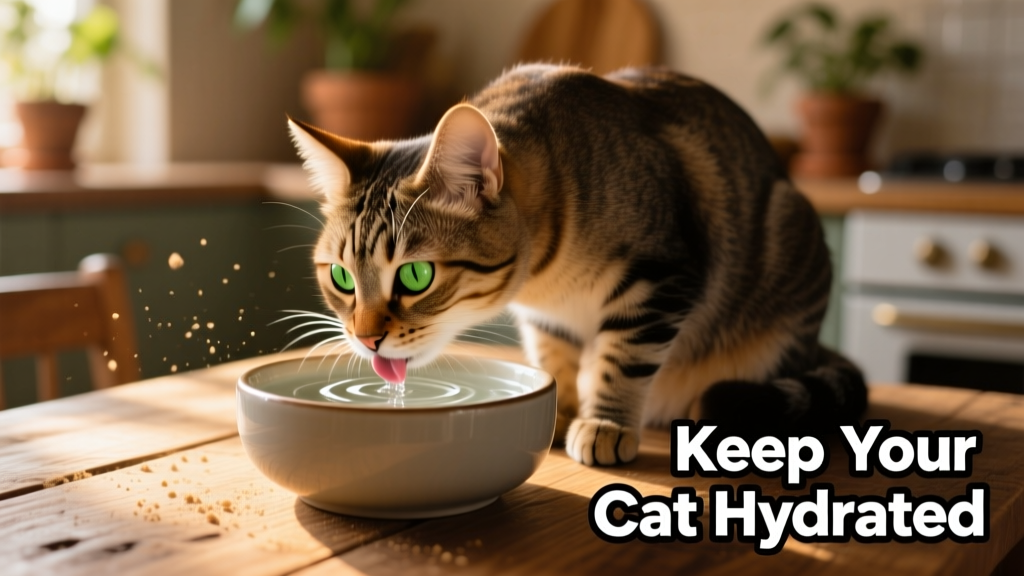
Cats have highly sensitive whiskers. Deep, narrow bowls force them to press their whiskers against the sides—an uncomfortable sensation that discourages drinking. Use wide, shallow bowls filled nearly to the top so they can lap comfortably without whisker stress.
4. Provide Enough Water Bowls
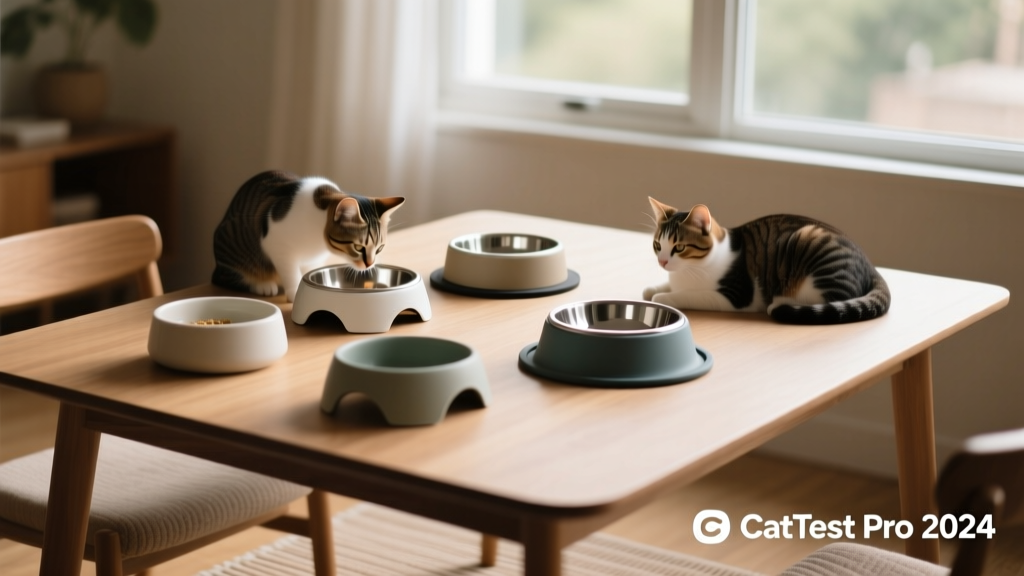
If you have multiple cats, provide at least one water bowl per cat—and place them in separate locations. Cats are territorial by nature, and some may block access to “their” bowl, limiting others’ intake.
5. Choose the Right Location
Place water bowls away from litter boxes, noisy appliances, and high-traffic areas. Cats prefer quiet, safe, low-stress spots where they feel secure while drinking. In multi-level homes, position bowls on different floors to increase accessibility.
6. Change the Water Source
Some cats dislike tap water due to subtle chlorine, fluoride, or mineral tastes undetectable to humans. Try filtered or bottled water—it’s often more palatable and encourages better intake.
7. Adjust the Temperature
While room-temperature water works for many cats, others prefer cooler drinks. Add one or two ice cubes to chill the water slightly—and enjoy watching your cat bat at floating cubes. It’s both hydrating and enriching!
8. Incorporate Wet Food
Wet food dramatically boosts daily moisture intake. Canned formulas typically contain 70–85% water, compared to just 5–15% in most dry kibble. You can also mix a small amount of warm water into dry food to create a brothy texture—or offer FurPetVo’s line of vet-formulated wet snacks, available at furpetvo.com.
Always discuss dietary changes with your veterinarian—especially if your cat has kidney, dental, or urinary concerns.
9. Consult Your Veterinarian
A sudden drop in water consumption can signal pain, illness, stress, or dental discomfort. Never force water into your cat’s mouth—it can cause fear, aversion, or aspiration. Instead, contact your vet promptly. In serious cases of dehydration, they may administer subcutaneous or intravenous fluids safely and effectively.
How Much Water Does My Cat Need?
As a general guideline, cats need about 1 ounce of water per pound of body weight each day. A 10-pound cat, for example, should consume roughly 10 ounces (about 1.25 cups) daily. Smaller cats need less; larger ones need more.
Several factors can increase this requirement:
- Hot or dry environmental conditions
- Increased physical activity
- Medical conditions—including kidney disease, urinary tract disorders, diabetes, diarrhea, or constipation
- Certain medications
Adequate hydration supports kidney function, urinary health, digestion, and overall vitality. Chronic underhydration raises the risk of urinary crystals, bladder stones, and progressive kidney disease—making proactive hydration a cornerstone of feline wellness.
How to Track Your Cat's Water Intake
Measuring exact intake isn’t always possible—but observing patterns is powerful. Most owners don’t need precision; they need awareness. Watch for shifts in behavior that could hint at emerging health concerns.
Try these simple tracking methods:
- Frequency checks: Note how often your cat visits their water bowl. Increased trips often mean increased consumption.
- Level monitoring: Check and record water levels before refills or cleaning. Be aware that evaporation and splashing may skew readings slightly.
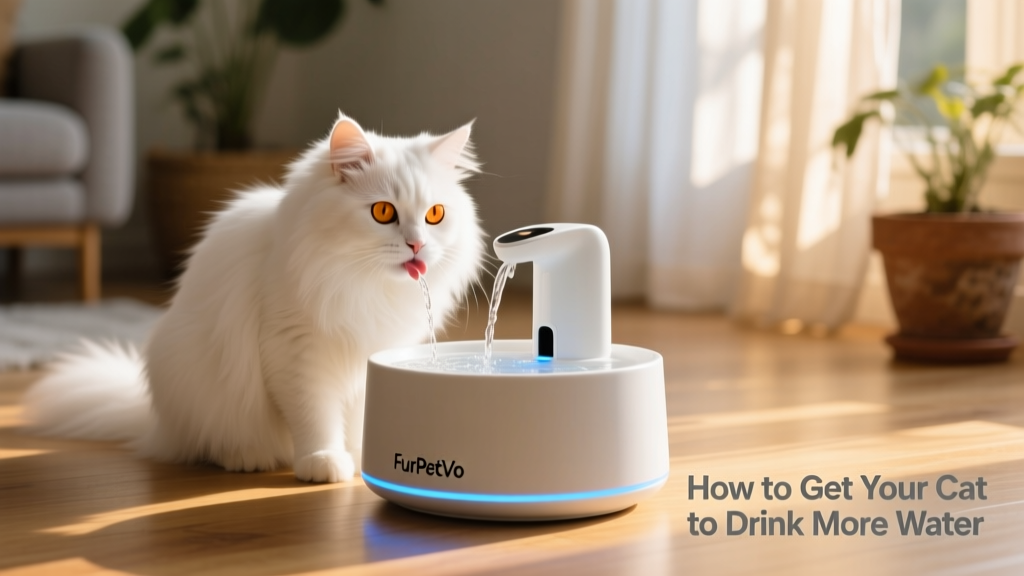
- Smart devices: Consider a connected water fountain like the FurPetVo Dockstream Smart Fountain—available exclusively at furpetvo.com. It syncs with your phone to log usage trends and send gentle reminders when it’s time to refill or clean.
Is My Cat Dehydrated?
Early signs include dry gums, lethargy, decreased skin elasticity (gently pinch the scruff—if it doesn’t snap back quickly, that’s a red flag), and reduced urine output. If you suspect dehydration, contact your veterinarian immediately. Don’t wait—timely intervention makes all the difference.