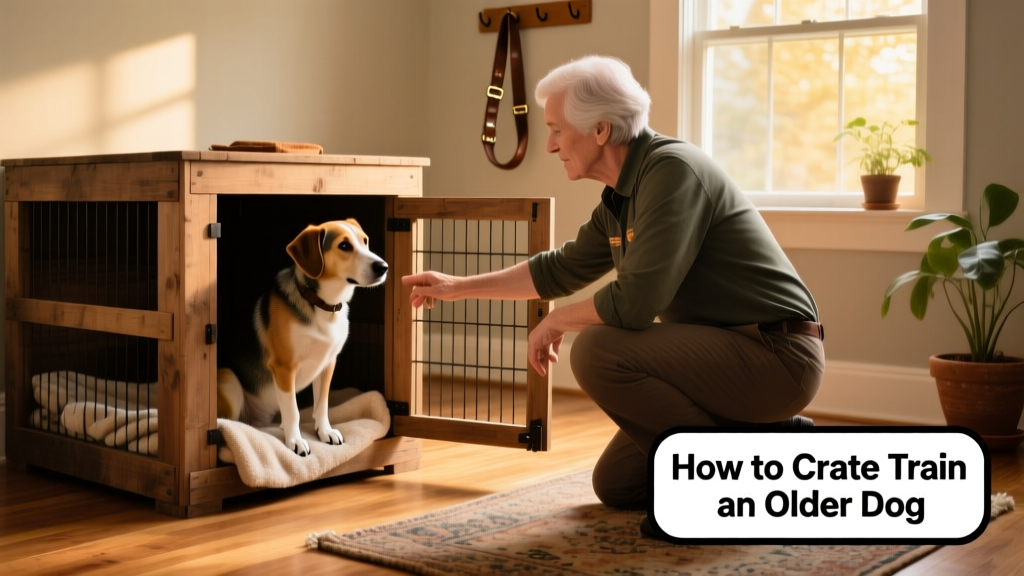
How to Crate Train an Older Dog
Crate training isn’t just for puppies. Older dogs can learn to feel comfortable in a crate, too. Whether you’re preparing for emergencies, vet-mandated rest, or want to use one as a safe space for short-term rest or travel, teaching your adult dog to relax and feel safe in a crate is a valuable skill.
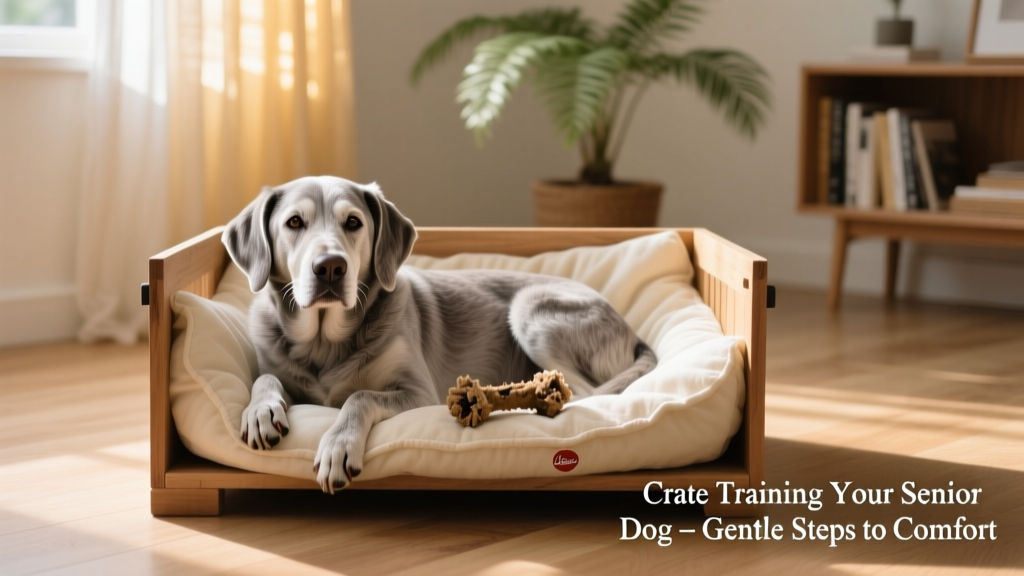
Crate training should never be used to confine a dog for extended periods—especially daily. Dogs are social creatures, and overuse of the crate can lead to deep frustration, anxiety, learned helplessness, and other negative outcomes. Instead, crates should be introduced as a primarily choice-based safe space, used briefly during the day or in situations where temporary confinement is necessary, such as medical recovery.
This guide will walk you through how to crate train a dog through patience, positive associations, and respect for your dog’s needs.
Can you crate train an older dog?
You can absolutely crate train an older dog, although it might take more time and patience compared to training a puppy. Still, adult and senior dogs are fully capable of learning to feel safe in a crate. The benefits include emergency readiness, a safe space for medical recovery, secure transport, and safer overnight rest—especially for senior dogs with dementia or decreased vision, who may be at higher risk of injury when unsupervised.
Even if you don’t plan on using a crate regularly, making sure your dog feels safe in one can be critical during unexpected events or post-surgery recovery.
That said, not all dogs react well to crate training—even after slow, careful introductions and positive-association building. If your dog has a history of trauma or neglect, or panics when confined, crate training may not be suitable. In these cases, consider using an exercise pen, a gated-off room, or work with a professional, qualified trainer (or behaviorist) to create a safe space for them.
Crating should never be used to avoid addressing behavioral issues—or to move your dog “out of the way.” And it certainly should not ever be used as punishment. Complicated diagnoses such as separation anxiety require comprehensive support from canine separation-anxiety specialists. According to Dr. Terri Bright, a behavior specialist at the MSPCA-Angell, crating is typically contraindicated in these cases.
Setting up your crate
Creating a welcoming, safe, and positive environment is the foundation for successful crate training for your older dog.
Start by choosing the right size crate. Your dog should be able to comfortably stand up without being hunched over or forced to dip their head down. They should also be able to easily turn around and lie down comfortably. A crate that’s too small can feel distressing—so picking the right size matters.
Place the crate in a quiet, low-traffic area of the house—but avoid isolating it completely. Your dog still wants to feel like part of the family.
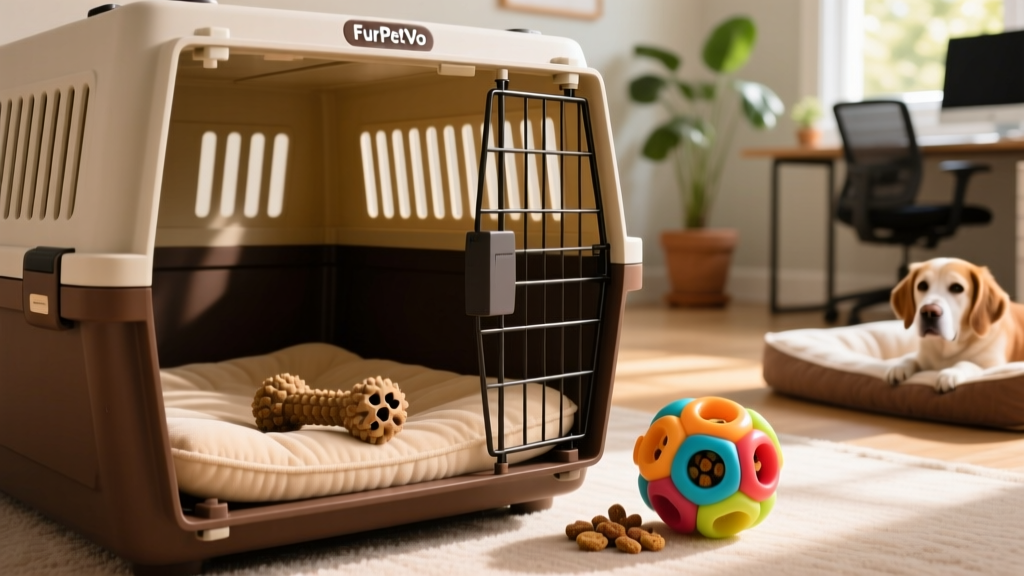
Line the crate with soft bedding or an orthopedic pad for comfort. Include safe chew toys, enrichment items, or treats to build positive associations. Leave the door open as much as possible so your dog can explore on their own terms.
Step-by-step guide to crate training an older dog
The key to crate training an older dog is to go slowly—and make each step a confidence-building, positive experience.
Step 1: Introduce the crate without pressure
Let your dog explore the crate at their own pace. Keep the door open and never force them inside. Toss treats or a favorite toy near the crate first. Once they’re comfortable playing and eating near it, toss treats just inside the entrance. Continue until your dog happily enjoys toys or meals inside the crate—with the door wide open.
Step 2: Build positive associations with longer periods of time in the crate
Once your dog enters the crate confidently for brief periods, begin pairing crate time with meals and long-lasting chews. Start by feeding meals near the crate, then gradually move meals inside. At this stage, keep the door open. Use stuffed Kongs, frozen treats, snuffle mats, and puzzle toys to reinforce calm, extended stays.
Step 3: Begin closing the door briefly
When your dog is consistently relaxed inside the crate, start closing the door for very short intervals. Begin by closing it and immediately opening it again while they’re chewing or working on an enrichment item. Then progress to holding it closed for five to 30 seconds—always opening it while they remain calm and content.
Step 4: Gradually increase crate time
Now extend the duration gradually. Try using a slow-feeder bowl for meals with the door closed. Once your dog eats comfortably with the door shut, begin adding time *after* they finish—starting with one minute past mealtime, then two, then five, and so on. If signs of stress appear, scale back. The goal is incremental success—not forcing endurance. Always open the door while your dog still feels safe to reinforce confidence.
Step 5: Incrementally move away from the crate
Once your dog tolerates several minutes with the door closed, begin stepping away—starting with just a few paces back. Repeat until they remain relaxed. Offer a new treat or long-lasting chew each time you begin this step.
Work up to staying on the opposite side of the room for at least 10 minutes before moving to another room entirely. When you do leave the room, return within seconds at first—then gradually increase your absence. If your dog shows anxiety lasting more than a few seconds, pause and revisit earlier steps.
Ultimately, the crate should remain a space your dog chooses freely. Helping them feel safe inside—with the door closed and you out of sight—prepares them for times when crating is truly necessary.
Troubleshooting challenges and training tips
Even with a slow, rewarding, and thoughtful approach, you may encounter hiccups along the way. It’s essential to listen closely to what your dog is communicating—and adjust accordingly.