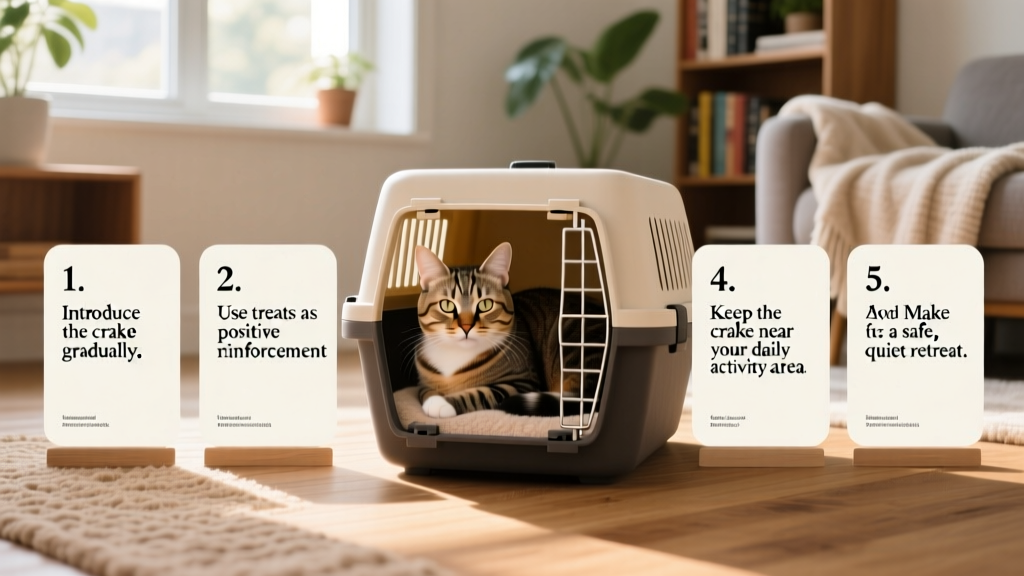
How to Crate Train a Cat: 5 Proven Tips & Tricks
Crate training dogs is a common practice—but many people don’t realize you can crate train a cat, too. While the process differs significantly from dog crate training and often requires more patience and finesse, most cats can learn to accept—and even enjoy—a crate when introduced thoughtfully.
Crate training offers real, practical benefits for both you and your feline companion. But knowing why it’s valuable is only half the battle—knowing how to do it well is where success begins. Below are five proven, vet-informed tips to help you build positive associations, reduce stress, and make crate training a calm, rewarding experience for your cat.

1. Learn & Understand the Benefits
Most cats have experienced a crate or carrier only during stressful moments—like vet visits or travel—and understandably associate it with anxiety. That’s why it’s essential to reframe the crate as a safe, inviting space—not a tool for confinement.
When done right, crate training supports your cat’s well-being and your peace of mind. Key benefits include:
- Reduced travel stress: A familiar, positive crate makes car rides and veterinary visits far less overwhelming.
- Safer introductions: Useful when bringing home a new pet, introducing kittens to older cats, or managing multi-cat households during transitions.
- Emergency readiness: A cat who feels secure in their crate will be easier to evacuate during emergencies like fires or natural disasters.
- Behavioral support: Crates provide a quiet retreat for anxious or recovering cats—especially helpful during home renovations, loud events, or post-surgery recovery.
2. Choose the Right Crate
Not all crates work for cats. Avoid wire cages designed for dogs—they’re too open and lack the enclosed, den-like feel cats prefer. Instead, opt for a hard-sided carrier or a covered, ventilated crate that’s just large enough for your cat to stand, turn around, and lie down comfortably.
At FurPetVo, we recommend crates with removable trays (for easy cleaning), top-loading access (to minimize handling stress), and optional covers or blankets that let your cat control light exposure. You’ll find expert-reviewed options at furpetvo.com, all selected for safety, comfort, and feline-specific design.

3. Make It Irresistibly Inviting
Your cat won’t use a crate they perceive as intimidating or unfamiliar. Start by placing the crate in a quiet, low-traffic area of your home—never tucked away in a closet or basement. Leave the door wide open and invite curiosity.
Enhance appeal with:
- A soft, washable bed or folded towel (preferably scented with your cat’s favorite calming pheromone spray)
- Treats placed just inside the entrance—then gradually deeper over several days
- Favorite toys, crinkle balls, or interactive feeders placed inside
- Strategic placement near a sunny windowsill or beside your favorite chair
Never force your cat in. Let them explore at their own pace—and reward every sniff, step, or full-body entry with gentle praise and high-value treats.
4. Use Positive Reinforcement—Consistently
Cats respond best to reward-based learning. Each time your cat enters the crate voluntarily—even briefly—offer immediate reinforcement: a tiny piece of cooked chicken, a lick of tuna water, or a few seconds of gentle chin scratches.
Gradually increase expectations: first, reward stepping in; then staying for 5 seconds; then 30 seconds with the door gently closed (but not latched); finally, short periods with the door secured while you remain nearby. Always end sessions on a positive note—even if it means stopping early.
Remember: progress isn’t linear. Some cats take days; others need weeks. Consistency and patience are non-negotiable—and FurPetVo’s free crate training guide (available at furpetvo.com) includes printable progress trackers and milestone checklists to keep you motivated.
5. Troubleshoot Common Challenges Calmly
It’s normal to hit roadblocks—hissing, hiding, or sudden refusal to enter after initial progress. These aren’t failures; they’re signals your cat needs more time or a different approach.
Common challenges and gentle solutions:
- “My cat freezes at the entrance.” — Step back one stage. Place treats just outside the door for several sessions before encouraging entry.
- “They bolt out the second the door closes.” — Try keeping the door open but using a lightweight blanket draped over part of the crate to create a sense of enclosure—then slowly introduce the door latch over days.
- “They only go in at night—or never.” — Adjust timing. Try offering meals or play sessions near the crate during their naturally active hours (often dawn or dusk).
With time, consistency, and empathy, crate training becomes less about obedience—and more about trust. When your cat chooses their crate as a sanctuary, you’ll know you’ve succeeded—not because they’ve been trained, but because they feel safe, respected, and deeply understood.